Author Archives: thehighclasshobo

The Roads of Travel Lead to Love… A Valentine’s Day edition

It’s that time of year again; either the admired or dreaded Valentine’s Day.  Valentine’s Day is a celebration of Love.  So in honour of this pseudo-holiday, I present to you the reasons why the Roads of Travel Lead to Love!

love world

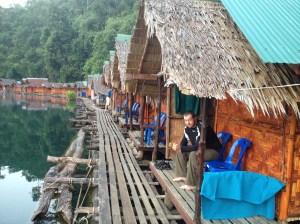
Traveling with a Companion – Traveling with a partner can make or break a relationship.  You witness a side of the other person that you don’t get a chance to see in everyday life.  I can recall many less than ideal situations with HubbyHobo in developing countries.  Racing through an airport only to find out we’ve missed our flight and realizing we have no place to sleep; enduring hallucinogenic-like fevers; or simply gaining an understanding that my definition of fun and acceptable activities varies vastly from my partners (I honestly thought HubbyHobo would enjoy waking up on a rickety floating hut in the middle of a Thai Lake on Christmas Day!).  Regardless of the situation, you only have each other and you can either problem solve and work together to rectify  the situation or self implode as a couple.  More often than not, what seems like a crisis situation at the time turns into one of the most laughable stories you share with your friends when you get home. Experiencing the ups and downs of travel together only makes you stronger as a pair.

IMG_1213

Who wouldn’t want to wake up here Christmas Day!?

Love for Yourself – It’s hard to be single on Valentine’s Day.  But here’s the good news; just because you don’t have a partner to share your travel experiences with, doesn’t mean you aren’t on the Road to Love.  Part of being open to Love (of any kind) is being able to love yourself first.  If you lack true confidence, self-efficacy, and identity it is difficult to fully open yourself up to another person.  Being a happy and fulfilled person will allow you to give a future relationship opportunity the fair shot it deserves.  I can’t think of a better way to gain an understanding of your morals, values, and personal capabilities than by traveling.  Traveling may not be the direct Road to traditional Love, but it can play an important role in self discovery and loving yourself.

DSCF1224

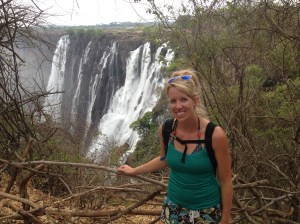
Traveling Solo – No matter your relationship status, traveling alone will Lead to Love.  As stated above, traveling single will help you to grow as a person.  Leaving a loved one behind will also provide you with personal insight about yourself and your partner.  I left HubbyHobo for 100 days.  While it was hard being away from him, I found when I returned we were more in love than ever.  It became obvious how much we enjoyed each other’s company and basic daily companionship.  It also made us realize what each of us brought to the relationship.  Just because you do things separately, does not mean you aren’t working towards a more loving partnership.  HubbyHobo had no desire to travel to Africa but he understood that I did and supported me in that.  If that’s not Love, I don’t know what is!

IMG_2797

Super Solo at Vic Falls

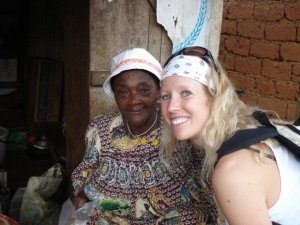
Love for Other Cultures – Lastly, the Traveling Road can Lead to the Love of other human beings.  By experiencing different cultures we gain an understanding of how others live or view life.  This opens us up to becoming more loving people in general.  We learn not to categorize people based on race, religion, gender, or money.  People are people.  Traveling allows us to open our hearts to everybody and gain a basic Love for humankind.

cameroon bananas

This lady was so happy we were in Lewoh to teach she gave us some bananas.  🙂

Who needs flowers and chocolates?! … grab a loved one and hit the road!

Happy Valentine’s Day Hobos.

love-is-all-around-the-world-teach-english-abroad1


The Power of Stepping Outside your Box

For many of us, it’s hard to step outside of our comfort zone.  Everyone’s bubble is different so what is easy for one person can be terrifying for the next.  What I don’t think we realize is just how powerful the decision to venture into unknown territory can be for our self-efficacy.

Often in life we are presented with daunting tasks; a large project at work, a health dilemma for us or a loved one, not enough time, money, or energy, or we are put into a situation where we need to overcome a fear.  The easy way out is to make an excuse.  We can blame others, back out of the commitment, or ignore the situation altogether and hope it goes away.

However, one of the most important things I learned while travelling was just how capable I am.  This sounds corny and perhaps a bit cocky but it’s true!  Personally, it took many times stepping outside my comfort zone to figure out how physically and mentally strong I can actually be.

I’ll give you some examples of how I now apply my travel experiences to everyday challenges.  Some of these are big and some are tiny, but the point is, the technique works.

Fear of singing in front of others – When I taught in Cameroon I was paired with a music teacher and we team-taught.  I had to sing in front of the class sometimes and I found this EXTREMELY hard at first.  I’ve discovered the Africans in general love music and they seem to sing from their souls.  They belt out lyrics with no shame whatsoever.  They didn’t look twice at me or giggle when I started singing.  Now, every time I travel I channel those little Cameroon kids and I belt out my national anthem with pride.

                     Singing in Cameroon Class             Helping Indonesian students with their  school project by signing my National Anthem

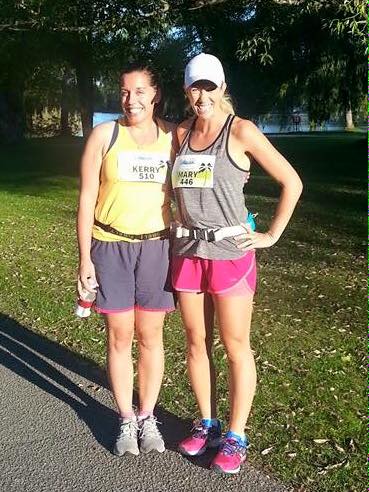
Running a Half Marathon – In September, I ran a half marathon.  Training during the summer heat waves was hard but I remembered other times where I had struggled physically and endured extreme heat.  It gave me the confidence that I could complete my goal and push through any mental blocks that hampered me when training.

marathon

Big Project at Work – I viewed my 100 days of travel as a big project.  I didn’t know how I would cope with being away from HubbyHobo for that long so I decided to take it one day at a time.  I had a large plan but took baby steps to get to the end.  If you do this with projects you’ll find it less stressful and you might actually enjoy the day-to-day of it.

DSCF1047

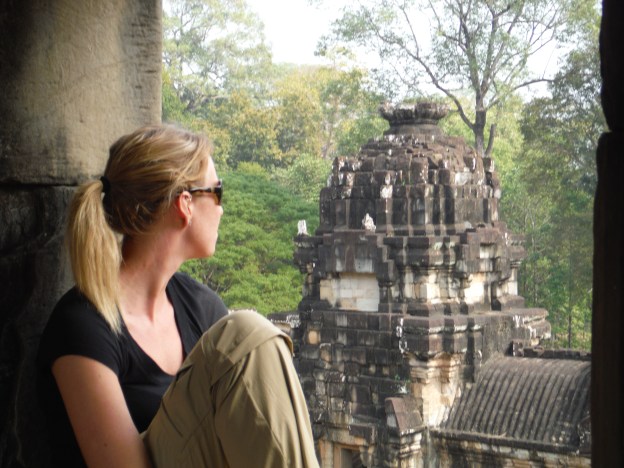
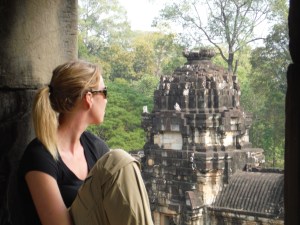
How did these massive temples get built? One step at at time.

Loss of Control – Most people like to feel in control of their lives.  You are to a certain extent but things will always pop up that are out of your control.  A situation out of my control occurred when I couldn’t withdraw any cash in Indonesia for 2 days (I lived off granola bars until I could get some money). On a previous trip to Honduras we arrived on a transfer at an airport only to be told our flight didn’t exist despite having tickets in hand. Life’s realities can be frustrating at times but things always work out; maybe not ideally, but ultimately you survive.

paragliding in Interlaken

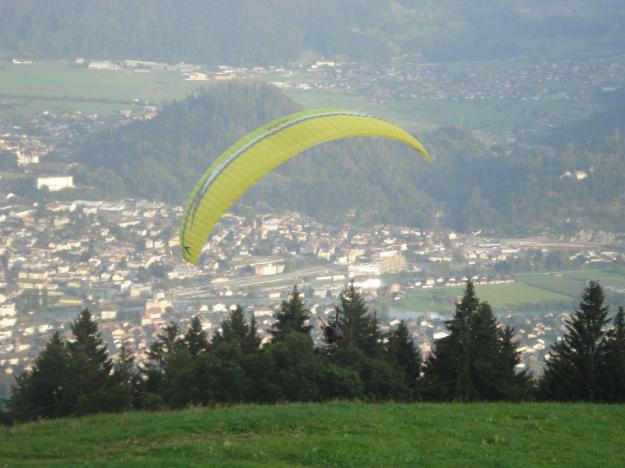
HubbyHobo encouraged me to run off this mountain cliff in Switzerland.  I was terrified but proud I overcame my fear.


The funniest part about gaining confidence through challenging experiences is that often those that love you, know how capable you are …. it just takes stepping outside your comfort zone for you to realize it on your own.

The second time I ever decided to go on a big trip I went to Cameroon, Africa to teach with my University.  Within 2 days of getting there we climbed Mount Cameroon.  I had no idea what to expect.  I can tell you that I was NOT prepared in the least:  I had hiking boots that were 10 years old and gave out on my way down the mountain, my clothes and socks were of poor quality, I had trained incorrectly and really had no idea what I was getting myself into.  The first day we climbed from 7 in the morning until 4 in the afternoon.  We ate dinner which was chick peas, the worst noodles ever, and other mystery ingredients… I took 2 bites and gave it away.  We could choose to sleep in the mountain hut with the rats or out on the mountain with the lions.  I opted for the lions and used a rock as my pillow (since I hadn’t brought one).  We woke up at 3 am and started climbing in the pitch black.  I had no energy and really struggled; it was both a mental and physical challenge.  By 8 am half of the team had made it to the peak!  It was the most satisfying feeling.  On the way down a few of us took a detour to see the smoking crater (Mount Cameroon is a volcano) and then we began the long descent.  Walking down sounds easy but it is just as hard as walking up in its own way.  By the end my toes were out of my boots and my hip was popping in and out of its socket with every step.

Among our group of 18 we had one disposable cell phone.  I decided to buy 5 minutes and call my Dad to let him know I had made it to Cameroon and I had made it off the mountain. I told him it was the hardest thing I had mentally and physically ever done but I was so happy I made it to the top.  His nonchalant response was, “Well, of course you did.”  My point being, although I questioned my capability and really struggled with my goal, those that loved me knew I had it in me to climb that mountain.

So use your past experiences (whether travel related or not) to push yourself into new adventures.  We are so much more competent than we give ourselves credit for.

DSCF0456

Top 7 Reasons to Overland

Overlanding; it’s not a road trip, you’re not bouncing from tourist destination to tourist destination via plane, it’s better than a tuktuk or daladala … it’s overlanding.  As skeptical as I was at first, I fell in love with overlanding.  I present to you, the top 7 reasons why you should need to experience this unique form of travel.

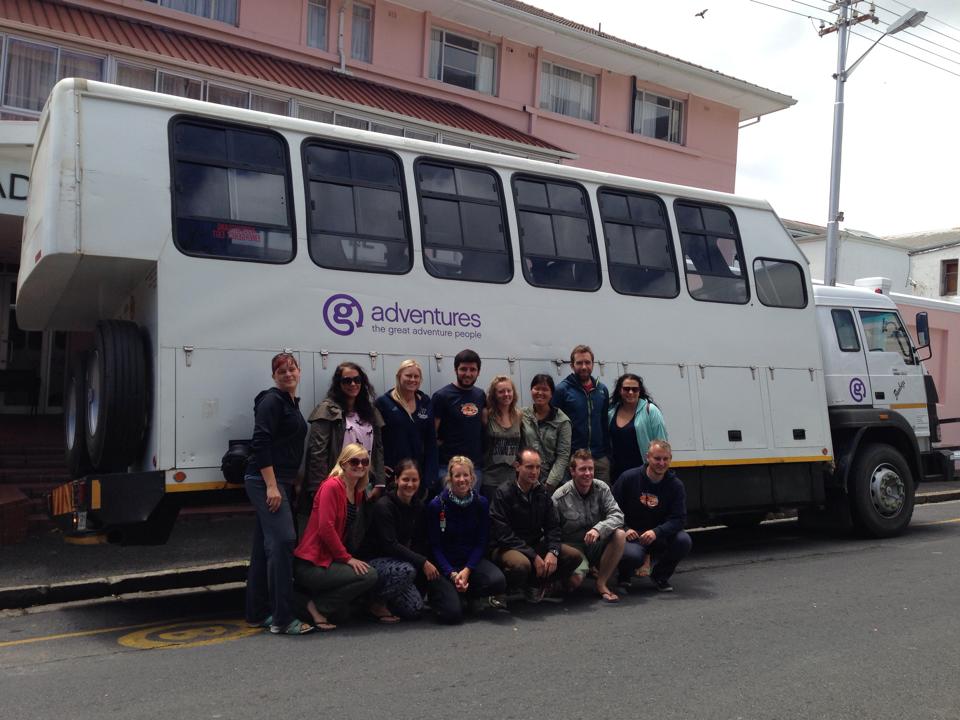
From Kenya to South Africa in an overlander.

From Kenya to South Africa in an overlander.

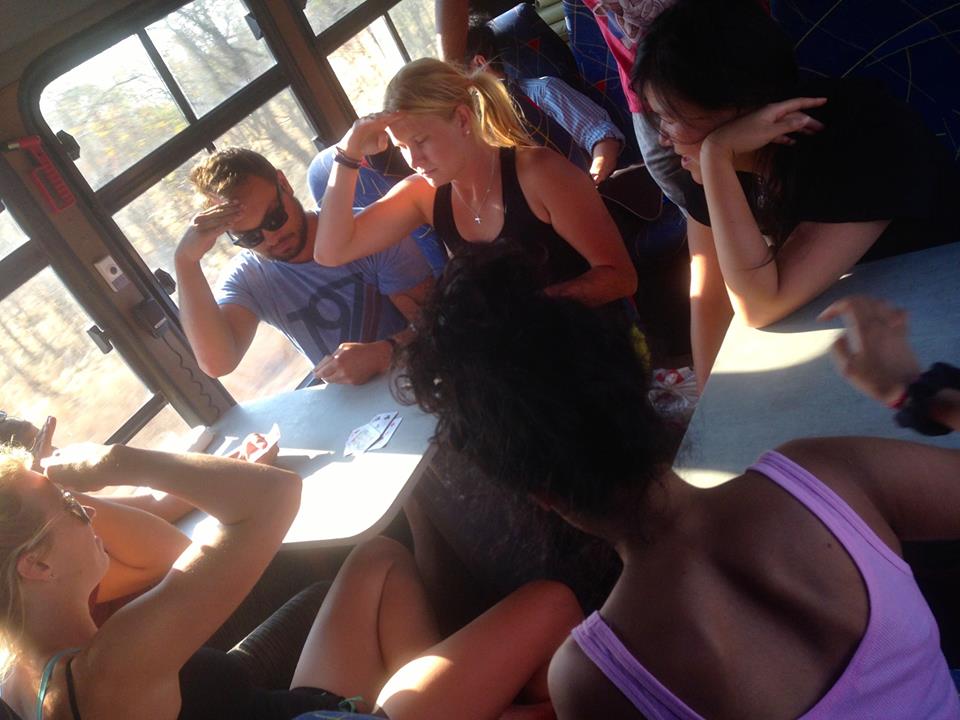
7.  No wifi, no air conditioning, no TV, no music.  Sounds like a nightmare, right?  WRONG!  Without all of these distractions you are able to/forced to make friends with your fellow overlanders.  Overlanding days be anywhere from 4 hours on the truck to, my personal record, 13 hours. Much like sitting around a campfire in the middle of the bush, overlanding brings out stories in people.  There are group tables towards the back of the overlanding trucks which travellers congregate around.  Stories of past adventures are shared, good books recommended, card games played, riddles solved, and jokes told.  If you’re more of an introvert there are spots to write in your journal, read, take in the passing scenery passing, or even catch a nap.  Introvert or Extrovert … you will make lifelong friends overlanding.

Passing time by playing cards

Passing time by playing cards

6. While overlanding you will develop a form of flexibility you didn’t know you had.  I’m talking about flexibility in terms of patience and compassion towards others and also literal physical flexibility.  Some days on an overlander are long.  It can be hot, the bumpy roads can exhaust your body, and you may not always be in the mood for yet another game of charades.  Although these situations bring out the worst in people, they also bring out the best in people.  Overlanders are a kind and generous breed and if not feeling well you can depend on someone to take the bumpy back for a few hours or lend you their headphones so you can zone out for a bit.  The second type of flexibility you will develop is magician-like contortion that you never knew you had.  Napping on seats that don’t recline during a rickety ride with twenty something other people on the truck should be a gymnastic event in the Olympics.  Personal space no longer exists and limbs fill every comfortable crevice on the overlander.  This sounds awful, but trust me, it’s all part of the fun.

Flexibility at its best.

Flexibility at its best.

5. While on an overlanding trip you see a progression of scenery that you would never get to see while flying from spot to spot.  Tourist destinations are beautiful and fun, but not always the most authentic.  While over landing you get to see the real country.  The local people going about their work, the landscape flowing from dry deserts and plains to soaring mountains in the sky.  You understand the infrastructure of the countries and see the progression as you pass from less developed areas to more developed areas.  And did I mention the wildlife!?  It is not uncommon to see a giraffe galloping across the field, or an elephant blocking the road, or a Masai man herding his cattle.  You simply don’t get the authenticity unless you overland.

IMG_3182IMG_3556

From plains to desert to mountains to sea.

IMG_3666

From plains to mountains to desert to sea.

4. This next reason is a little more logical; overlanders are safe.  Experienced truck drivers who know the routes like the back of their hand will take care of you.  Overlanders are elevated which not only makes for a better view of the passing countryside, but it means you never have to worry about anyone being able to reach up through the windows.  To board the overlander there is a set of retractable stairs that lead to a locking door.  If you are ever feeling uncomfortable or overwhelmed by the locals you can simply stay on the overlander.  Your belongings are also guaranteed to be safe because they are locked in compartments underneath the truck until you arrive at your camping destination for the night.  Overlanders have a specialized lock box for passports and other valuables for added safety.  I never once worried about my personal safety or my belongings.

Stopping for a quick lunch.

Stopping for a quick lunch.

3. As it turns out, overlanding is a traveling sub-culture.  At some of the campgrounds you have the chance to meet and interact with other overlanders.  Here you can share stories of the places you’ve visited, compare your precious overlanding trucks and gear, and sometimes even challenge each other to a game of football, flunky ball, or frisbee.  Once you’ve overlanded you join a type of elite travellers club that only other overlanders will understand.

The Overlanders Club

The Overlanders Club   

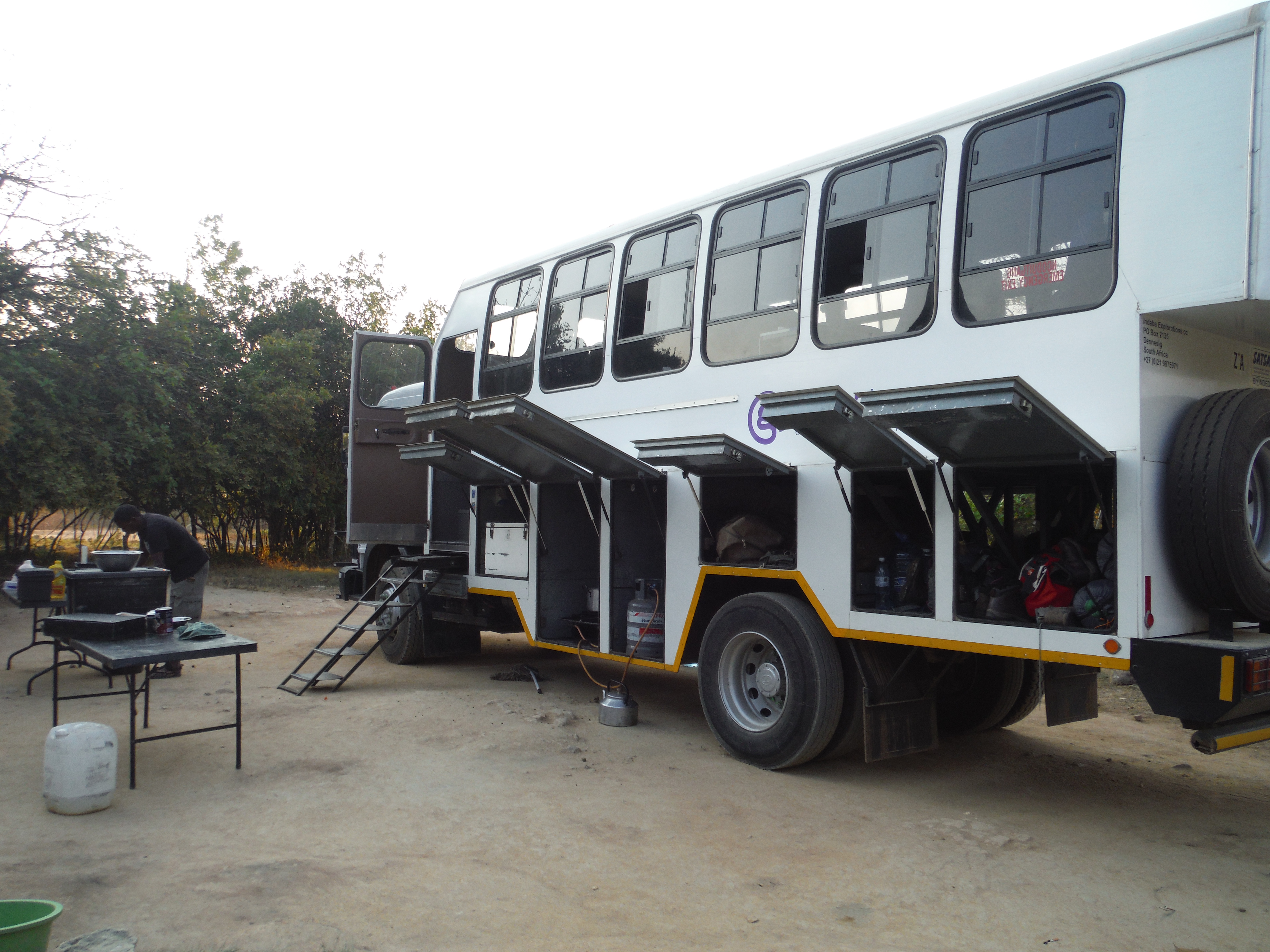
2. Overlanders are convenient and glorious inventions!  Each overland is equipped with spots to store luggage, compartments for the storage of tents (provided by the company), a mat pile for added comfort when sleeping on the ground, as well as a camping kitchen!  The stove is built into one of the compartments and all kitchen dishes needed are in the section beside.  It is the job of the overlanders to work as a team to set up an eating area (foldable chairs are found in yet another compartment), prep and cook food, and clean the dishes.  This may sound like a lot of responsibility but many hands make light work.  After breakfast in the morning travellers are responsible for breaking camp and loading up the supplied gear into the convenient storage spots of the overlander before heading out on the road again!

My tentmate and I.

My tentmate and I.

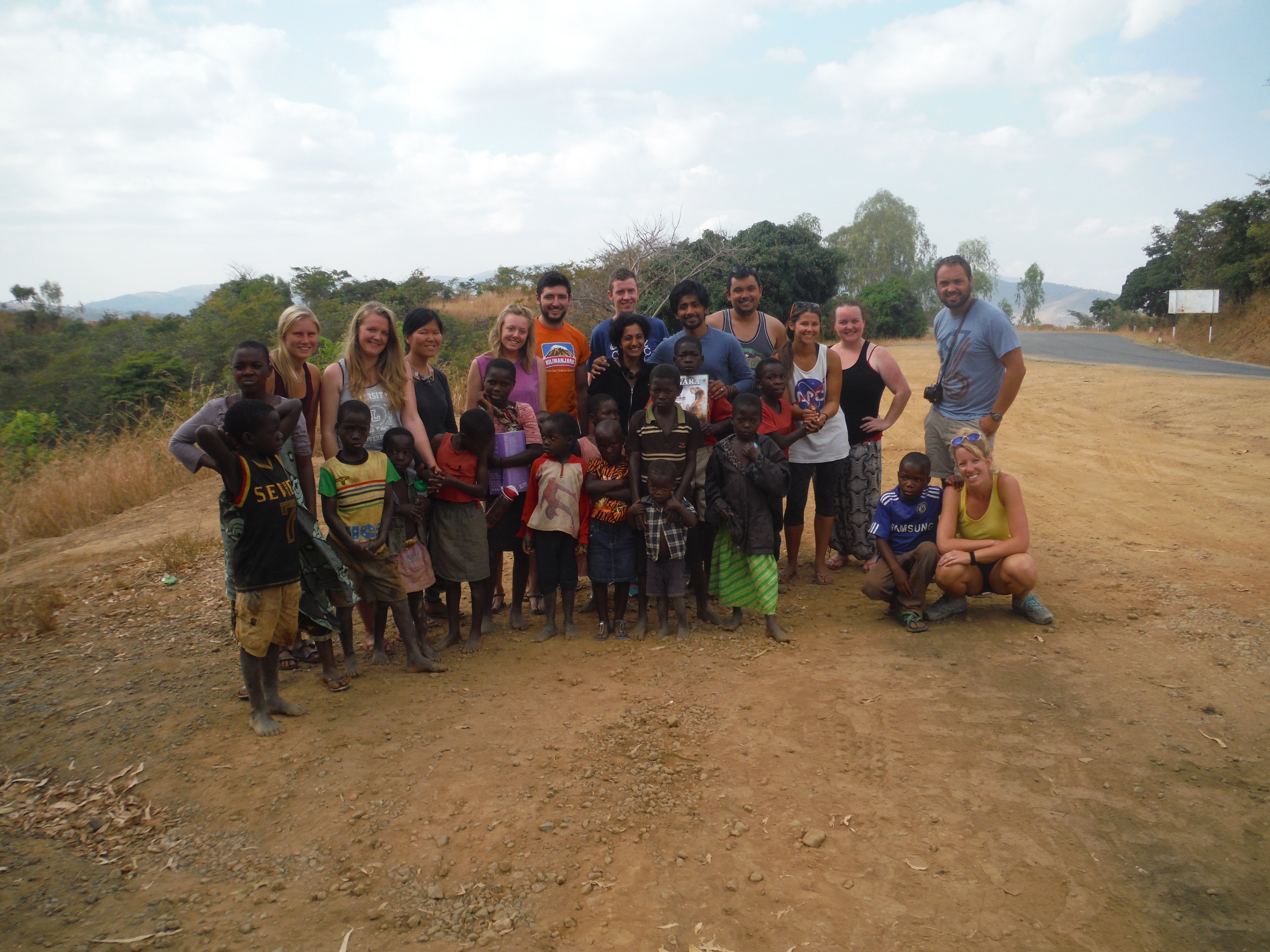
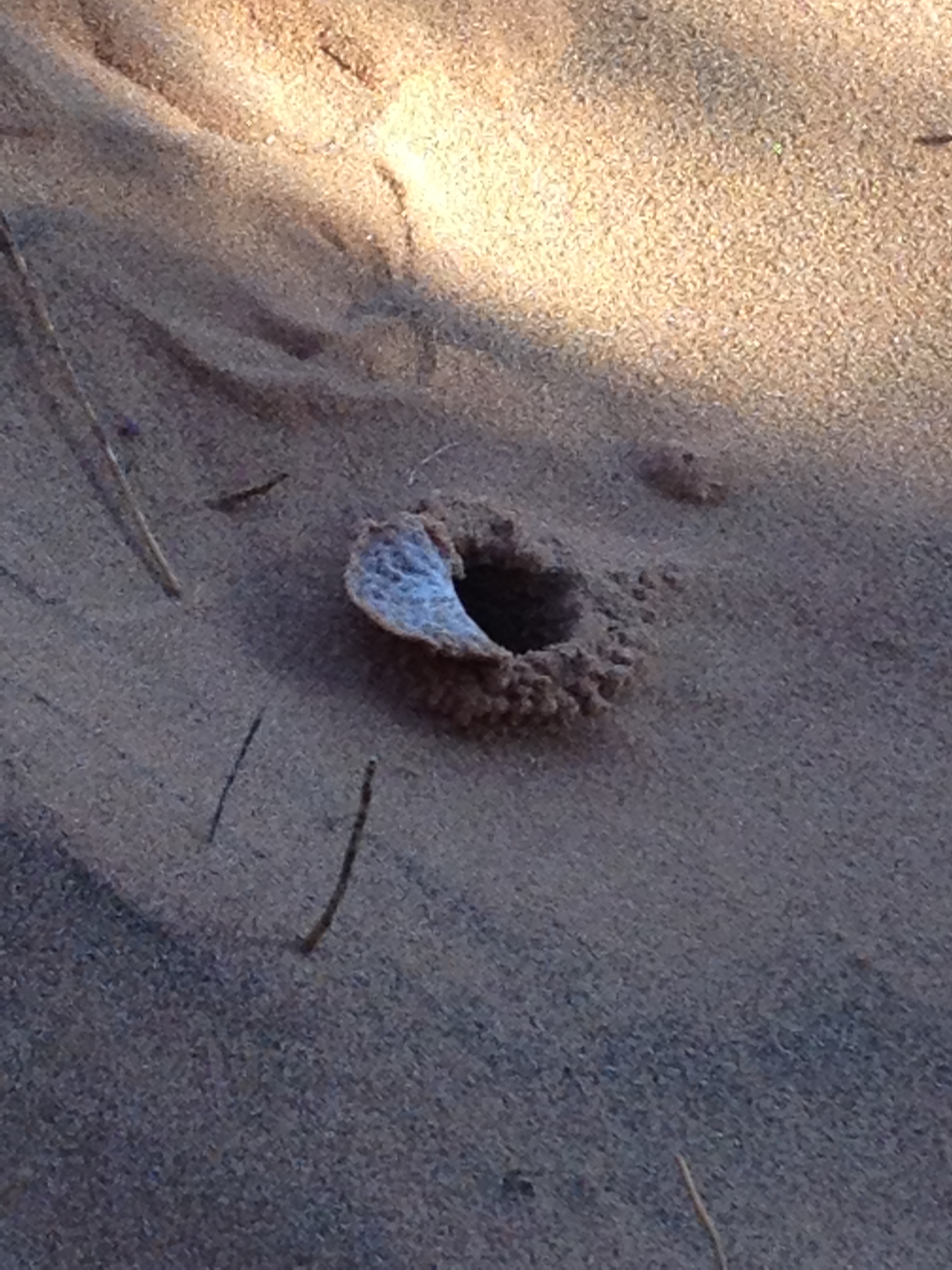
1. The last and most important reason to overland is spontaneity.  Having the flexibility to stop whenever you want to soak in the local culture is a gift unto its own.  In Malawi we stopped for a “bush toilet” and ended up spending an hour singing and playing with some local children who appeared from a town nearby.  In Tanzania we pulled off on the side of the road to take in the breathtaking view of the Serengeti and learn about ant lions in the sand.  Our road was blocked by a stubborn elephant for 15 minutes in Botswana, but we marvelled at it’s majestic demeanour.  In Namibia we played football with some kids in a parking lot then smiled inside at the screams of delight they emitted when we gave them our ball.  It’s the things that are not in the itinerary that make overlanding the special type of travel that it is.

DSCF2146 DSCF2019

Although difficult at times, overlanding is a must for the adventurous traveller.  Take it from me, I spent 40 days overlanding Eastern and Southern Africa, and I would do it again in a heartbeat.

DSCF2095 IMG_3594

Indonesia Part 3 – Java

Backpacking through Indonesia was one of the most difficult countries I have ever travelled. Geographically, Indonesia is very long and skinny and dispersed into many different islands. There are lots of tours offering to take travelers to different parts of Indonesia but upon closer inspection and research these companies are often sketchy, unprofessional, and in this Hobo’s opinion, overpriced! We had a general idea of the places we wanted to visit in Indonesia but it would have been impossible to plan out the details of our trip from our laptops in Canada. There simply isn’t enough good information online.

Two and a half weeks into Indonesia we’d been yearning to make it to the mainland but kept hitting frustrating roadblocks with the logistics of it. Finally, Hobo M and I decided to stop trying to plan and just go for it! We booked a ticket with Garuda Indonesia Air this time, ($10 more for a better baggage weight, food, and it didn’t sound like we were riding a whipper snipper through the air) and headed off to Surabaya in the province of Java.

Farms on the main land.

Farms on the main land.

We got to the tiny airport and picked up our bag which had been rummaged through. Jokes on them, my clothes reeked of dirty hippie and I carry anything of value in my small pack which stays strapped to my body. Our destination goal upon arrival was the small city of Malong. Had we not done some research before heading here, we would have been completely lost before we even got out of the airport. Fortunately, after sifting through hundreds of blogs and websites someone had posted information about getting from Surabaya Airport to Malong. It’s amazing that we trusted the information some random online person posted to take us to where we needed to go, but overall I think the travel community is pretty trustworthy. Also, we had no other information to go off of. I’ll pay it forward and repeat the information:

We ventured outside the busy airport avoiding the aggressive touts for a taxi and scanned the area for the Damri shuttle bus. We were on this bus for approximately one hour as it weaved through the busy traffic to the bus station. Now, bus stations are sketchy enough in developed countries but I can guarantee that those bus stations are first class limo services compared to the stations of developing countries. Trying to navigate signs in a foreign language while having people yell at you to get on their bus to who-knows-where, while carrying your luggage, and really having to pee is a complete nightmare. I would have taken a photo of the experience but I was afraid to take my camera out. We chose to spend the extra 10,000 rupiah ($1) to go with the “upscale” Patas bus to Malong. There is no ticket booth, you simply wander until you stumble upon the correct bus, toss your backpack underneath and pray that no one takes it, then get squished into a “seat”. We were some of the last ones to board the bus so Hobo M got stuck in a back seat which was supposed be for three people but had evolved to seating 6, one of which was a rather large, snoring man. After about 20 minutes Hobo M had enough of her makeshift seat and to the confused looks of the locals took up a lounging position on the bus floor. 3 hours later, just when we were convinced we had gotten on the wrong bus we pulled into the equally sketchy Malong bus station. From here, it was a quick cab ride to our final destination, Helios Hotel.

Hobo M opting to ride on the bus floor.

Hobo M opting to ride on the bus floor.

I had only spent 5 hours in Java, but one thing was for certain; this was real Indonesia. The infrastructure was older and more basic, the roads were clogged with honking scooters and cars everywhere, and the pollution was atrocious.

This man made his living by taking it upon himself to conduct traffic.  Tour company cars would slip him $ as they passed to make sure they always get through the intersection first.

This man made his living by taking it upon himself to conduct traffic. Tour company cars would slip him $ as they passed to make sure they always get through the intersection first.

Our first goal after arriving in Malong was to find food. This proved to be much more difficult than we had anticipated. We followed the worst directions in history and found everywhere but the eating district. 2.5 hours and a few near meltdowns later, we stumbled upon a McDonalds of all things. I’m ashamed to admit that in the heart of true Indonesian culture I succumbed to eating dirty, greasy McDonalds. But I was starving and oh, so HANGRY (Anger caused by severe hunger). Upon asking for directions we also came upon a tour to take us to Mount Bromo. Perhaps it was the state of starvation and exhaustion talking; the price was right so we spontaneously booked it without doing any research.

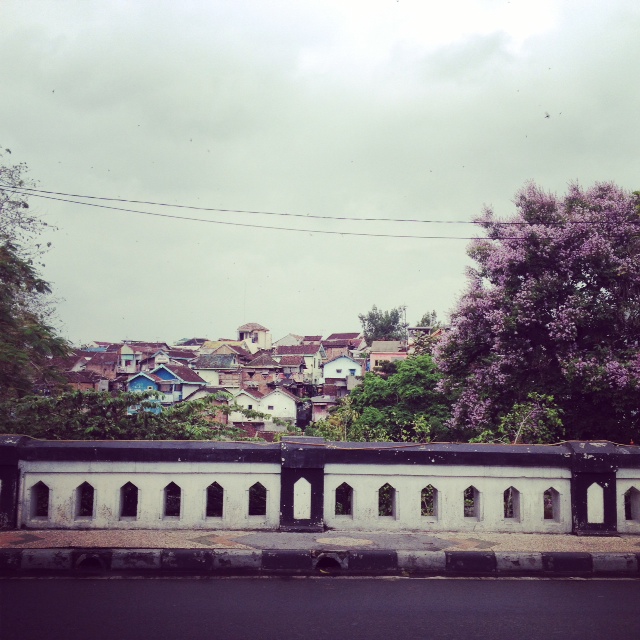
Malong

Malong

The next morning, or should I say that evening we woke up for our midnight pickup. The 5 people plus the driver crammed into a rickety red jeep. We drove through the darkness up the twisting mountain roads which were about as sketchy as the jeep we were driving in. There were definitely no guard rails and the muddy roads were spattered with broken cement slabs and rocks. It was amazing that our driver was able to navigate the route in the dark, especially  when we got to the base of Mount Bromo and all the other rusty jeeps were racing each other through the open grass fields.
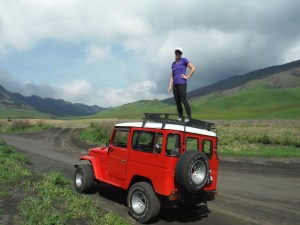
Our chariot for the day.

Our chariot for the day.

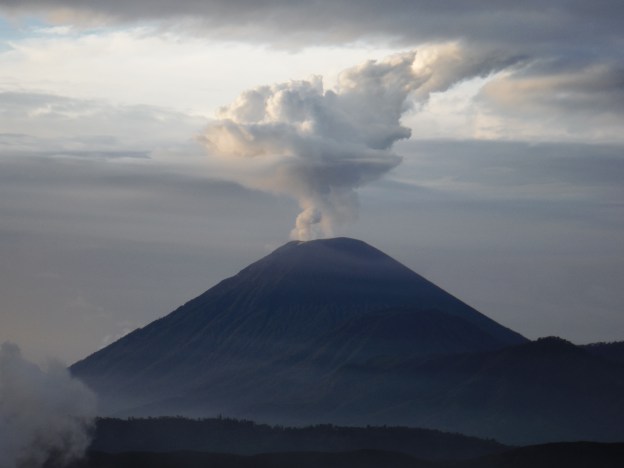
We got to the viewing area very early: 3:00 in the morning to be exact. There was really no place to wander and we couldn’t see anything so Hobo M and I tried to sleep on a cold bench for a while. I’m not going to sugar coat it, we were very unimpressed with this part of the tour. The sun didn’t really rise over Mount Bromo in a romantic, awe-inspiring way one might imagine … it just sort of got light. There were tourists EVERYWHERE and the endless array of selfie sticks were being waved around like magician wands. It wasn’t calm and peaceful, people were shouting in all languages trying to get their friend to take a picture of them. Eventually after the crowds started dispersing Hobo M and I wandered to the edge for a better view. The scenery was magnificent when the view wasn’t blocked by hordes of other tourists. We snapped a few photos and left, slightly disappointed that we had lost half our night’s sleep over the “sunrise” event.

Sunrise view of Mount Bromo.

Sunrise view of Mount Bromo.

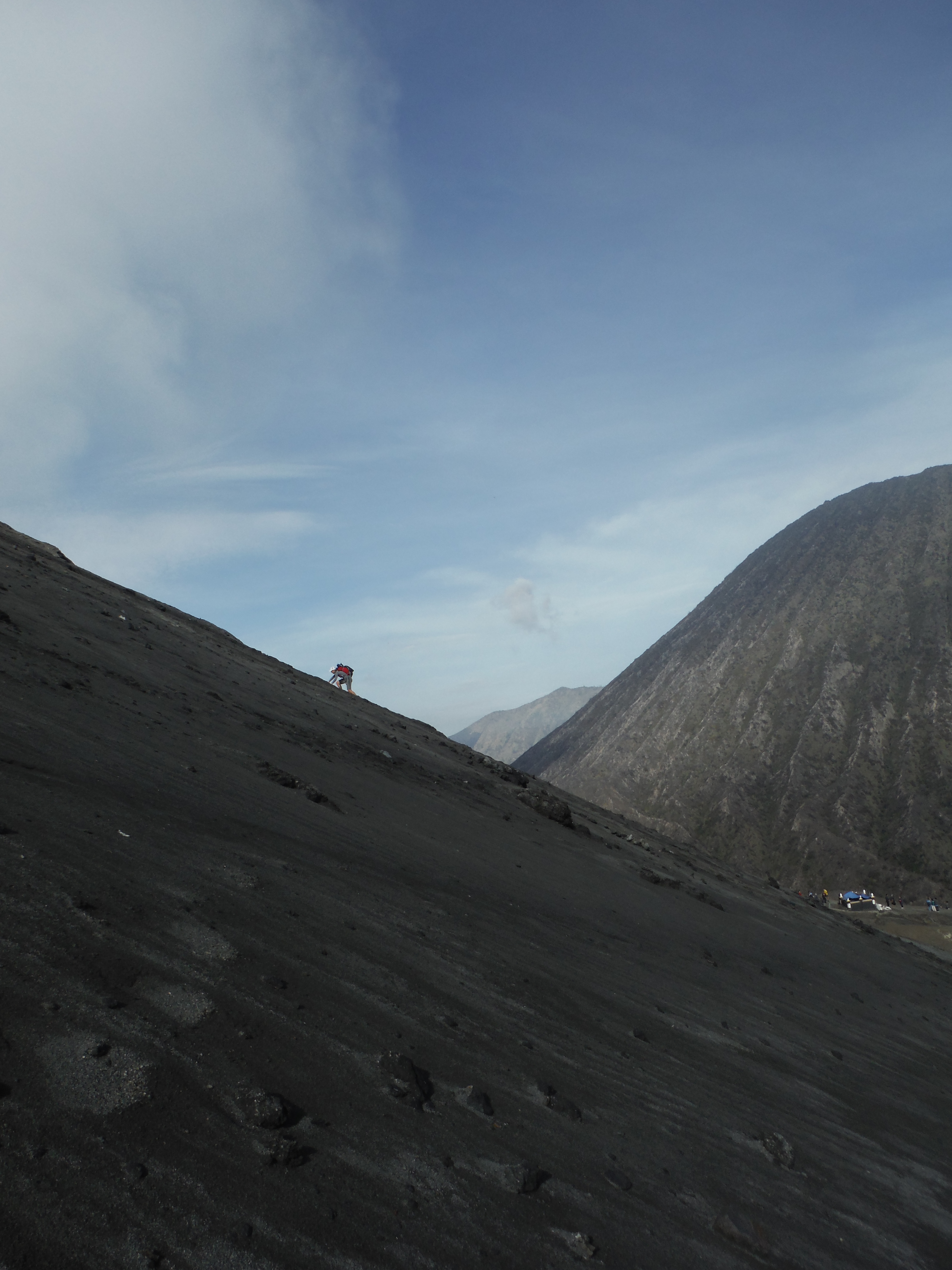
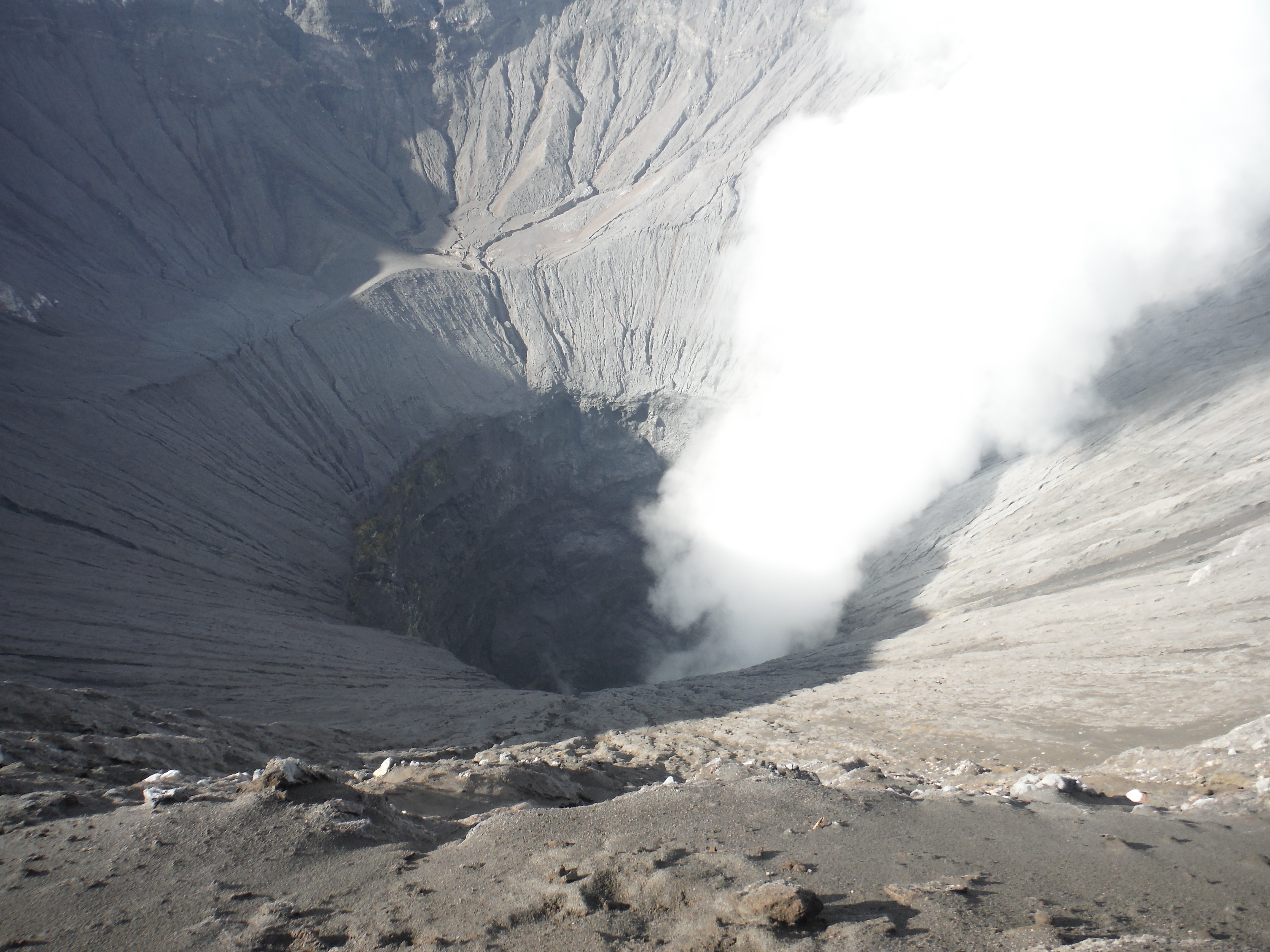
To our surprise, the day did get better though. We drove down a different path of winding roads and ended up at the base of Mount Bromo. Our guide suddenly stopped the jeep, pointed to the mountain, and said, “Walk, 1 hour”. So we did as we were told and wandered to the mountain and started strolling. There was a set of stairs but it was full of tourists so we went to the secluded side of the mountain and climbed up the black volcanic sand. We weren’t sure what would be at the top but to our astonishment there was a ledge about 2 meters wide and then a plummeting drop down into a smoking crater. It was a beautiful phenomenon; we were standing on the edge of a smoking volcano!
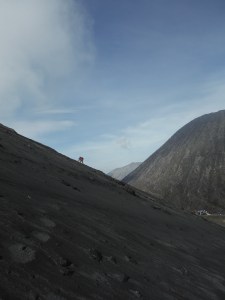
Hobo M hiking through the sand.
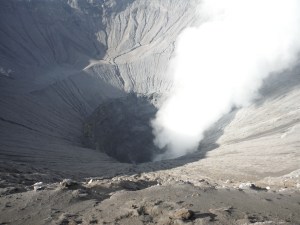
Hobo M hiking through the sand.

DSCF1169

For the rest of the day we stopped at various scenic spots at the base of the volcanoes to admire the scenery before fighting the congested, dirty traffic back to the place we were staying.
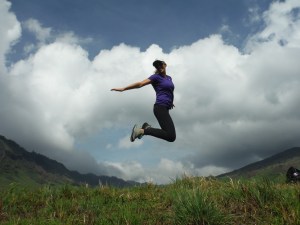
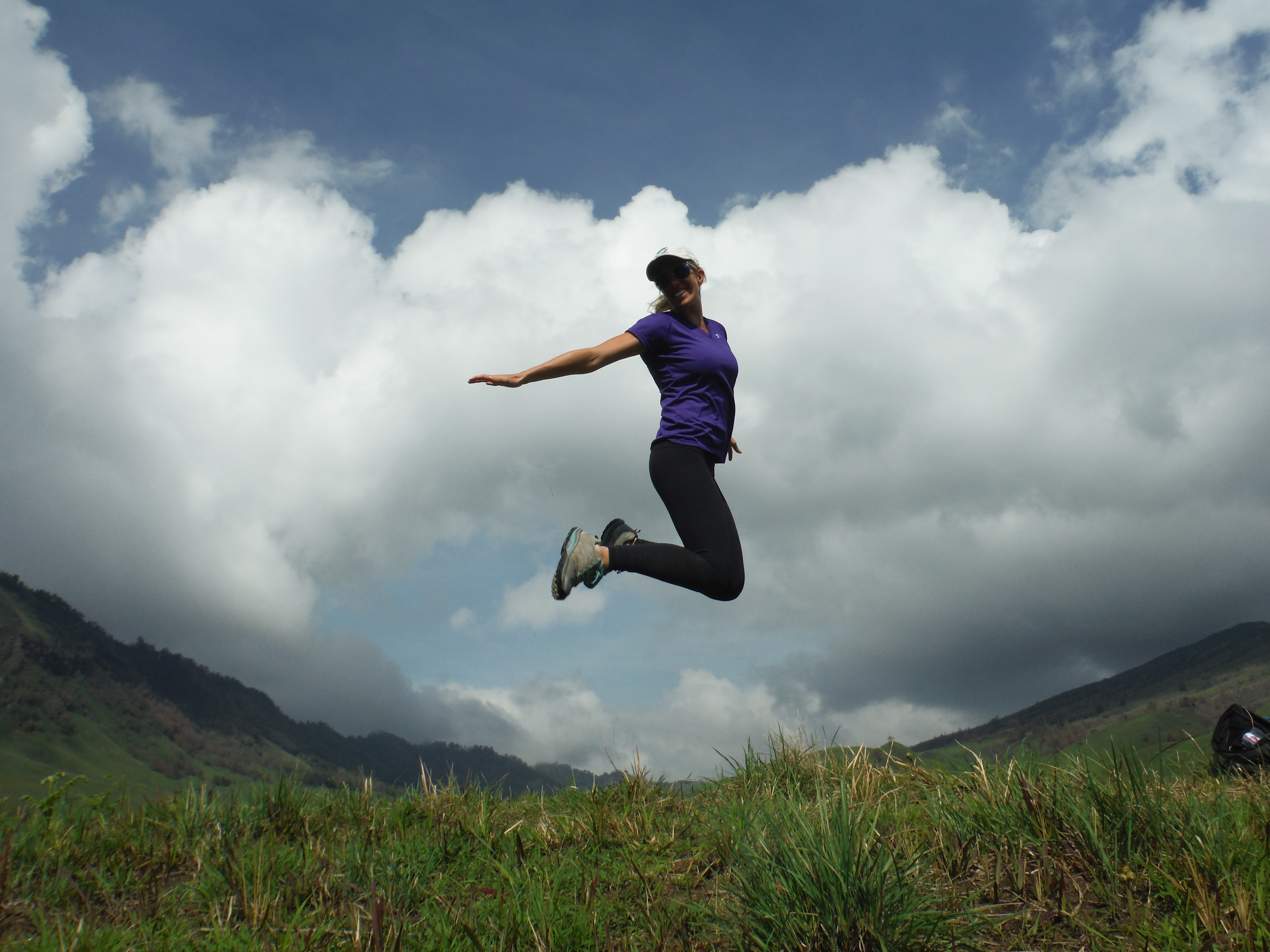
Classic jumping picture.

Classic jumping picture.

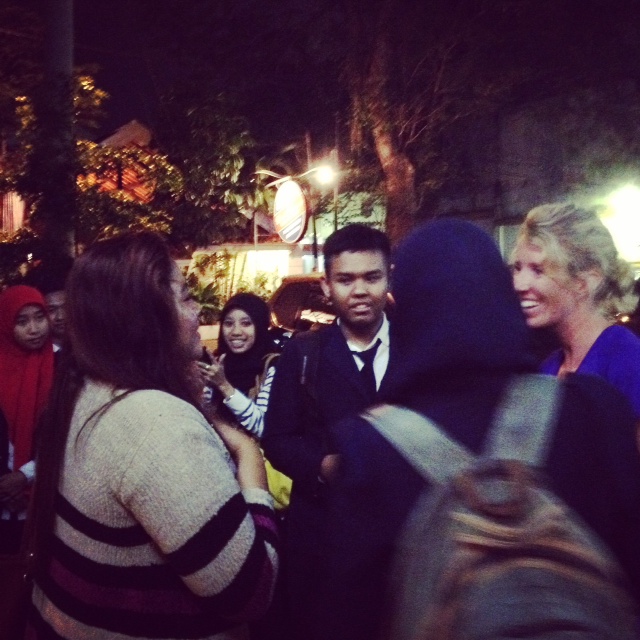
After a really solid nap and shower we made a plan for the next few days and were much more successful in finding a restaurant for dinner. Outside the restaurant some teenage locals approached and told us they, “Need to talk to, uh, people like you for our English project.” Due to Hobo M’s job, she cannot be videotaped but as a teacher I felt compelled (and secretly a nerdy excitement) to assist these students. We must have been the only Westerners in town because once I agreed to help the students started calling all their friends and suddenly teenagers everywhere were showing up on scooters looking for the one Westerner who was willing to assist with their project. Basically, the project was for their English Conversation class so they just needed to be videotaped talking in English to someone who’s native language is English. It was actually lots of fun and by the end they had me proudly singing Oh Canada. Perhaps I’ll be an Indonesian youtube sensation in the near future, haha.
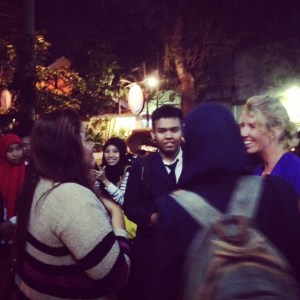
Helping the locals with their English projects.

Helping the locals with their English projects.

The following morning we began the next leg of our journey. We were met at Helios Hotel by Mr. Dodo, who we would soon find out, would be the best tour guide we ever had. It was a long day of driving to our destination but we were in a comfy SUV instead of a falling apart jeep so we didn’t mind. 7 hours later with minimal stops we pulled into a secluded mountain town to hunker down at our homestay for the evening. The sleeping arrangements were as nice as they could have been for a town in a developing country kilometers away from anything else. And we were only slept there for a few hours anyway because we had another early wake up. Mr. Dodo fawned over us in the wee hours of the morning making sure we had some coffee and carefully presenting us with our packed breakfasts and bottles of water. It was an hour drive to Ijen Crater where we were met by a 17 year old boy, Rossit, who would be our guide. We were a little skeptical at first but this boy’s family had lived in the Ijen Village for years and his Dad was a miner and then a tour guide. He had a strong understanding of trail etiquette and had many more safety precautions put in place than all of the other guides we saw.

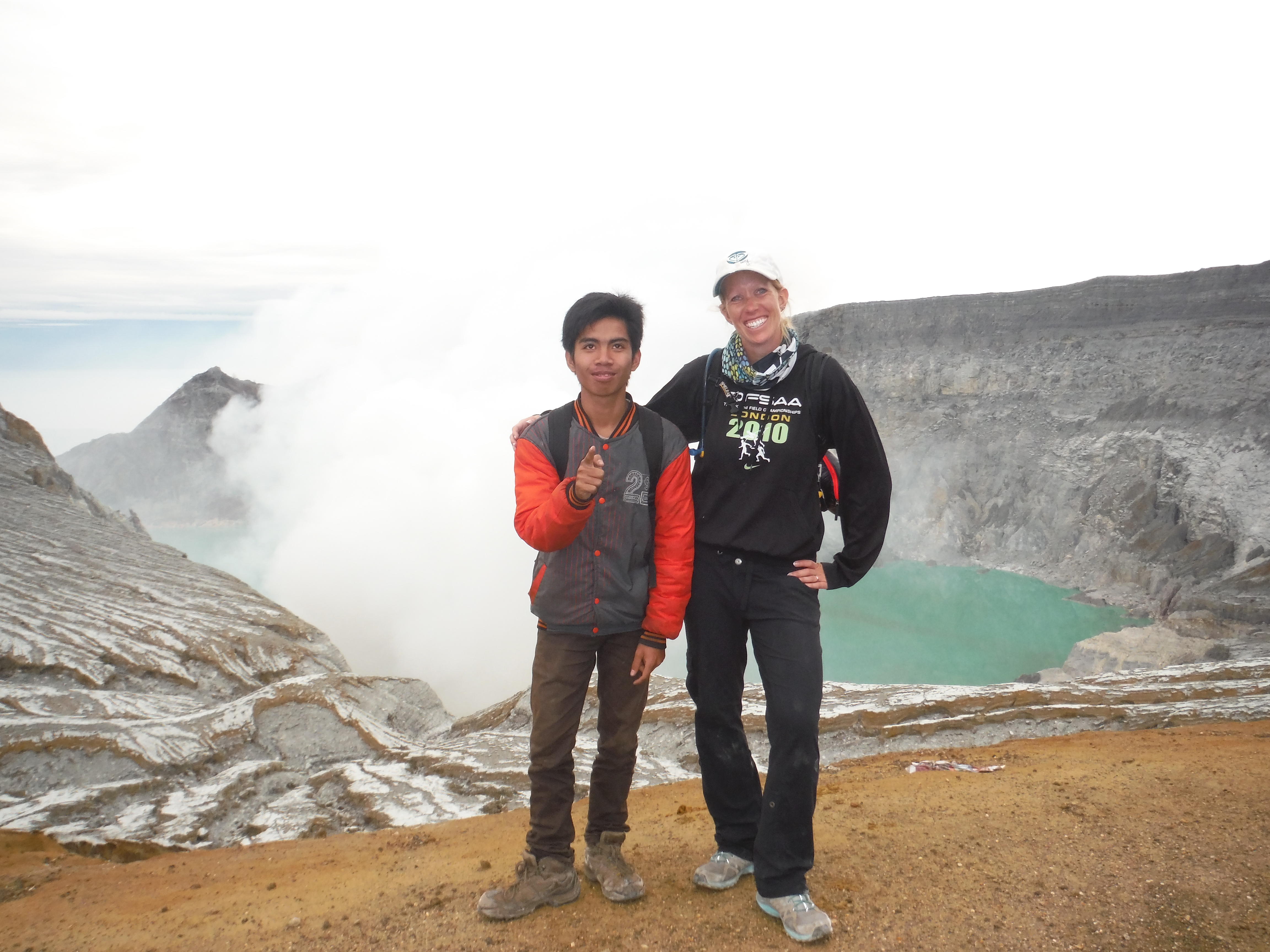
Our guide, Rossit.

Our guide, Rossit.

We started the upward hike that lasted a few hours. When we got near the top Rossit stopped us and gave us gas masks. We laughed because we didn’t see any other tourists wearing full out breathing apparatus but we took the masks anyway. We think the masks were Mr. Dodo’s doing.

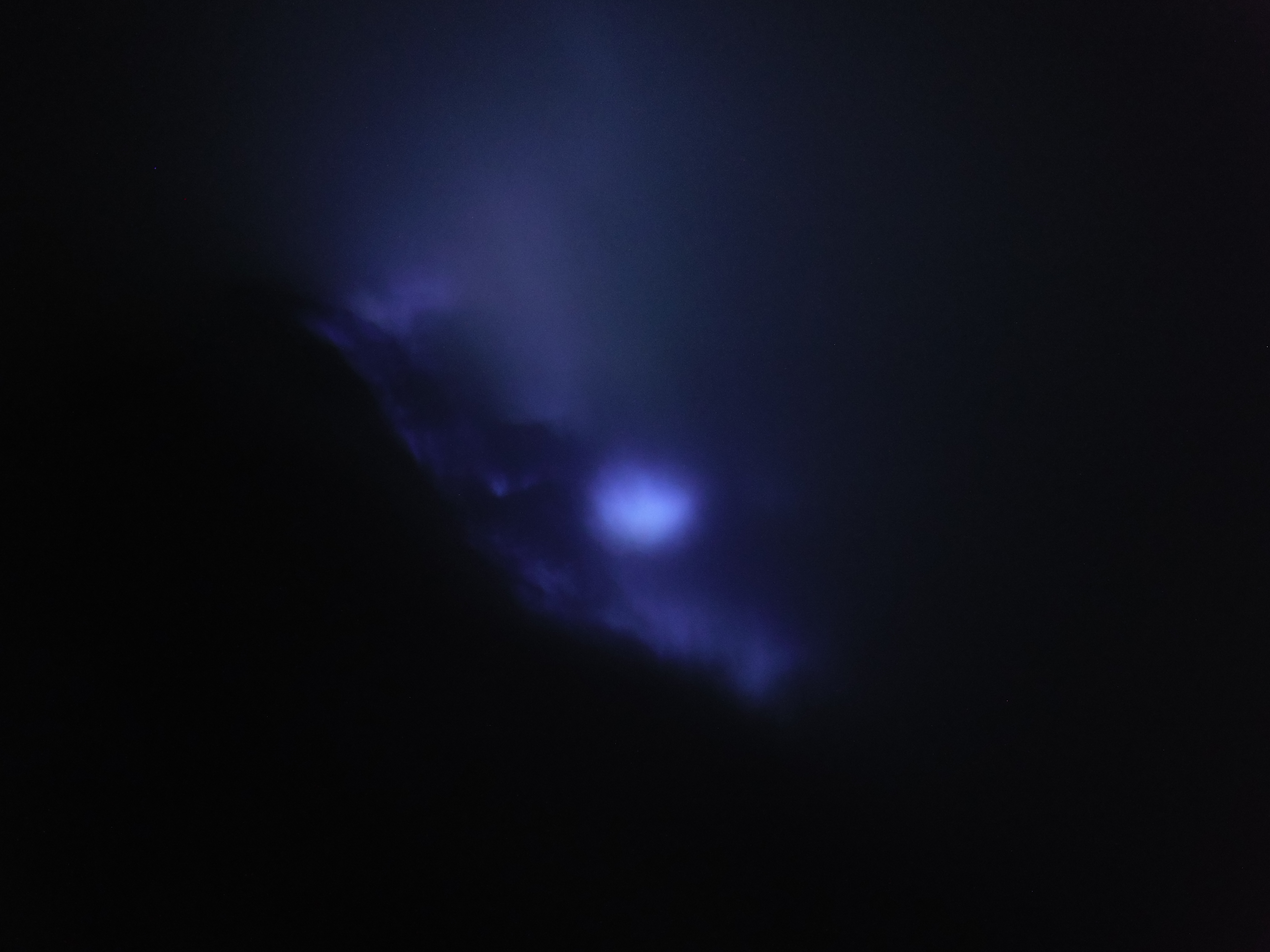
When we stood on the edge of the crater looking in, it was like we were on a different planet. There was smoke pluming and billowing into the night sky, the volcanic rocks looked like they belonged on the moon, and there was blue flames at the bottom of the crater. Blue Flames! They were BIG and a brilliant electric bright blue. I had never seen anything like this and probably never will again in my life. Unfortunately the photos didn’t turn out very well because it was dark and the wind would shift the smoke quickly, blocking the view of the flame. The landscape will be forever etched in my memory though.

My attempt to capture the blue flames in a photo.

My attempt to capture the blue flames in a photo.

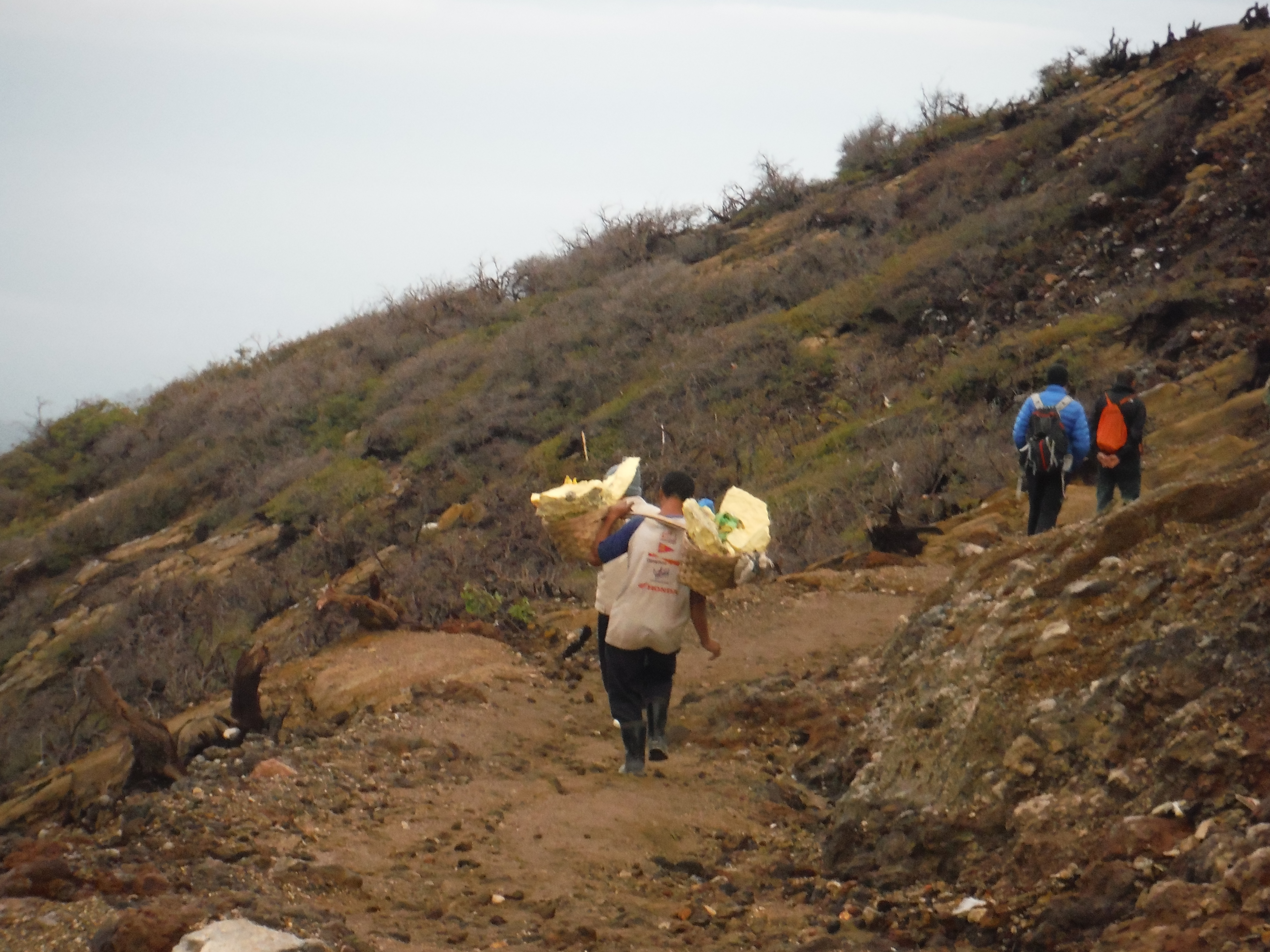
We took care climbing down into the crater. Rossit was very respectful of the miners who carry minimum 100 lb. loads of sulphite in woven baskets on their shoulders up out of the crater and then down the side of the mountain to town. Both Hobo M and I tried to lift one of their baskets and failed miserably. They get paid the equivalent of 90 cents for a load of sulphite. The miners are SO strong and work for virtually nothing. I felt admiration for them but also sympathy.
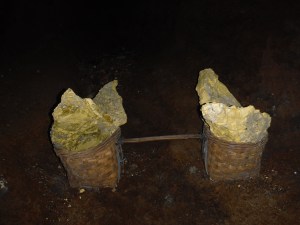
A load of sulphite.

A load of sulphite.

Avoiding the miners and allowing them to pass on the narrow path, we eventually made it to the bottom of the crater. We could see the bursting blue flames up close and admire how they danced across the sulphite. Rossit, being Muslim, took a few minute to go pray and then returned by our side. Suddenly Rossit perked up and tilted his head towards the sky, quickly shifting his view from left to right. He grabbed my hand and yelled, “Danger! Danger!” We weren’t sure if he was being overly dramatic or serious but we found out soon enough when a huge sulpher smoke cloud forcefully blew our way. We climbed as quickly as we could and I was so grateful that I had worn my silly gas mask. My eyes were burning and watering but I scrambled after Rossit’s path with Hobo M in tow. We finally reached an area where the smoke couldn’t get us and listened to the coughing and sputtering of the other tourists trying to retreat to safety as well.
Imagine this coming at you!?

Imagine this coming at you!?

After catching our breath, we trekked to the top of the crater to enjoy the stunning view that the crater had to offer now that the sun had risen. There was a striking turquoise lake in the bottom framed by the soft billowing of the sulphite smoke beside it. The blue flames were no longer visible, only the night hikers got to see them. The walk down the mountain was serene and peaceful.

The hike down amongst the miners.

The hike down amongst the miners.

Mr. Dodo was waiting for us at the bottom of the trek with tea and cookies. Once our energy was replenished we made the 2 hour drive to the harbor. Mr. Dodo purchased our ferry tickets for us, then walked us in directing us from a distance to make sure we got on the right boat. A true tour guide, right to the bitter end!

Back in Bali, Hobo M bartered hard for a taxi and we drove for 4 hours to the town of Seminyak, which is a few kilometers down the beach from Kuta (where we had been staying previously). We had scheduled in 3 days of rest, relaxation, and of course, surfing before we had to hop on our flights back to cold Canada. There was plenty of rest and relaxation, but unfortunately the surfing conditions had changed drastically while we were on the main land. The rainy season had come, which meant that the Ocean currents had shifted. This resulted in all of the garbage thrown in the Ocean near Java (on the mainland) was being washed up on the beach in Bali. Within a week, this beach had gone from a pristine, white sand, surfer’s paradise to a disappointing dump. There was so much garbage washed ashore that beach front hotels had to clean it up with rakes, as if they were raking autumn leaves every day. We tried surfing in the garbage water one day, but feeling pieces of god-knows-what brushing by your legs and arms was gross.

Garbage Beach.

Garbage Beach.

We spent our last few days walking the beach, doing some Christmas shopping, relaxing by our hotel pool, eating delicious meals in bean bag chairs on the beach, and getting spa treatments such as a haircut and style, and fingernails and toenails painted for $12.50 total. It was a lovely way to end 100 days on the road.
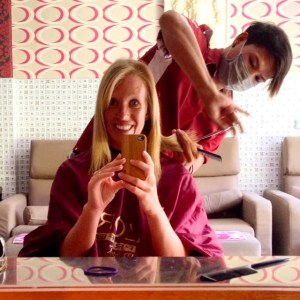
My hair stylist kept saying, "I make you look like Movie Star!"

My hair stylist kept saying, “I make you look like Movie Star!”

I wish I could say my flights had gone as smoothly as my last few days of travel but they did not. My flight to Seoul, South Korea was delayed. They came and found me on the plane and moved me up to the front to give me a fighting chance to make my connection back to Canada. I told myself this was excellent training for The Amazing Race Canada and with no shame I full out sprinted through the Incheon Airport. I was determined to get home to Hubby Hobo! I arrived at the gate as the last people were boarding and miraculously made my connection. Unfortunately, my luggage did not make it, but was delivered to me a few days later. Mother Nature gave me a nice welcome home by dumping the biggest winter snowstorm we’ve had this year on me when I arrived. “Welcome Home” – Love, Canada.

It's chilly but good to be home.

It’s chilly, but good to be home.

Overall, my 100 days of travel were some of the most fascinating, challenging, fun, and craziest days of my life. I learned that I am much stronger and more capable than I ever gave myself credit for. I learned that you don’t need many material possessions to be happy. I learned that the human race, as a whole, are really good people. And I learned just how BIG our planet is. There are so many places to go, things to learn, cultures to experience, and people to meet. You just need to make the effort to break outside of your bubble and see all that the world has to offer!

"Not all those who wander are lost."

“Not all those who wander are lost.”

–> A special thank you to Hubby Hobo for fully supporting me in my crazy dreams of touring. I know you sacrificed much more than I did to make this happen. I am so lucky to have had the adventure of a life time and be able to come home to you patiently waiting for me at the airport with a supportive smile on your face. I Love You more than all the sand in the Namib Desert! XOXO Lots of Love, Your ridiculous, wandering wife – The High Class Hobo

Indonesia Part 2 – Lombok and Gili

Upon our return from Ubud, we spent a few days at a camp on the beach continuing our quest to learn to surf as well as doing some of the touristy things that Bali had to offer. One of the tourist attractions was amazing and another was a bit of a disappointment.

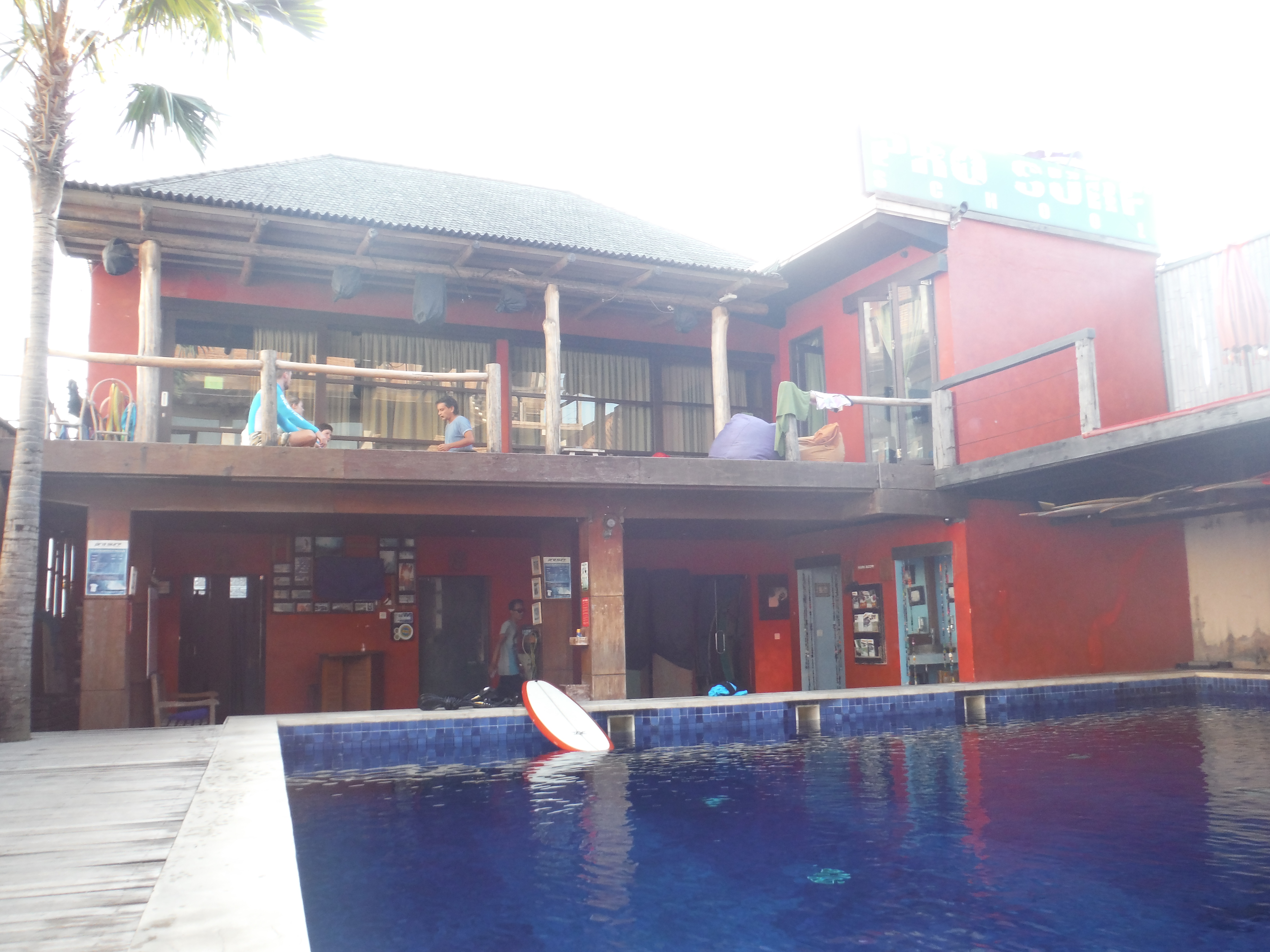
Back to Pro Surf in Kuta Beach

Back to Pro Surf in Kuta Beach

Let’s start with the enjoyable attraction. Bali has a zoo, a really nice zoo! Hobo L and Hobo M are huge animal lovers we booked, “A Night at the Zoo.” … pretty self explanatory. We arrived around 5 and the first thing we did was visit a few animals that weren’t nocturnal. This included a giant, ugly clawed bird and a group of gorgeous elephants you could feed.

Evil bird plotting his escape.

Evil bird plotting his escape.

Can you tell I'm not an animal person?

Can you tell I’m not an animal person?

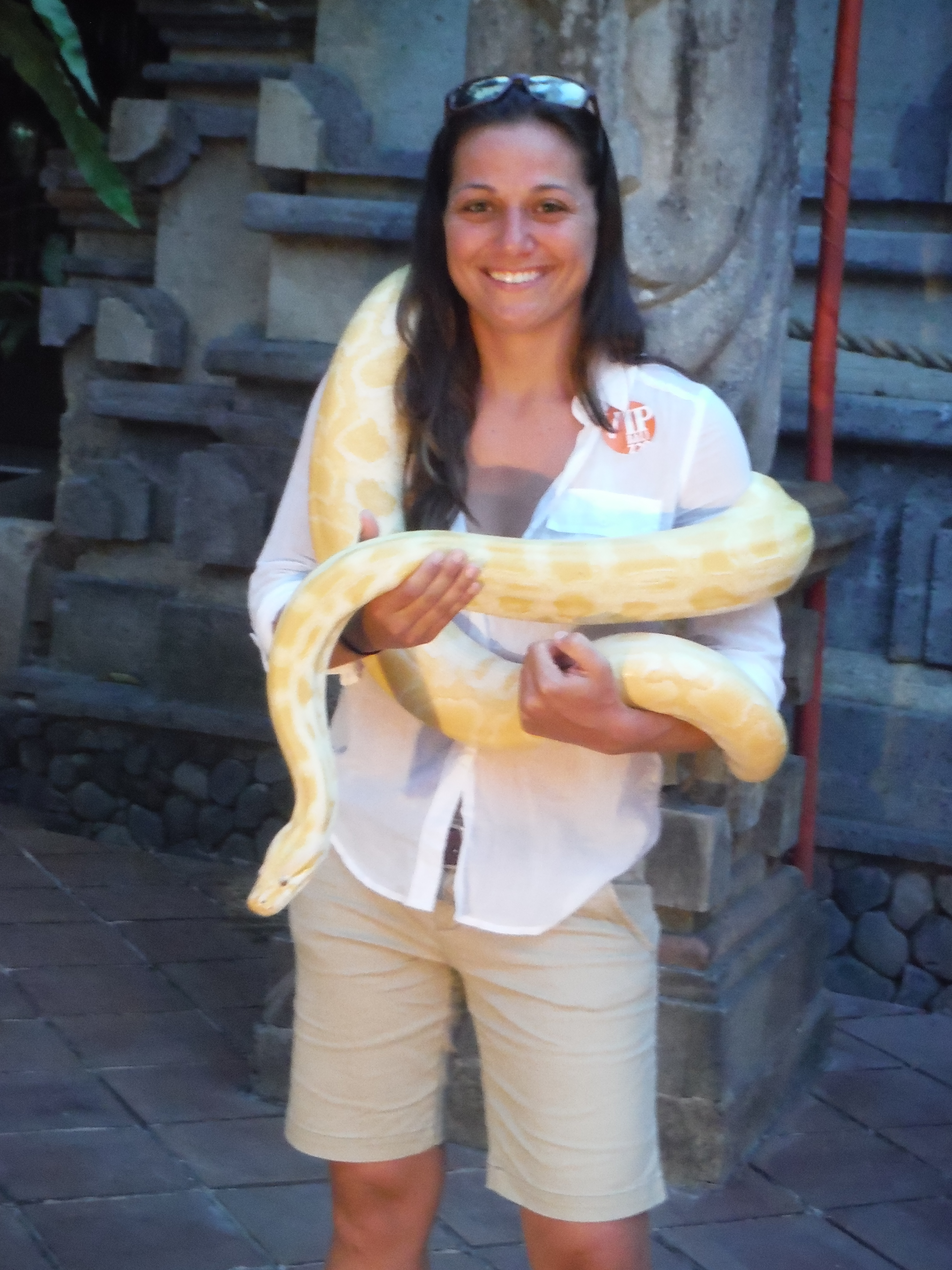
There is usually a group of orangutans but they were ironically on Christmas display at the BeachWalk mall in Kuta, a 10 minute walk from our surf camp. We also got the chance to hold/have awkwardly perched on us a yellow boa constrictor and a bearcat.

My "Get this Thing off me" smile

My “Get this Thing off me” smile

Hobo M braving the boa.

Hobo M braving the boa.

After ordering our choices for dinner we went on a walking night safari which was pretty cool because we saw all the nocturnal animals awake and active. We got to feed the monkeys and the Bali deer and see lots of other animals that are native to both Indonesia and surrounding Asian countries. After a few months of very basic meals, dinner was a highlight. Fresh arugala salad (that had to have been washed because I digested it properly!), a large steak dinner, and lemon tart pie for dessert. All topped off with an ice cold BinTang beer. While eating we could gaze at the nearby lions in their open concept cage or laugh at the trained porcupine that was running around by our feet. As our after dinner entertainment we witnessed a traditional dance followed by fire dancing! The whole event was very professional and was money well spent.

Mythological Indonesian Dance.

Mythological Indonesian Dance.

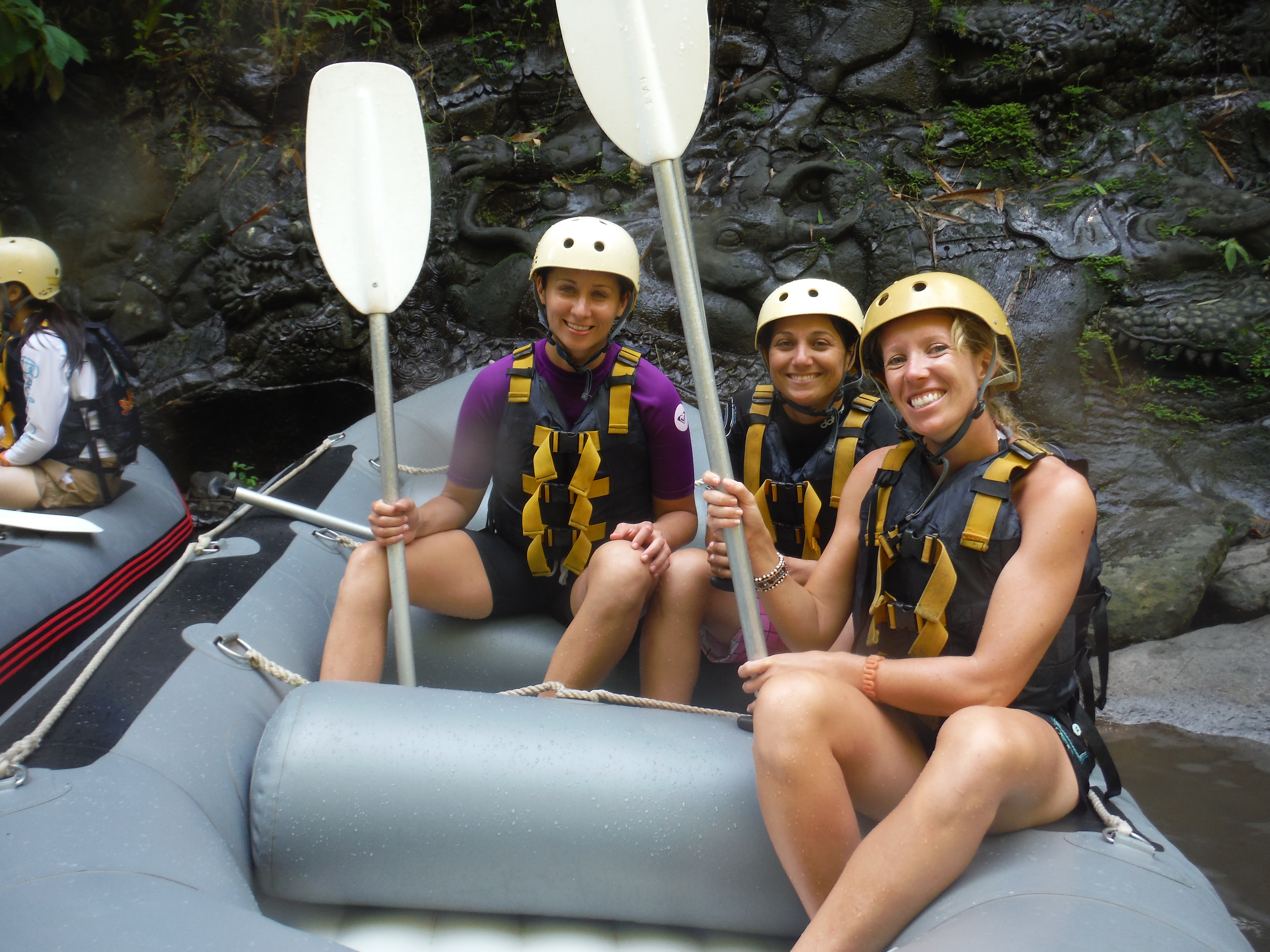
The next day was a bit of a disappointment. We went “White Water Rafting” down the Ayung River. I was really excited for this because I absolutely LOVE WhiteWater Rafting! I was aware that after rafting some of the best rapids in the world in Zambia, I might find these a little tame, but the Ayung River rafting was an insult to White Water Rafting. “Babbling Brook Float” would have been a more accurate name. Upon arrival we were given helmets and life jackets (not that we needed them) and essentially floated down a creek with a few wavy patches. This rafting was so pathetic that at points the bottom of our raft would actually get stuck on the rocks below.   These were Class .5 rapids at the most.

Good friends make any situation better.  :)

Good friends make any situation better. 🙂

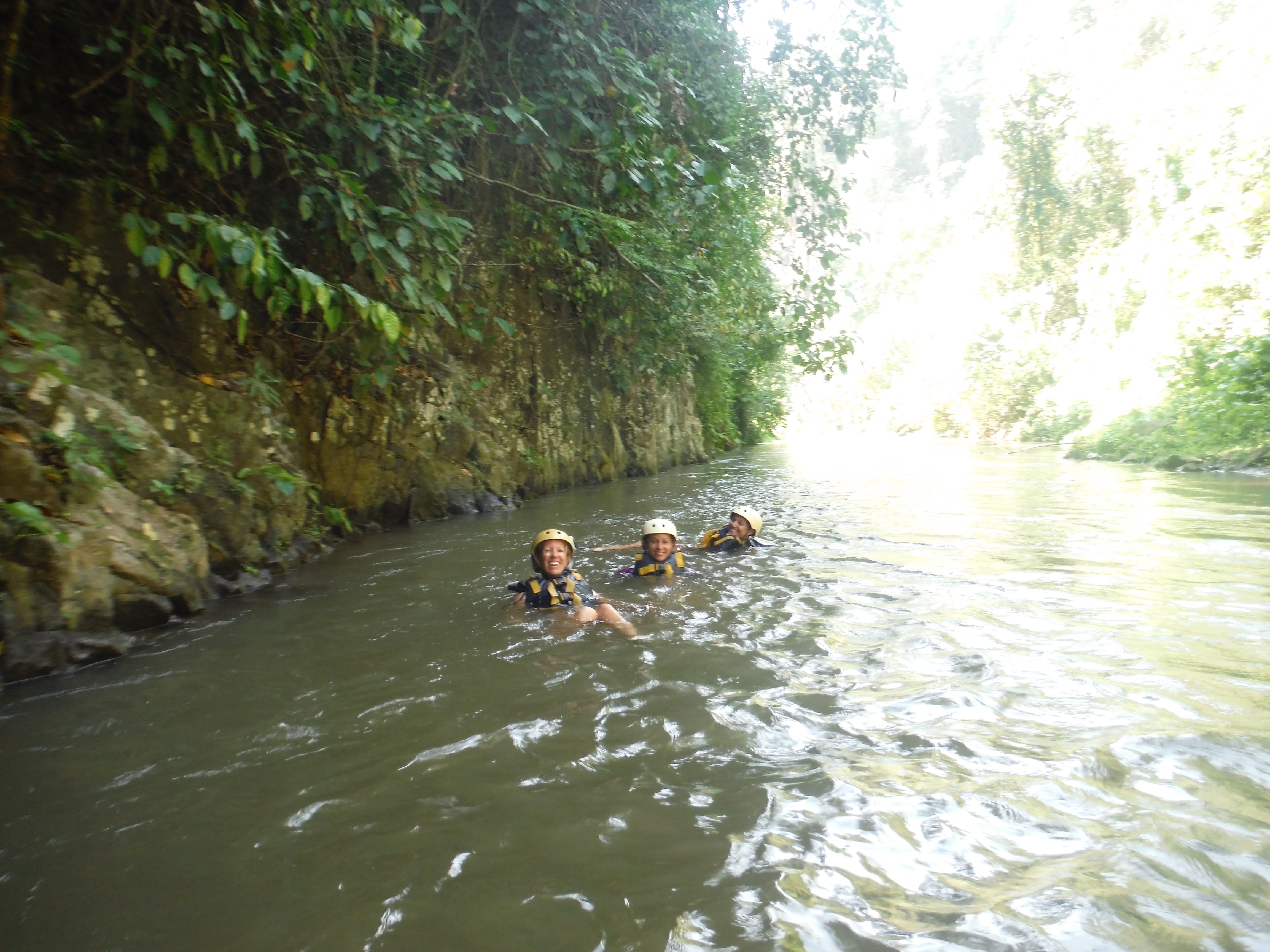
I’m really lucky I was with Hobo L and Hobo M because they saw how disappointed I was so they cracked jokes all the way down the river to cheer me up. The most exercise we got all day was hiking up the stairs at the end of the river float. There were three tiny highlights of the tour. One was the small gator that we saw swimming close to our raft, the other was the scenery that looked like it belonged in Jurassic Park, and the third was the buffet lunch that followed the “rafting”.

Floating down the River because we thought our guide was joking about the gators.

Floating down the River because we thought our guide was joking about the gators.

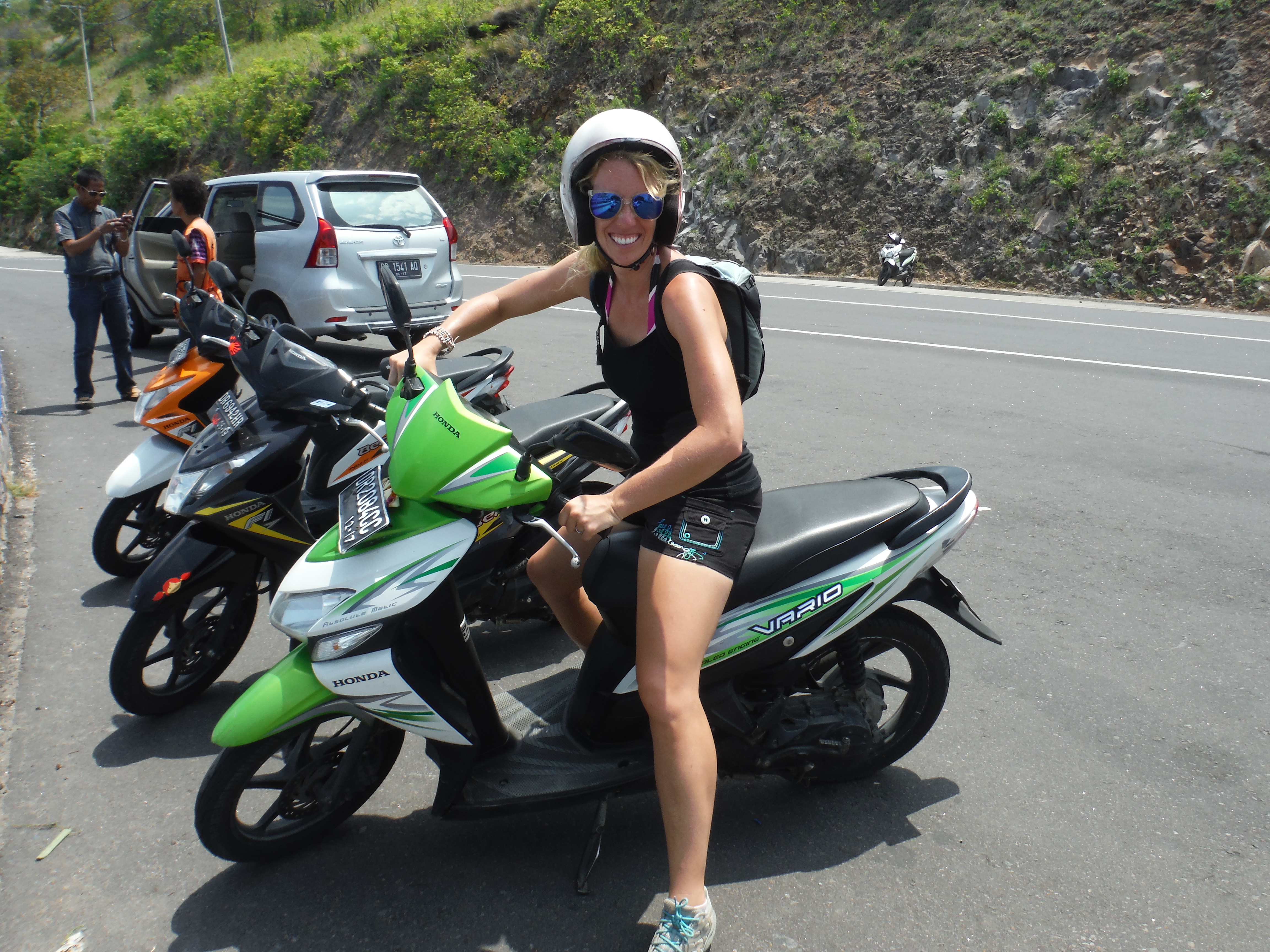
So after a win and a bust in Bali we cabbed it to the airport and bought a $34 ticket to the island of Lombok. The delayed plane sounded like a lawn mower and shook like an Earthquake but we made it! I would imagine that Lombok is what Bali was 20-30 years ago. The scenery is amazing and the island isn’t too built up yet. There were few tourists and it had a very laid back vibe to it. We scored a stunning hotel with a perfect location for a sweet price. The day after we arrived we decided we wanted to explore the island. What better way to do that than to rent $5 scooters! We were a little hesitant at first for a few reasons. A) We didn’t know where we were going. B) We weren’t sure how well maintained these scooters were. C) In Indonesia they drive on the left side of the road. D) Hobo L had never driven a scooter or motorcycle before. E) The helmets were in about the same condition as a 1940’s war helmet would have been.   But those were all minor details, we’re capable women!

My sweet scooter ride.

My sweet scooter ride.

We hopped on the scooters and carefully pulled out into the honking traffic. We slowly made our way out of town and up the hills of the winding roads. We didn’t get too far because we knew we had to stop for some fuel. We pulled off on the side of the road at a stand that looked like it was selling vodka bottles full of urine. But no, that is how the locals buy and sell their gas. We purchased a few litres and set off again, slowly gaining confidence and speed.

Indonesian gas station

Indonesian gas station

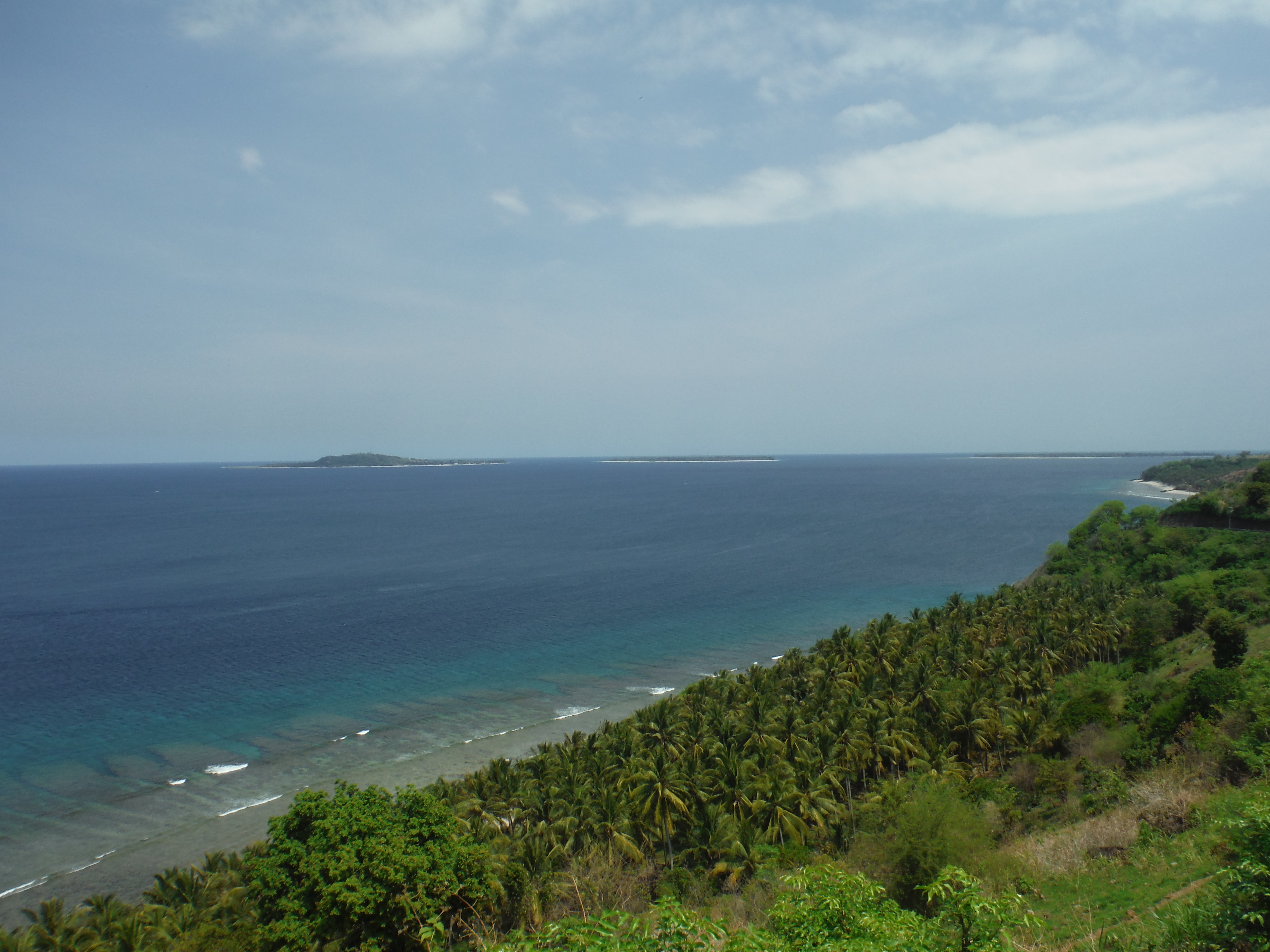
The twisting hills following the coastline were stunning. It was difficult to stay concentrated on the road with such amazing views distracting us. We drove for hours and hours occasionally stopping to consult a map or ask the friendly locals where the heck we were. Our goal was to find Mount Rinjani which unfortunately we could not climb because the wet season had started. After one last piece of broken English directional advice we started our uphill scooter ascent feeling the weather get cooler and wetter as we rose in altitude. We drove as far as we could and after an inconclusive cloudy view of the mountain we made our way back down trying to remember the roads we had taken to get to our destination.

Hobo M exhibiting her navigational skills.

Hobo M exhibiting her navigational skills.

After hours on the road with no issues our confidence had skyrocketed. The trip back to the town of Senggigi, where we were staying, resembled a glorified go-kart race. There were no speed limit signs and just like the locals, we were pulling up behind cars and other scooters and laying on our horns until they let us pass. To the scooter owners surprise we returned the bikes at the latest possible time and told him that the three of us gals had made it all the way to the mountain and back. The only near injury we had was when a coconut flew of a truck and smoked Hobo M’s backpack. All in all, a solid day.

Stunning coastal views.

Stunning coastal views.

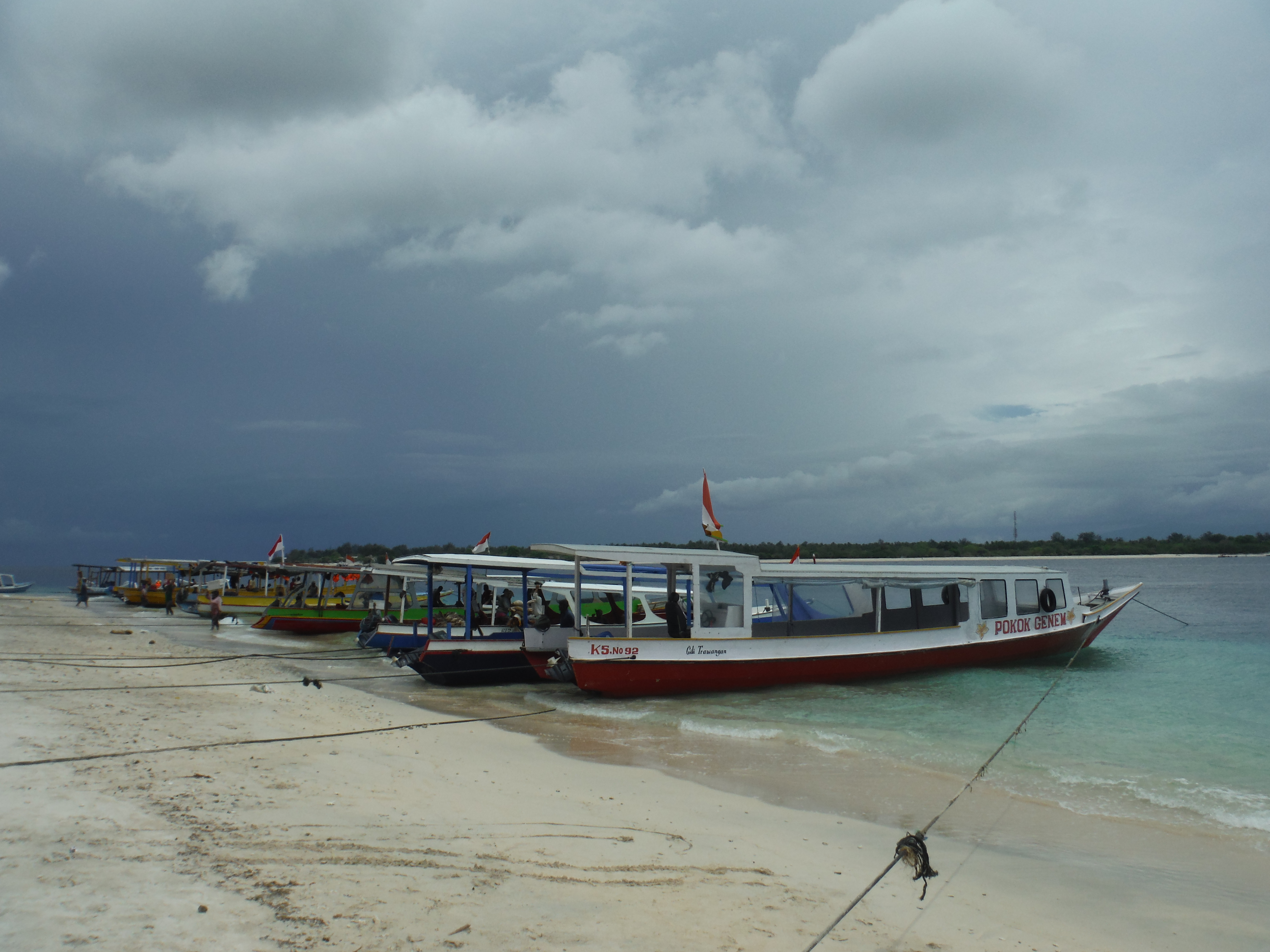
The next day we embraced the health and wellness scene that Lombok is known for. Our morning started with laps in our 50 meter infinity pool followed by smoothies, omelets, and bacon wrapped veggies at the complimentary hotel breakfast. We strolled to the beach then scouted out the best place for a massage. Our hour long incredible massage cost $6 and it was very professional. I also got my toenails and fingernails painted upping my spa bill to a whopping $8. Once feeling refined and relaxed we ate an authentic Italian dinner at a restaurant on the beach. It’s good that we had a day to unwind because the following day was a travel day again. We haggled hard for a taxi but had no luck and eventually caught a ride with some locals to get the harbor front. From there we bought a speedboat ticket that took us to Gili Trawangan Island.

The High Class Hobo and her belongings waiting to board the speedboat.

The High Class Hobo and her belongings waiting to board the speedboat.
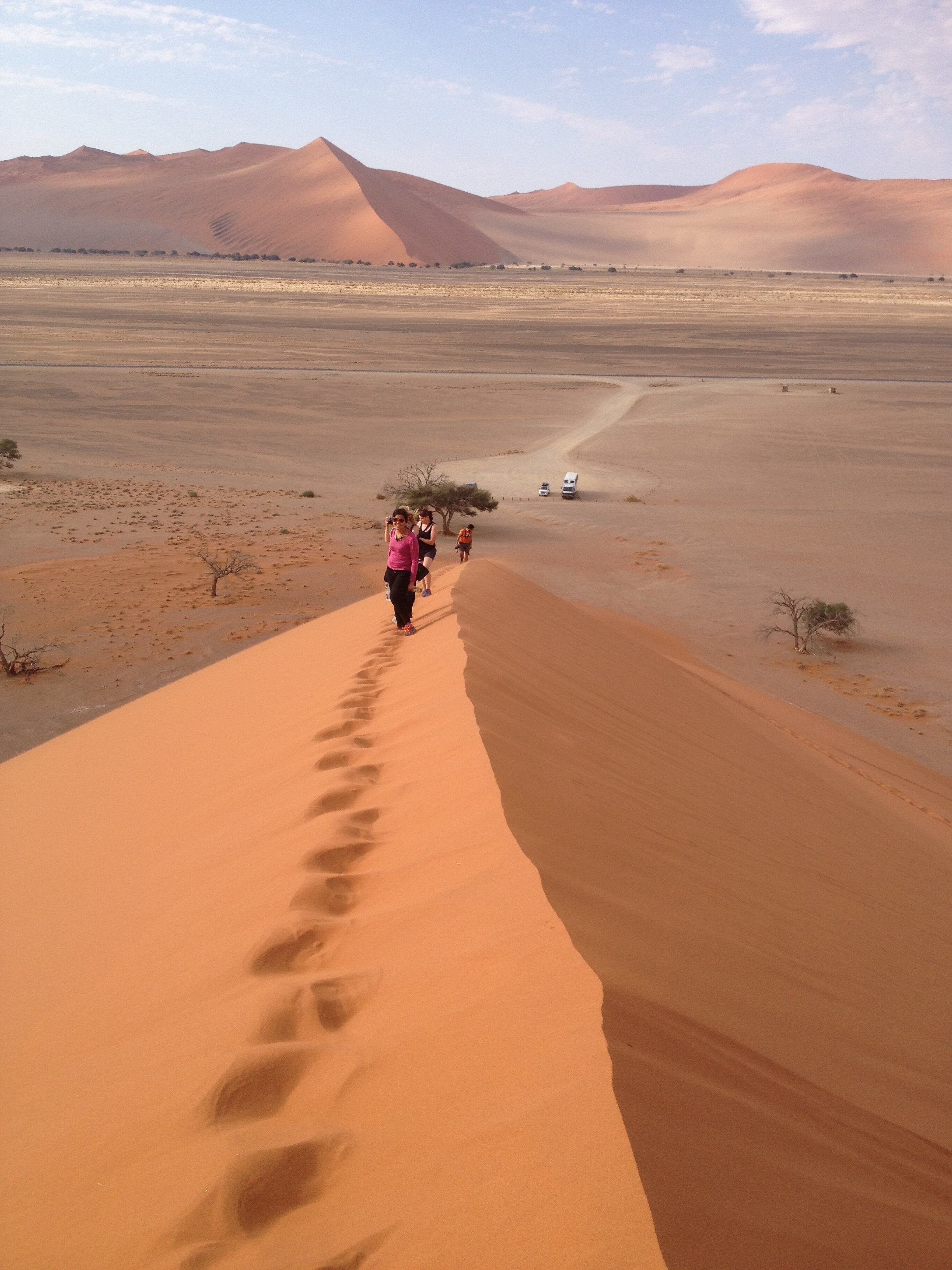
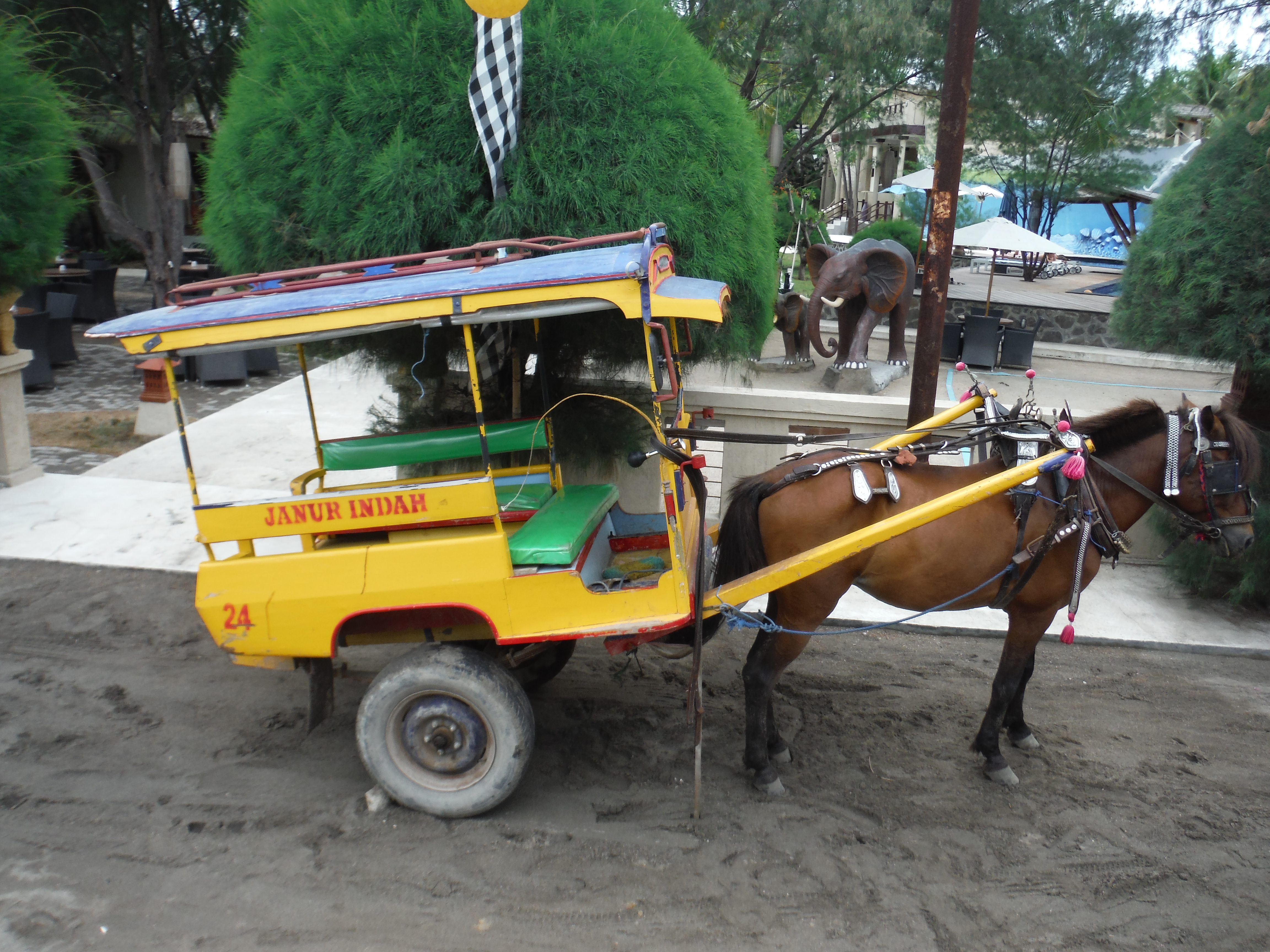
There are many Gili Islands off the coast of Lombok but the three most popular ones are Gili Air (the laid back island), Gili Meno (the honeymoon island) and Gili Trawangan (the party island). Gili Trawangan was beautiful but upon closer inspection parts of it looked used and abused… you could tell it was the party island. The main strip was fun. It had a plethora of bars, restaurants, dive spots, and hostels or small hotels. The roads were dirt or sand and no motor traffic was allowed so everyone rented bikes for their stay or took a horse drawn cart to their destination.

Transportation on Gili G

Transportation on Gili G

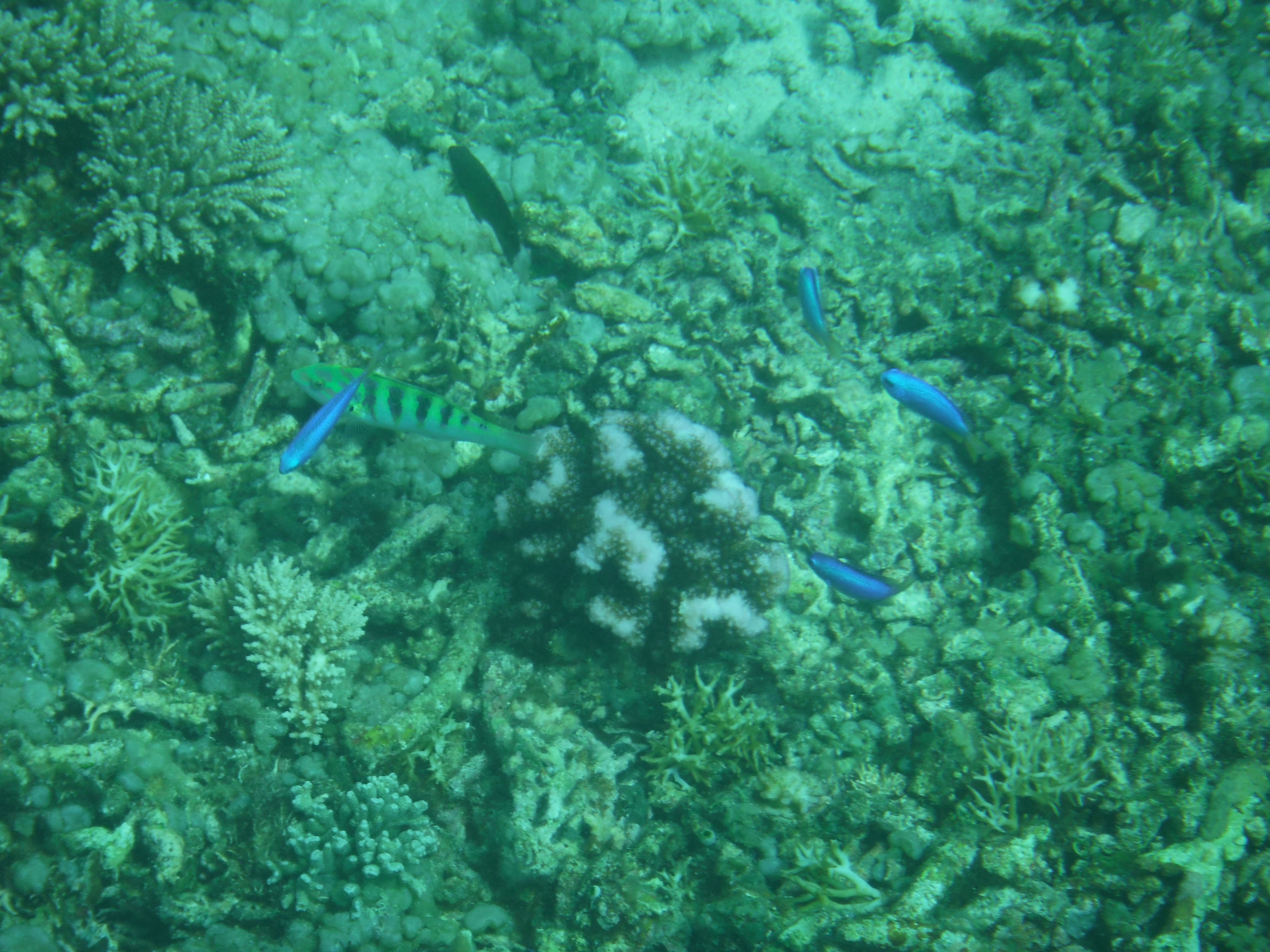
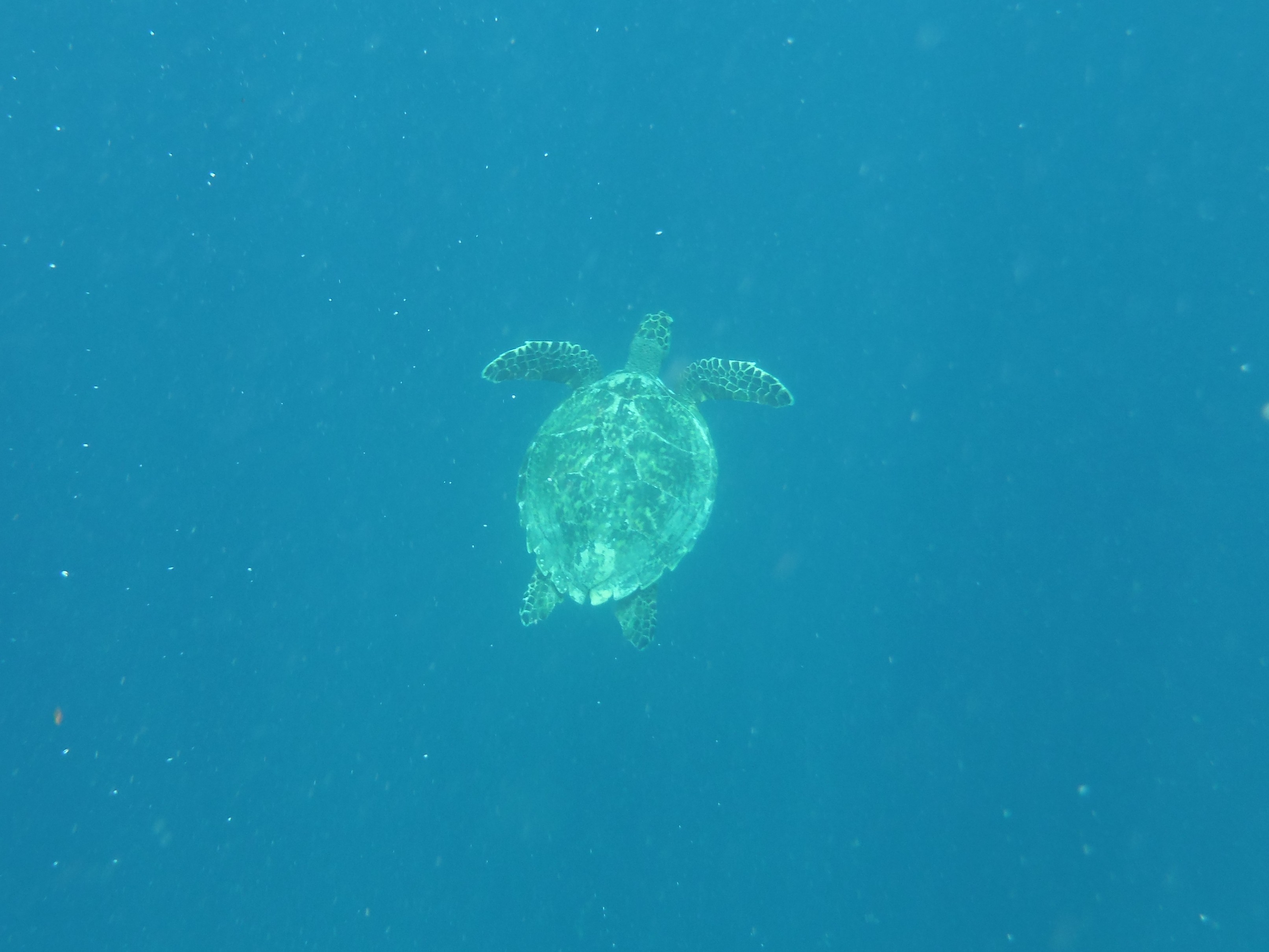
We stayed off the main drag but still on the beach on the North part of the island. Once settled, we opted for a snorkeling tour which also took us to the other two Gili islands. Although the tour ended up being slightly sketchy, the snorkeling was the best snorkeling I have ever experienced. The coral was still relatively intact and there were so many types of fish that I never even knew existed!  We went to three different dive spots in the warm turquoise water. At one point we followed a graceful turtle until it disappeared into the darker blue of the deep waters. We literally spent hours floating around looking at the different colours and shapes of all fish! DSCF0968

DSCF1055

After lunch we headed to our last dive spot but the winds and rain had suddenly started. Our boat forged ahead through the massive waves with people literally hanging on and letting out ashamed little yelps or screams when the boat rocked sideways to the point where you were afraid of falling out. A few of us tried to snorkel at the last spot but it was difficult because the waves would wash over you and fill your snorkel with water leaving you to breath in the salty H2O. Happy to be back on land we spent the remainder of the afternoon relaxing by the calm pool at our hotel. DSCF1048 (2)  We ventured into town on our bikes for dinner and enjoyed some delightful Mexican food. After dinner it was an adventure attempting to ride our bikes back to the hotel in the dark. Since the North part of the island is not very developed the “roads” are still beach sand … not ideal for riding a bike. Instead we decided to cut through the interior of the island spotted with palm trees, local houses, fallen palm leaves, and some wandering cows. There are NO lights and the paths are not exactly easy to follow. After some unintentional off-roading and a near fall after hitting a tough coconut we safely made it back to the hotel. The next day we dedicated to exploring the island. The interior paths of the islands were much easier to navigate in the day time. We saw the huge corporate developments starting to build up the west side of the island. We saw a pile of plastic water bottles that must have been at least 10 m x 10 m. I have no idea how they dispose of all the waste. The island wasn’t equipped to deal with the consumption of all the island party-goers. It was actually quite sad.

Imagine cycling through this in the pitch black!

Imagine cycling through this in the pitch black!

We decided to end our stay on Gili Trawangan by doing a bit of a market pub crawl. This basically consisted of us wandering down the strip and into the market eateries trying to find the cheapest beers and appetizers. The night ended with a beach walk all the way home to our hotel.

DSCF1081

The following day we bought speedboat tickets back to Bali. The boat represented the culture of the island. They had a sun deck, loud speakers blasting out dance music, and of course, beer. Unfortunately, it rained on our parade (literally) and most people took cover below the sun deck. Hobo M and I stayed on top, the rain was warm so it didn’t bother us too much except for the sting of it pelting us in the face. It was worth staying above deck though because when our speedboat came to an abrupt slow down we had the perfect view of a huge whale just meters from our boat! It surfaced, blew the water out of its blow hole, paused as if investigating us for a minute, and then disappeared again back into the depths of the Ocean. Back at trusty Pro Surf in Bali we prepared for the sad departure of Hobo L and planned the last leg of our Indonesian journey. Stayed tuned for Indonesia Part 3 – Java!

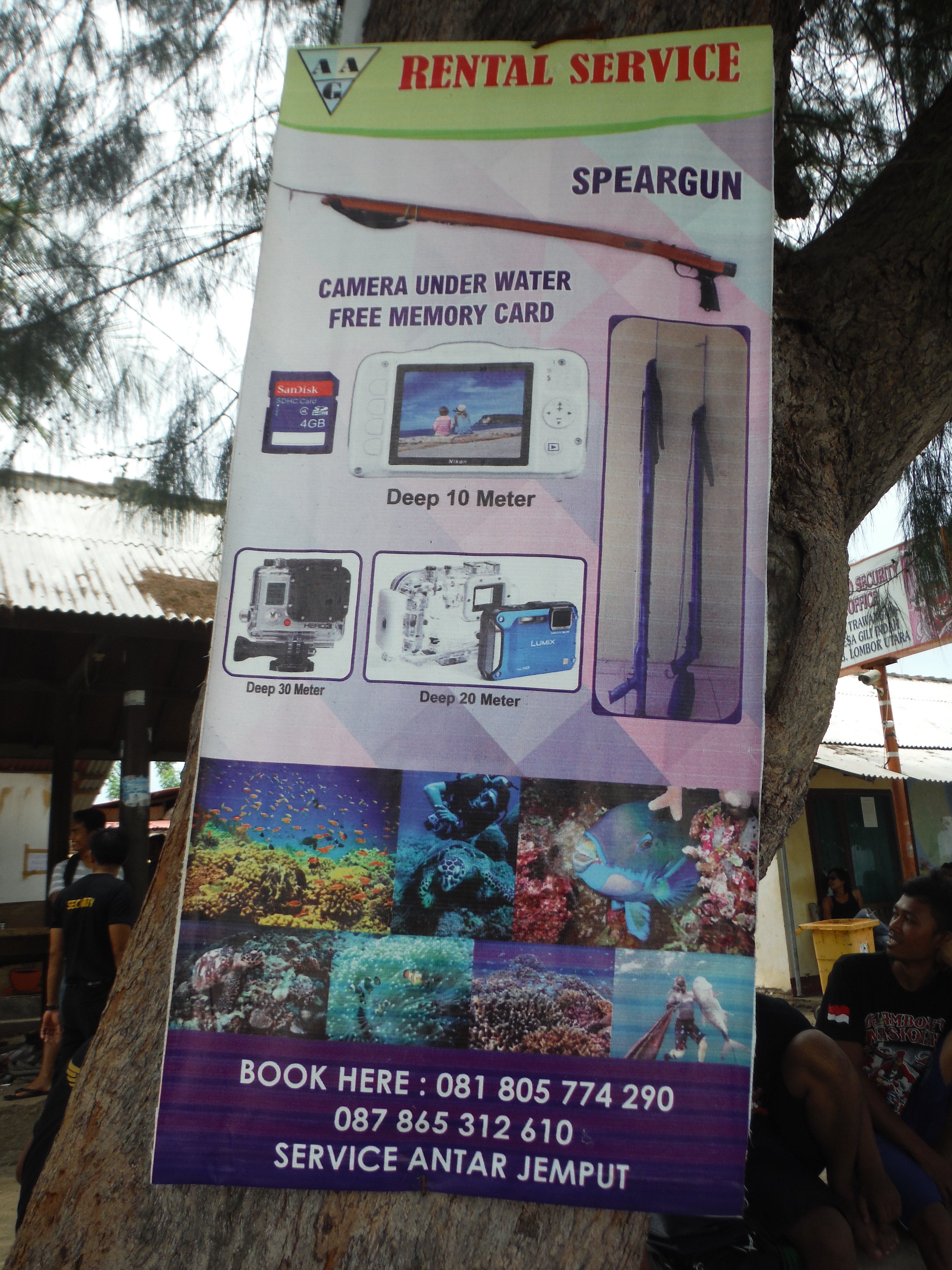
Just in case you were looking to rent a spear.

Just in case you were looking to rent a speargun.

Indonesia Part 1 – Bali

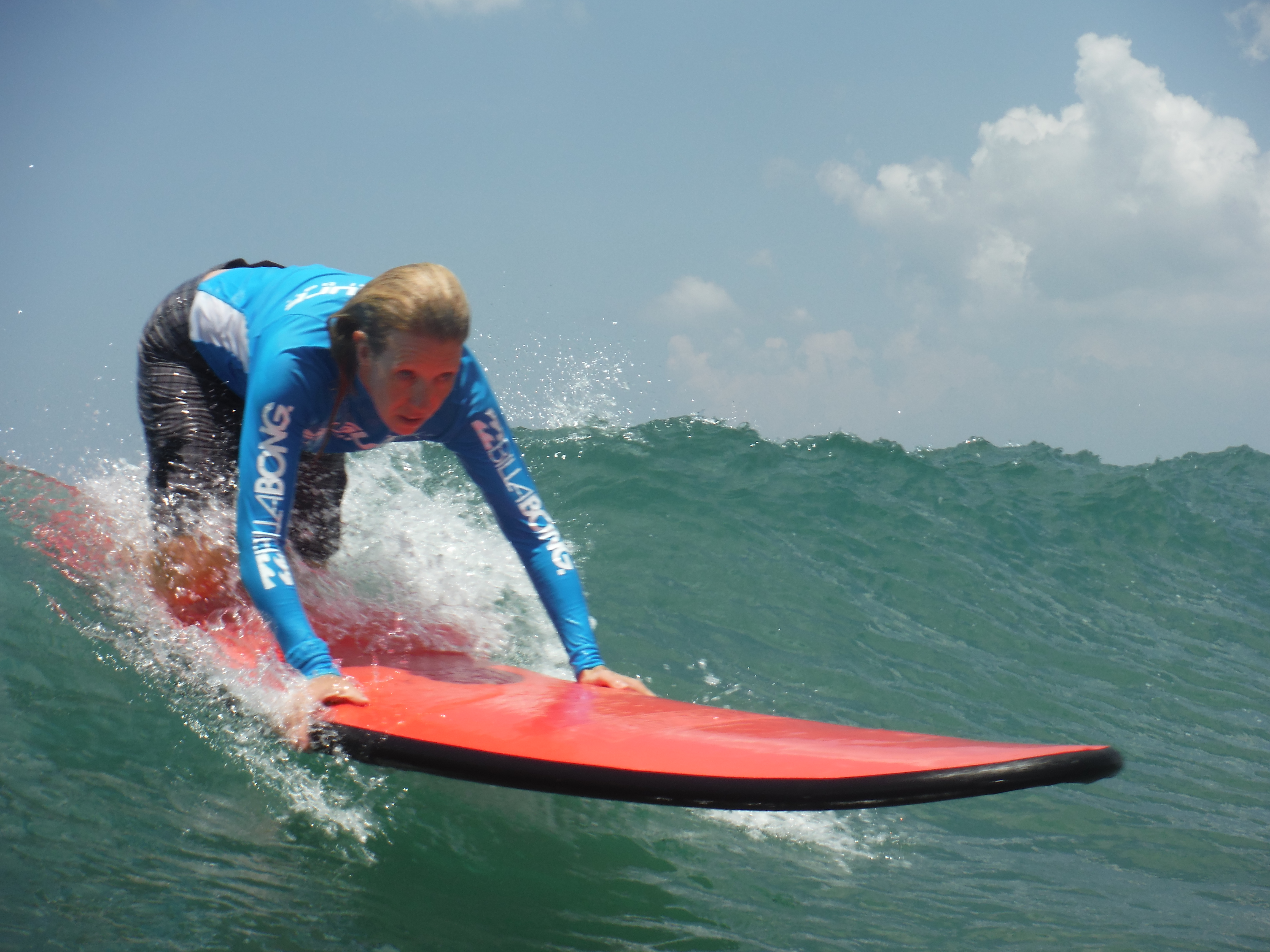
Despite what most people think, Bali is not a country, it is a province within Indonesia. We booked our accommodations at Pro Surf Camp right on Kuta Beach. I had surfed before for about 3 hours in Costa Rica but this was my chance to get past the white wash and into the green waves. In true hobo fashion I did not hire an instructor but instead my friend Hobo M (the third musketeer who flew in to meet us) taught me!

My free surf instructor - Hobo M.

My free surf instructor – Hobo M.

A few things I learned about surfing:

  • The conditions have to be right. Kuta beach has a sandy bottom (as oppose to coral which can cut you up) and it has beginner waves when the tide is in.
  • You need to learn to read the waves. You want to start paddling on your board at the correct time so that you a) don’t miss the wave by having it roll underneath you or b) don’t have the wave crash right on top of you. Unfortunately, I learned the hard way with point (b). I felt like I was in a washing machine and prayed my board wasn’t going to smoke me in the head.
Learning the timing of the wave.

Learning the timing of the wave.

  • When you take a wave, point your board away from the curl. The white wash on top of the wave will travel along the peak and as long as you stay a little ahead of the white wash you can keep riding the wave
  • Don’t panic! You are attached by a leash to your surfboard. You will always surface because your board will always bob to the top.
  • Surfing is addictive! It reminds me of snowboarding in the sense that it’s a solo sport with the social component of chilling with your friends while bobbing out in the Ocean until the perfect wave comes along. The moment you finally do catch that perfect wave is a feeling you want to chase again and again.
  • DSCF0551

So essentially surfing a few times a day was our life for approximately 3 days. In between surfing we would find cheap places to eat, go for morning jogs on the beach, swim in the pool, or investigate other ways to spend our time in Indonesia. It was incredibly hot and humid in Bali during the dry season so other than some sort of water activity it was difficult to do too much in the mid-day heat.

Finally after a few days of searching around we decided to jump to the in-land town of Ubud. I didn’t know this at the time but Ubud is one setting in the book, “Eat, Pray, Love.” Although very touristy, this place had a more cultured feel to it than Kuta Beach. The town was scattered with temples and encircled by green rice paddies. Tourists enjoyed upscale health food and wheatgrass shots in nice restaurants while discussing the latest yoga move they’d learned and mulling over how in line their chakras were.

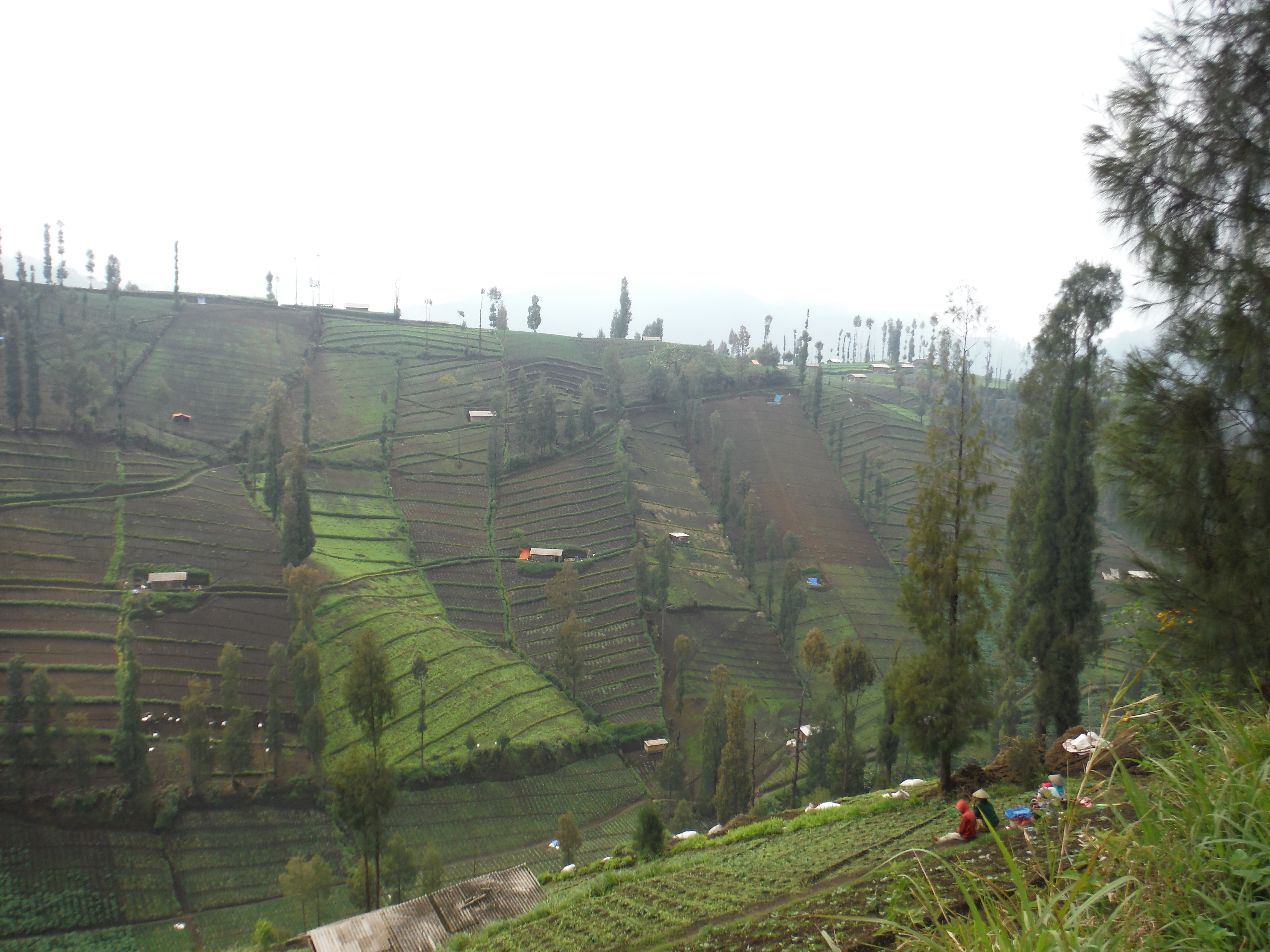
Rice Paddies staggered on the hillside.

Rice Paddies staggered on the hillside.

The three of us Hobos know the benefits of yoga and other zen-like exercises but we simply couldn’t bring ourselves to commit any time to it. We’re girls on the go so we embraced that by signing up for a Bike Tour through the rural rice paddies instead of downward dogging it in the middle of the humid town. The following day we were picked up and driven through the winding roads of the staggered mountain farm fields to have breakfast overlooking Mt. Bantur.

Our scenic breakfast view.

Our scenic breakfast view.

Following that we visited a coffee plantation where we sampled all sorts of coffee and tea including the exclusive-to-Indonesia Luwak Coffee. A Luwak is an animal found in tropical regions in South-East Asia but mainly in Indonesia. The animal eats the coffee flowers and beans but basically digests the bean still intact. So Luwak Coffee is coffee made from beans that have been excreted from the Luwak. It tastes slightly more bitter than normal coffee and is apparently a delicacy.

A Luwak eating some coffee beans.

A Luwak eating some coffee beans.

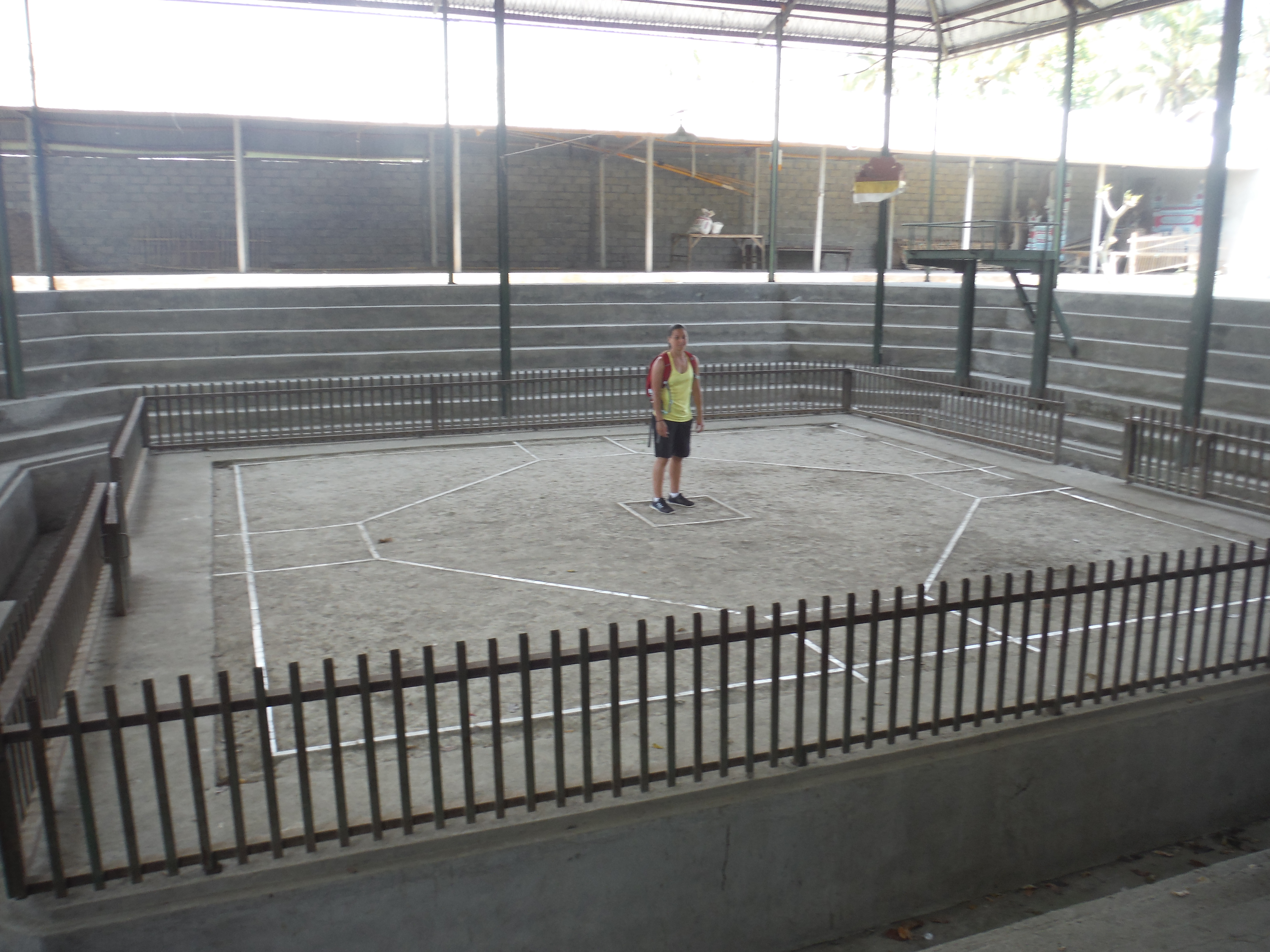
After we were well-caffeinated we hopped on our bikes and rode downhill for 25 km. We stopped in a village and had the chance to tour a typical Hindu house. The livings spaces houses many generations under one roof and every home has a specially built temple in the North-East corner because that is the closest spot to Mt. Bantur, the highest peak around, which means it is closer to the afterlife. We also stopped at a school, a rice paddy to watch how it is harvested, and a cock fighting ring. Apparently cock fighting is actually a ceremonial part of the Hindu religion but our guide admitted that it is often a hangout for the men to come on weekends and gamble on the roosters.

Hobo M in the middle of the cock fighting arena.

Hobo M in the middle of the cock fighting arena.

After our downhill stretch we had the option to bike ride uphill the last 8 km to lunch. The three of us are reasonably fit gals so we thought, “No Problem! Let’s do this!” while the others wisely took the air conditioned mini van to the lunch location. All I can say is we certainly earned our lunch that day. The intense heat and humidity of midday combined with a slight altitude made me almost vomit. The more frustrating part was our guide for that portion of the tour couldn’t have been more than 15 and he was riding uphill passing us with a smoke dangling from his mouth and barely breaking a sweat. I guess the locals are made for those conditions. We enjoyed a delicious feast of local Indonesian food and then headed home for a much needed cold shower.

This picture was taken before the uphill sweatfest.

This picture was taken before the uphill sweatfest.

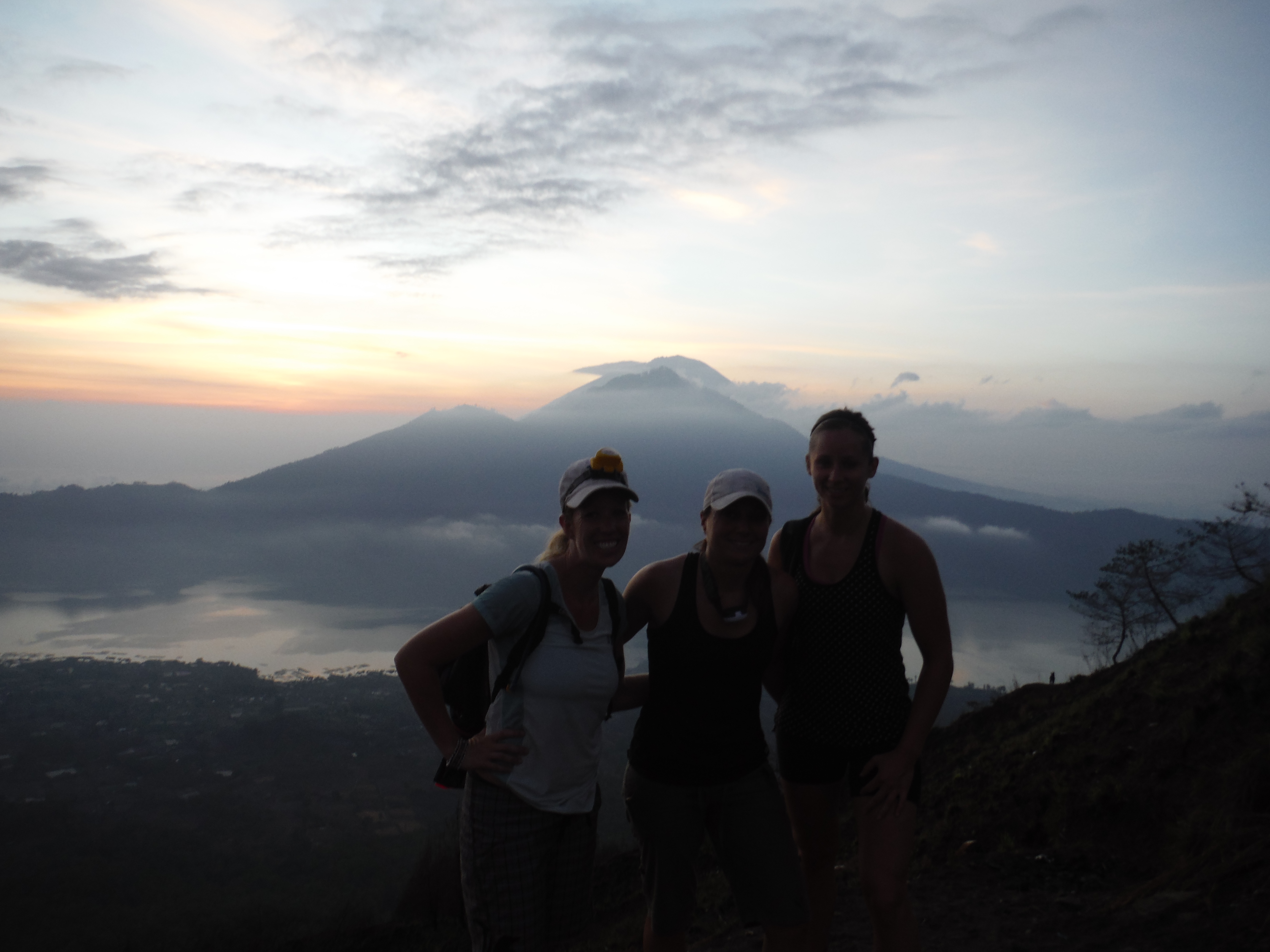
After eating a dinner of jaffels and banana milkshakes at a spot advertising the cheapest food in town we turned in early to get a few hours of sleep before our next Ubud adventure, climbing Mt. Bantur! Our pick up was 1 in the morning and we were whisked off to the darkness of the countryside. Climbing in the dark can be tough for a few reason. Obviously it is difficult to see where you are going using just a small headlamp or flashlight aa your source of light. In the daytime you can set goals for yourself as you climb (EX: OK, I’m just going to make it up to that tree and then I’ll take a breather), but in the darkness you can’t do that. Lastly, in the dark there is no beautiful scenery to distract you from your beastly breathing. You simply need to put your head down, put one foot in front of the other, and trust that the view at the top will be worth all your hard work. And it was! The sun came up as a huge golden ball over the surrounding mountains and lake turning the sky into hues of brilliant orange and pink.

Enjoying the view from 1,717 m.

Enjoying the view from 1,717 m.

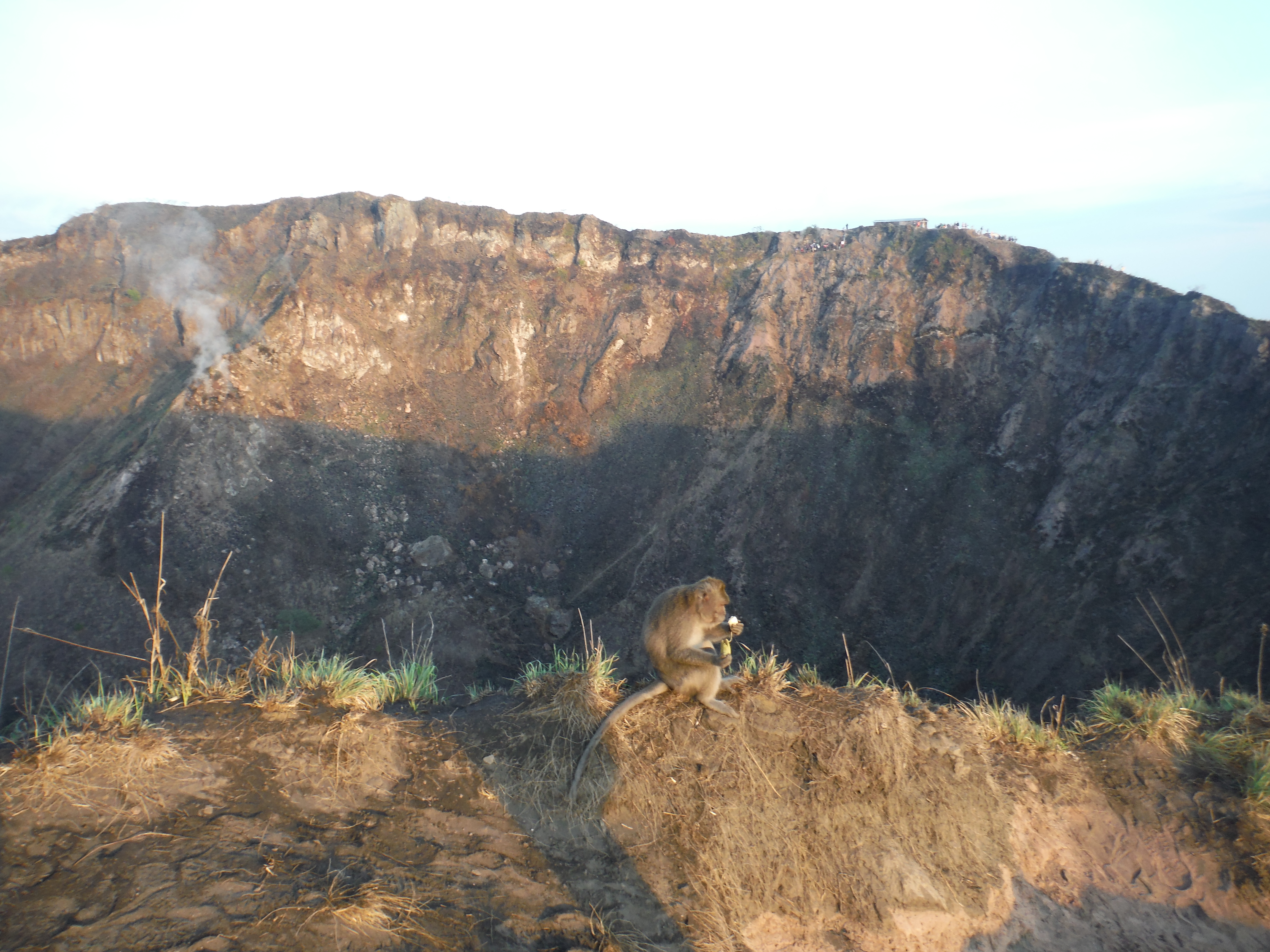
We were able to relax and enjoy the view with our boxed breakfasts at the summit of the mountain; that is, until the monkeys arrived! Now, I like monkeys as much as the next person but these ones were bold! I saw the evil monkey running towards us first and managed to grab my bag, but the poor German girl next to me was not that fast. Before we knew it the monkey was picking through the girls lunchbox. And it wasn’t just grabbing any food it could find, it was rummaging and selecting what it wanted! Eventually the monkey decided on the banana (no surprise there) and sat on the hill watching the sunrise like the rest of us casually eating the banana. You dared not to go near the monkeys because they were actually quite aggressive. The evil monkey then sifted through the remainder of the girl’s breakfast box and opted for the boiled egg followed by the bread. But the spoiled brat monkey left all the crusts. Later a smaller monkey came for the crust leftovers. The dozens of monkeys that seemed to have come out of nowhere were now in full attack mode and all the tourists were grabbing their bags and lunches in an attempt to save them. The monkeys had taken over! At one point I actually saw a monkey grab a water bottle out of someone’s hand, unscrew the cap, and chug the water as the thirsty tourist looked on in disappointment. Hobo M left her bag on the mountain and as Hobo L tried to grab it the monkey came at her!

A monkey enjoying a banana he selected from a tourists boxed breakfast.

A monkey enjoying a selectively stolen banana and taking in the view.

All this was hilarious but it was enough to make us decide that we didn’t want to visit the Monkey Temple in the afternoon like we had originally planned. The Monkey Temple is basically an old temple overrun with monkeys in the middle of Ubud. We had seen our fair share of this Planet of the Apes scenario so we started making the decent down the lava rock mountain. The path was slippery due to all the lose rock so it was slow going but the volcanic surrounding scenery was amazing. Upon our return to Ubud we showered, checked out of our homestay, and caught a cab back to the western amenities of Kuta where we could gather our thoughts and plan out the next section of our journey.

Back to Pro Surf in Kuta Beach

Back to Pro Surf in Kuta Beach


24 Hours in Singapore

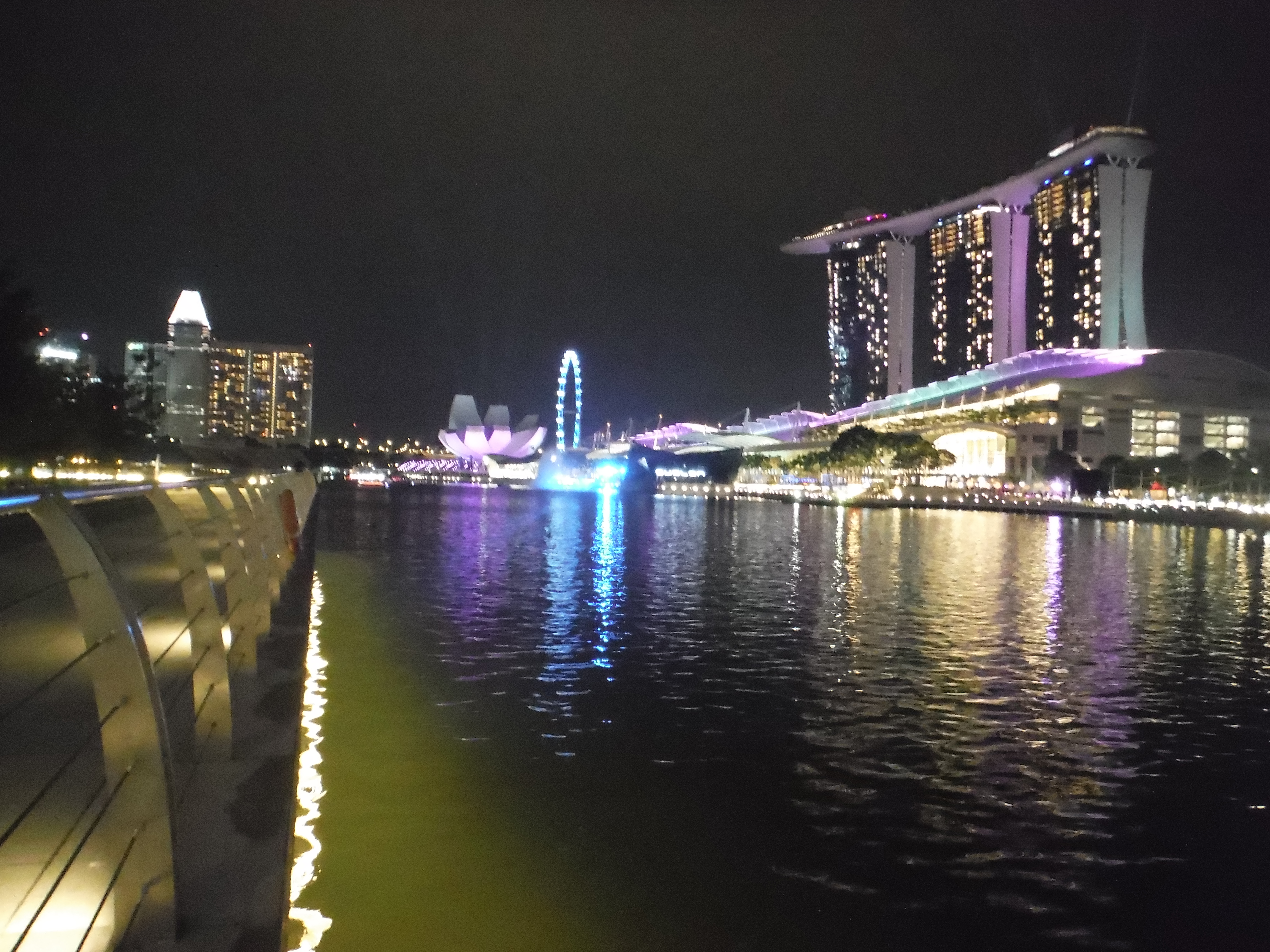
As fascinating and cutting edge as Singapore was, it was no place for a Hobo. This was the most expensive country I have visited on my journey so I’m glad Hobo L and I only spent 24 hours on a layover there.

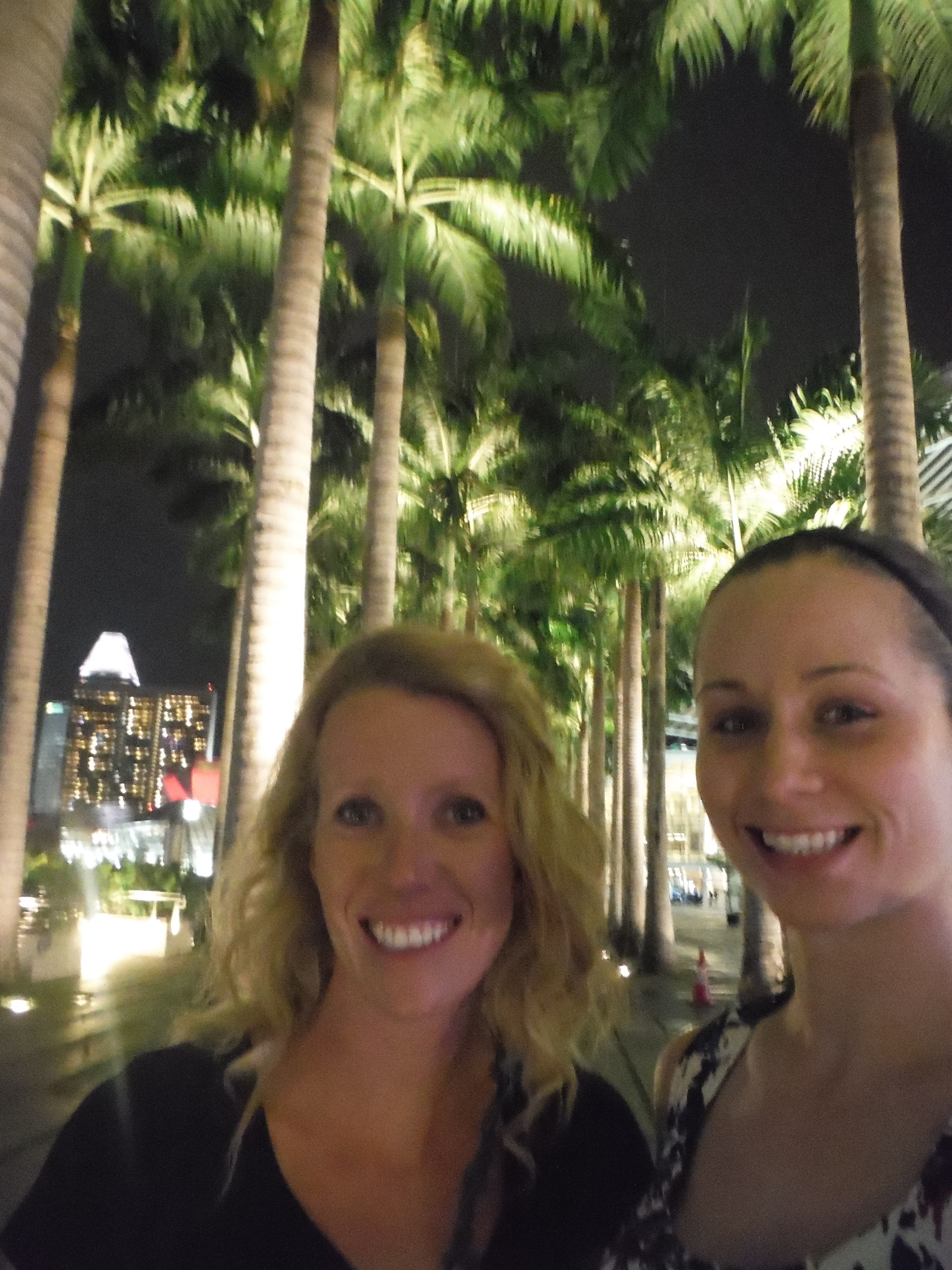
A perfectly manicured boardwalk.

A perfectly manicured downtown boardwalk.

Upon arrival we accessed the free wifi in the clean and modern airport in an attempt to find a cheap place to stay. Although a little out of the way, we managed to find a decent hostel for $15 a night. The subway system attached to the airport was incredibly easy to figure out so we made it to our hostel with no issues…. Just the burden of our ever-expanding backpacks.

Upon closer inspection of the Singapore society I became more and more impressed with the way their culture functions. Everything (and I mean everything) is logical, has forethought, and is designed to structure the way the citizens behave. They say that Singapore is the strictest country in the world (smuggling drugs is punishable by death) and I could see subtle signs of this everywhere. I’ll give a few examples:

  • To discourage jaywalking they often put decorative fences up on the side of the road to force you to walk at the crosswalks
  • Alcohol is incredibly expensive. This may be because everything in Singapore is expensive or because they want to discourage the use of alcohol to maintain a more productive society
  • There were specific spots to stand when boarding the subway so the flow of traffic could get off before the new people got on

DSCF0429

  • There were laneways (just like a road) for walking to keep the flow of people traffic moving in the subway tunnels
  • Spitting is illegal. Some say this is Singapore wants to appear more Western to the rest of the world. Big, dirty horks are very common in a lot of Asian cultures
  • They marked exactly where cables were buried in the roads so digging it up for construction would be more precise and efficient in the future
  • Chewing gum is illegal so people don’t spit it on the ground and make a mess
Smuggling gum into Singapore, such a rebel!

Smuggling gum into Singapore, such a rebel!

  • They left space on the lit up subway stop signs in each subway car for future expansion
  • They used cartoon characters to encourage polite behavior between citizens

DSCF0430

After showering and changing into our nicest, cleanest clothes we hopped back on the subway and headed to the downtown core. Singapore is not like the rest of Asia. It is incredibly modern and pricy and reminded me of what I think a warm and tropical New York would be like. Downtown there was a small lake surrounded by a pristine mall, perfectly manicured palm trees on the boardwalk, and restaurants overlooking the water where there was a light and fireworks show. We couldn’t afford to eat at any of the restaurants. In fact our food court mall meal cost over $10 each with no drink.

The lit up Lake

The lit up Lake

After weaving in and out of stores such as Louis Vuitton, Prada, Gucci, and any other expensive brand name you can think of we started wandering home. Unfortunately the subway system shuts down at midnight, even on a Saturday so we had to figure out the bus route home. Everyone was extremely kind and helpful. The bus driver even let us ride the bus for free because we didn’t have the correct change and he made sure we got off at the right stop.

The covered the skating rink in the shopping mall for the Christmas display.

The covered the skating rink in the shopping mall for the Christmas display.

In the morning we were going to go to Mustafa Mall (a 24 hour shopping centre that was 1 km down the road from our hostel) but we reconsidered. We thought that if we can barely afford a food court meal we probably should not be checking out the shopping mall. It was not a problem though because we didn’t have much time to kill before we needed to head back to the airport.

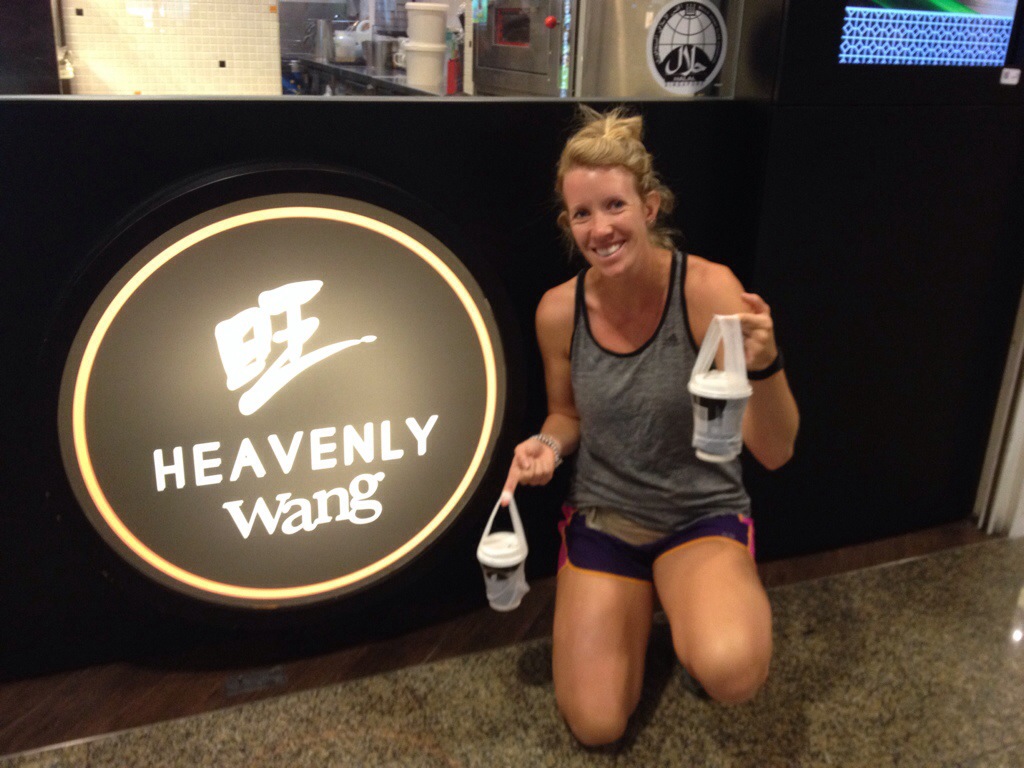
An odd name for a coffee shop.

An odd name for a coffee shop.

While we were in Singapore I couldn’t help but think how I was finally in a destination that Hubby Hobo would have liked. It was a clean, precise, structured, and respectful country; all the things he loves! Perhaps one day I will bring Hubby Hobo to Singapore …. But I’ll have to wait until I win the lotto.

A 56 story hotel with a "boat" patio an pool on top.

A 56 story hotel with a “boat” patio an pool on top.

As we were flying out of Singapore there was interesting surprise; a tornado! I was really nervous to fly into the storm in case the twister got bigger but after flying through some rough turbulence, the skies calmed and we were safely off to our next destination – Bali, Indonesia!

Flying into a mini twister.

Flying into a mini twister.

Gooood Mooorrrrrnnning VIETNAM!

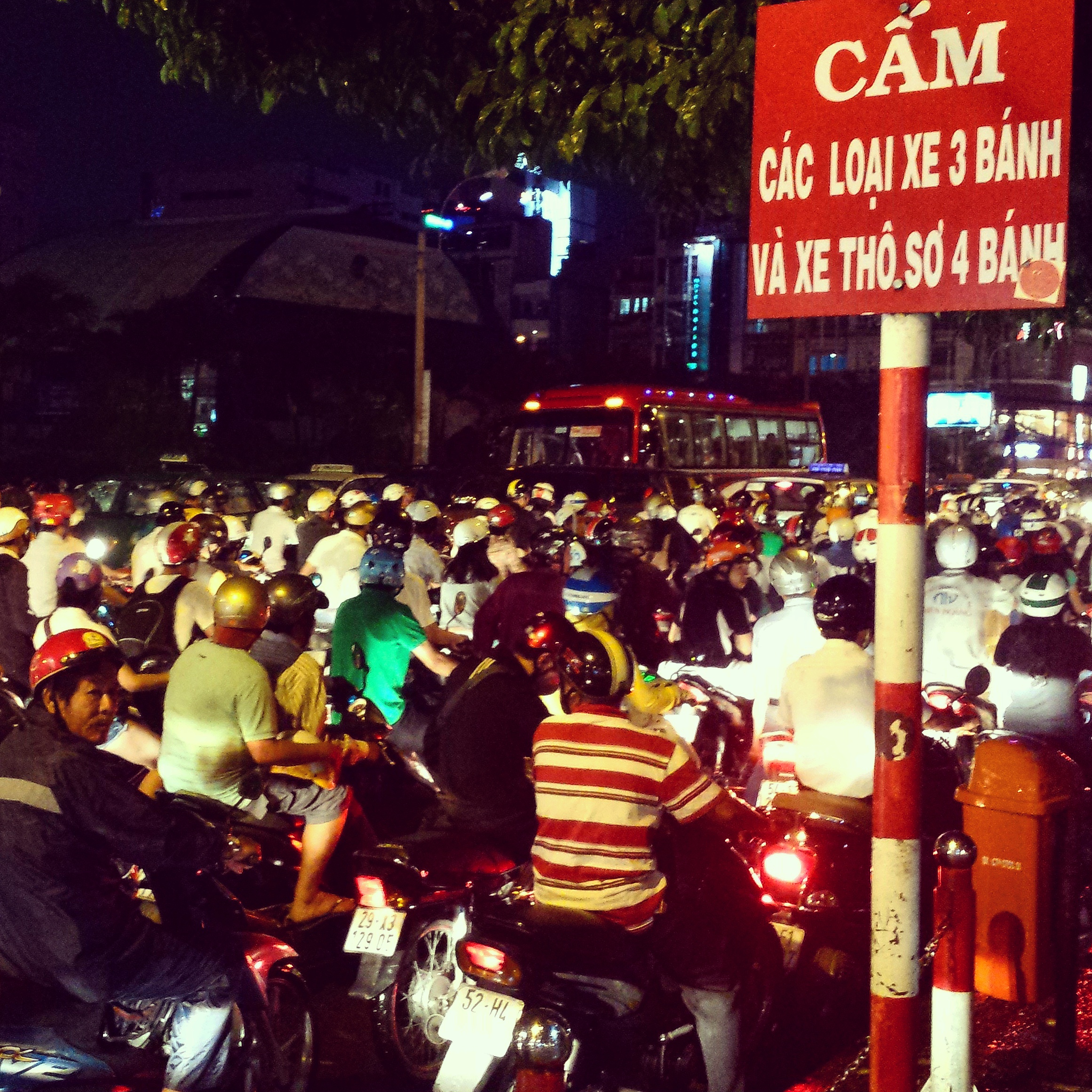
From South Africa I had a one hour layover in Abu Dhabi and then headed straight to Ho Chi Minh City (aka: Saigon). After getting over some issues with my Visa (apparently you need a letter from your embassy to travel to Vietnam), I was given an “emergency visa” at a price that hurt my little hobo heart. Once in a cab and heading towards my hostel there was one and one thing only I noticed about Vietnam: MOTORBIKES! This place was swarming with scooters that weaved in and out of each other in NO order whatsoever and somehow they didn’t crash. If Vietnam has any traffic laws at all they must be thrown out the window the moment people get their licenses because it was absolute chaos. It felt like I was playing frogger every time I wanted to cross the street.

Cars are taxed 300% so everyone in Vietnam owns small motorbikes.

Cars are taxed 300% so everyone in Vietnam owns small motorbikes.

After sleeping in the following day I decided to wander the streets in search of a place to do my laundry. I took everything in the hopes that the grubbiness of camping for 40 days could finally be washed out of my clothes. I also found the backpacker road which had some great spots to eat and some fun shops. This leads me to the second major thing I noticed about Vietnam: A HOBO’S PARADISE! This place was incredibly cheap…. like mind blowingly cheap. My entire 11 days came to under $500 and I wasn’t particularly skimping on things.

So after I delighted in the prices of Vietnam my next mission was to plan what I was going to do during my stay in Saigon. I opted for the War Museum one day and the CuChi Tunnels another day. I would have liked to have taken a trip out to the Mekong Delta to see the floating markets but I didn’t feel I had enough time.

The War Museum cost $1 and in my opinion it was very graphic and very anti-American. I didn’t know too much about the Vietnam War before I travelled to Saigon but between the War Museum and the CuChi Tunnels I feel like I now have a better understanding. The War Museum was littered with pictures of people who had been deformed due to ingesting the chemical Agent Orange. The photos were really sad and the captions pointed the finger of blame squarely at the Americans. They believe that the use of Agent Orange and other chemicals was a war crime. I’m still unclear as to why the USA joined the Vietnam War. Perhaps any sort of growing communism was a major threat at that time? After spending a few more days in Ho Chi Minh I did notice an alarming number of people with deformities which I am assuming are still side effects of Agent Orange chemicals. I also noticed people’s relief when they asked me where I was from and I said Canada. Automatically people assume I’m from the USA because of my accent and appearance. Maybe I should throw an, “Eh” in at the end of every sentence just to make people feel more comfortable.

War Museum in Saigon/Ho Chi Minh

War Museum in Saigon/Ho Chi Minh

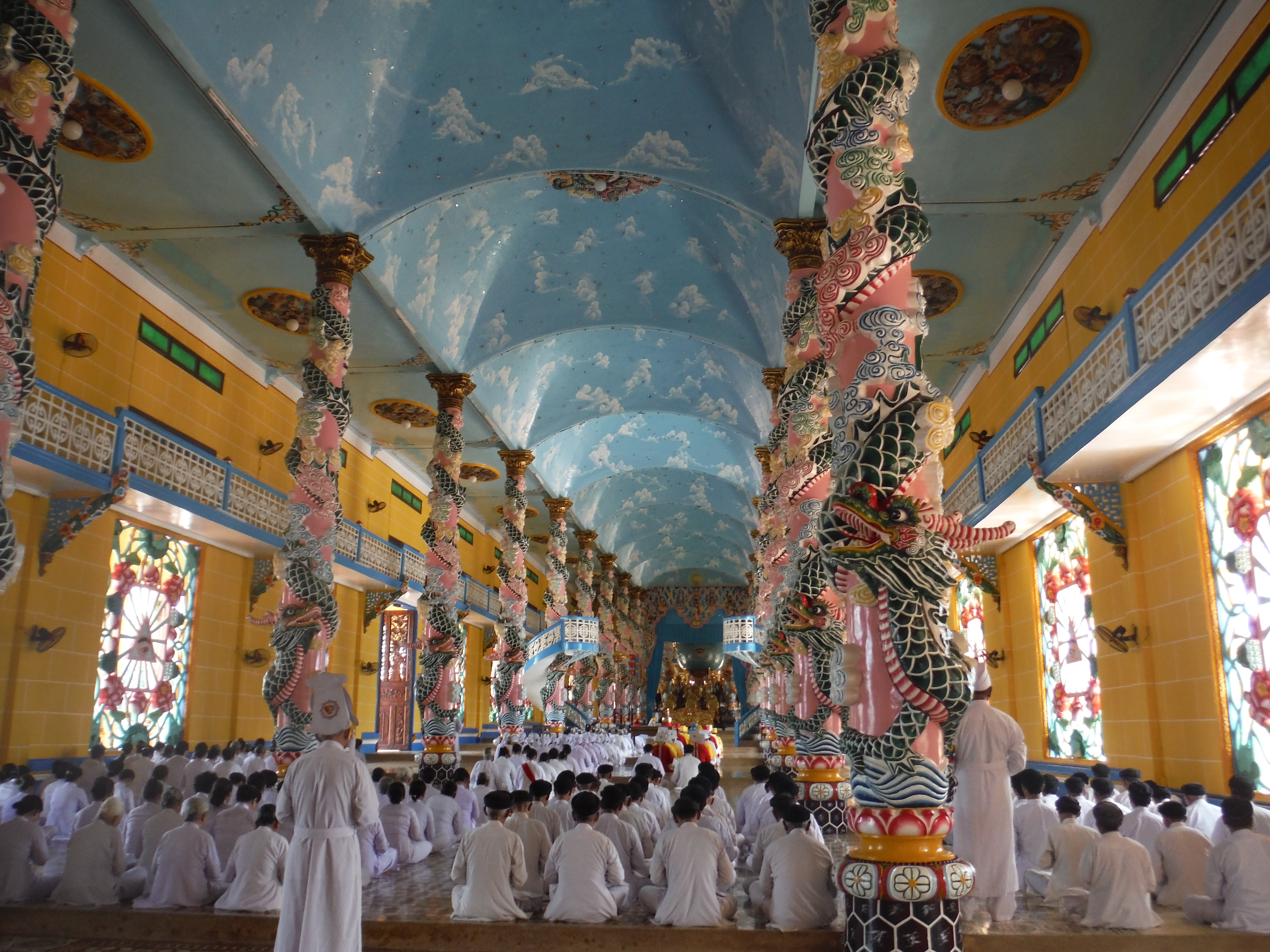
The following day I took a tour out to the Tam Giao temple and the CuChi Tunnels. The Tam Giao religion is isolated to Vietnam. It is a combination of Buddhism, Confucianism, Mahayana, and Taoism. The reason the religion was invented was because when the French were attacking Vietnam in the late 1800’s religious places were off limits. So they created a new religion with a giant temple so they could hide in there.

Religion exclusive to Vietnam

Religion exclusive to Vietnam

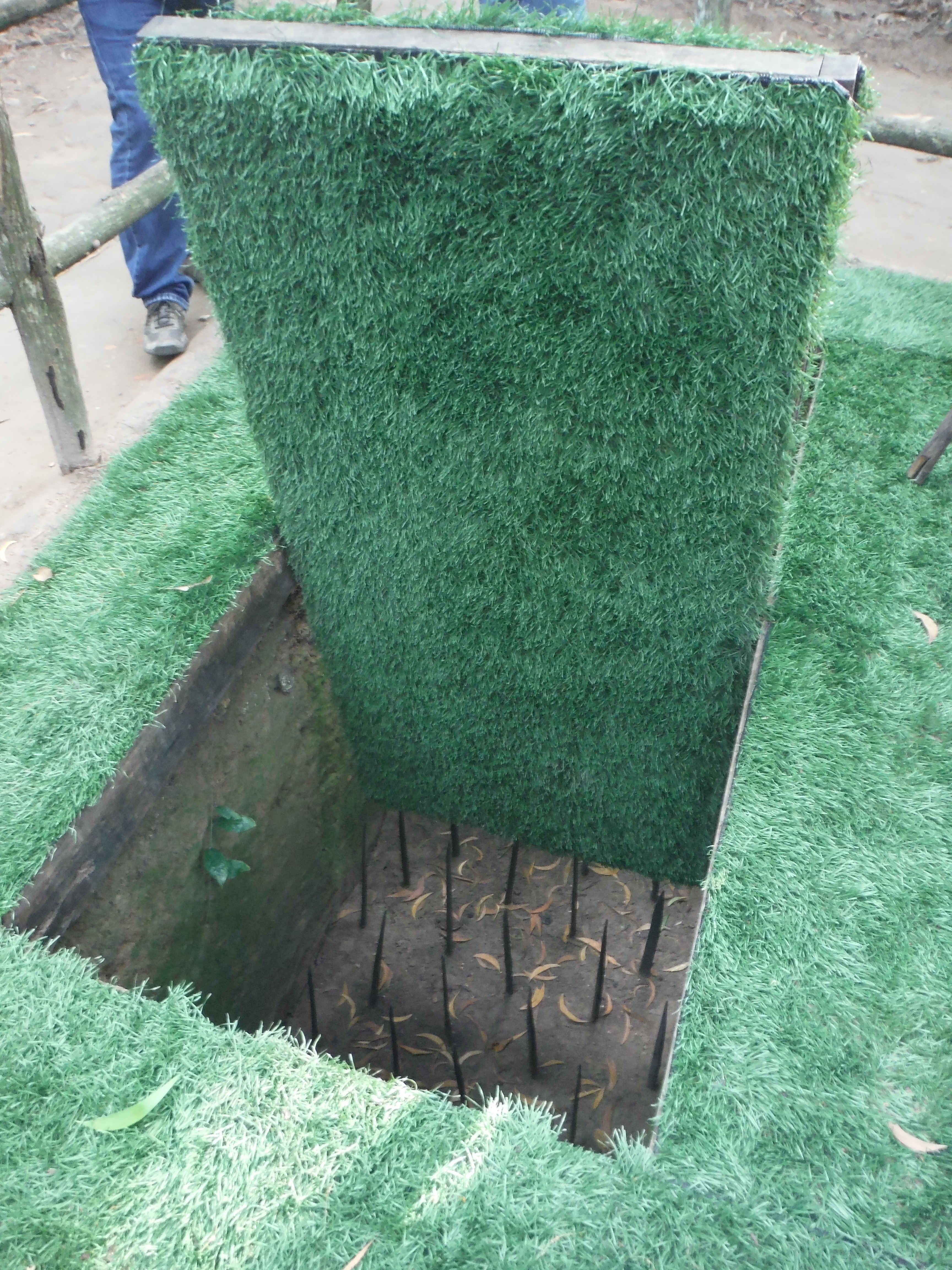
The temple was interesting but the highlight of the day was the CuChi Tunnels. The Vietnamese used guerilla warfare to fight. They would work in their villages all day as civilians and at night the women would dig the tunnels and the men would fight intensely for about half an hour. The Vietnamese were extremely resourceful people; they made traps out of anything and everything. Most of the traps were holes dug in the ground with spikes attached to folding chairs or other household items.

Vietnamese jungle traps

Vietnamese Jungle Traps

Vietnamese Jungle Traps

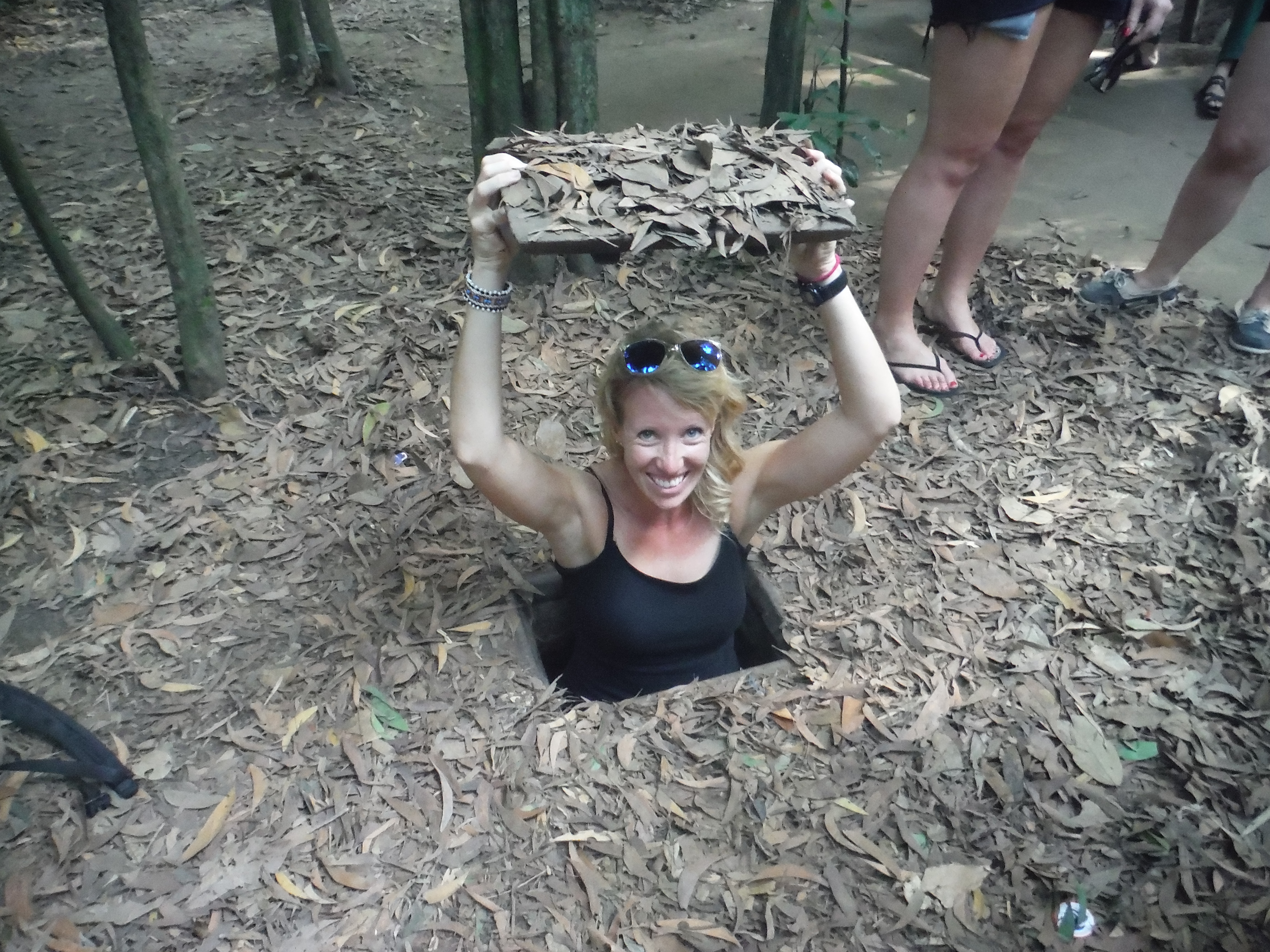
Aside from the traps, the Vietnamese had a huge network of tiny tunnels. I went inside one and my hips barely fit. There was a 20 m tunnel that the tourists could crawl through but they had to double to size of it so the westerners could make it through. Even with double the size my claustrophobia kicked in so I have no idea how the Vietnamese handled it. Since the network of tunnels became so intricate air was sometimes sparse. They disguised air holes as giant termite mounds and they would surround the air holes as well as the entrances to the tunnels with chili pepper flakes so the army dogs would lose the scent of humans.

My guide stepped on the lid as a joke while I was down there.

My guide stepped on the lid as a joke while I was down there.

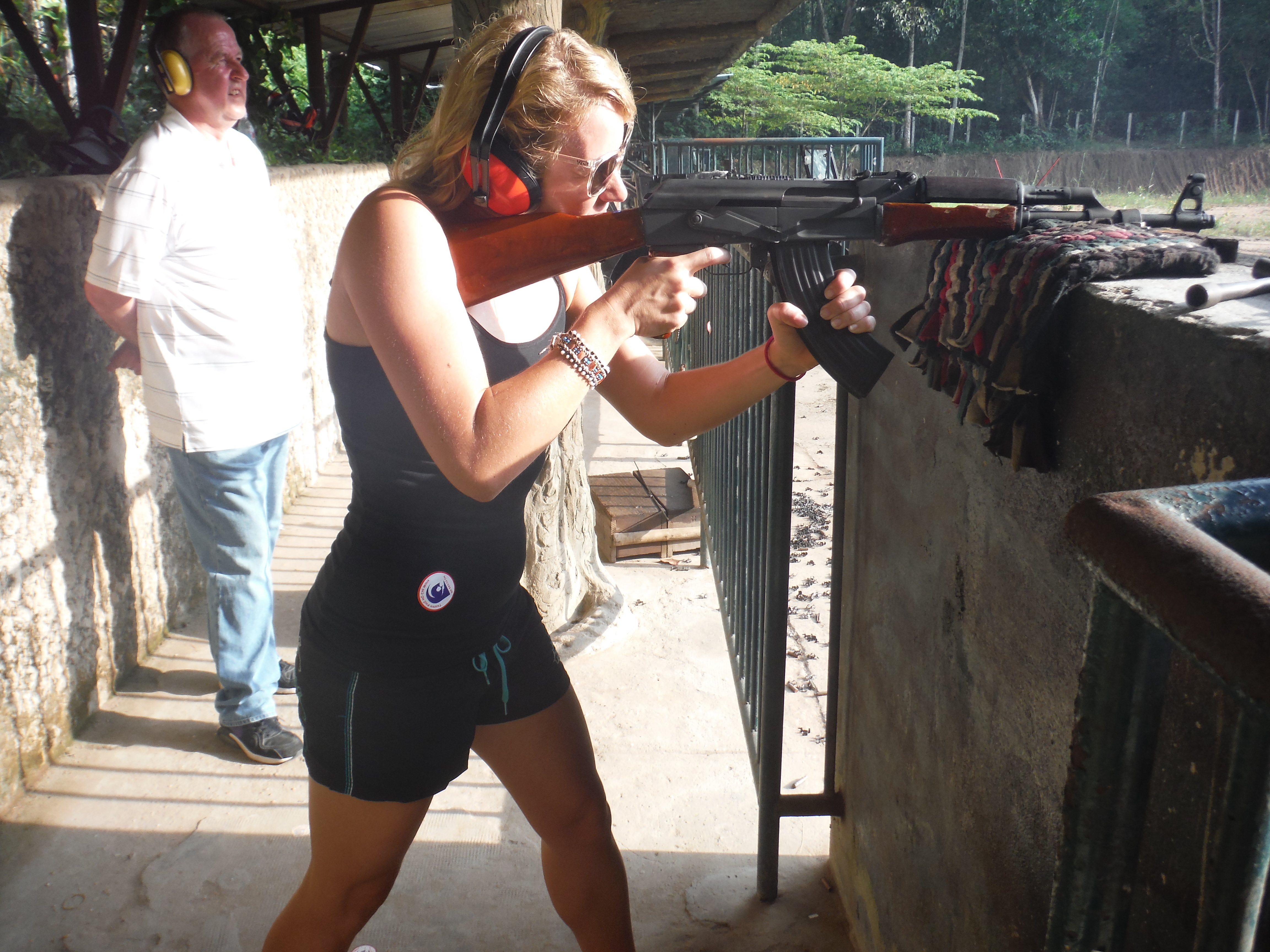
Aside from using nature to create weapons, the Vietnamese would disassemble grenades or bombs that didn’t explode so they could reuse the explosives inside for their own homemade weapons. These people were survivors! Another highlight of the CuChi Tunnels was my chance to shoot an AK-47. I felt slightly guilty about how much I enjoyed shooting it, but it was really fun!

Hit the target, Daddy-obo taught me well!

Hit the target, Daddy-obo taught me well!

After some more fabulous and cheap Vietnamese food and a visit to the night market I made my way from Ho Chi Minh to Hanoi which is in the North of Vietnam. It was here that my friend Leigh and I met up at the airport. We stayed for $12 each in a fantastic hotel in the centre of Hanoi with a balcony and a delicious breakfast. The lady at the front desk was amazing in helping us to plan out our time in Hanoi and the surrounding area. First we opted to go on an overnight cruise to Halong Bay. The next day we drove for almost 4 hours to get to the harbor where we boarded our vessel. Our ship was very nice and modern and it only had 12 rooms. We took a scenic tour out to the bay admiring the beautiful ancient mountain tops that peeked out of the water after being flooded years ago.

Would have been more scenic with the sun, but still beautiful.

Would have been more scenic with the sun, but still beautiful.

When we arrived at Halong Bay we took smaller boats out to floating village. The people here and in the surrounding area literally lived on floating homes or in some cases, in their bamboo boats. We went for a tour in the little bamboo boats all around the town. We saw the school and houses and the spot where everyone comes to sell their fish. I tried rowing the bamboo boat and it was tough! What was even more embarrassing were the locals rowing by using their feet and doing a better job steering the boat than I was.

Attempting to row the bamboo boat.

Attempting to row the bamboo boat.

Later we docked at a beach where we could climb up to the top of one of the mountain tops to see the surrounding view. We ended our day with a 7 course meal traditionally served to royalty. The presentation of the food in Vietnam was so intricite. One grilled fish was covered in a “net” that had been carved out of one entire carrot. Our spring rolls were stuck into pineapples shaped like little birds. They were very artistic with their food presentation. Following dinner there was the option to do some less than okay karaoke or go squid fishing. We opted for the squid fishing but didn’t catch anything. The next morning we had the option to do Tai Chi before breakfast and then we went to visit a cave full of giant stalactites and stalagmites. It would have been nice if the weather had been sunnier for us but it was still a scenic and relaxing few days.

DSCF0251

All the decorations were made with fruits or vegetables.

A net carved out of a single carrot.

A net carved out of a single carrot.

When we got back to Hanoi we didn’t have much down time because we had to hop on the sleeper train to head to our next adventure; a trek in Sapa! Sapa is in the North of Vietnam only a few kilometers from the border of China. Many of the Sapa people descend from tribes that lived there years ago. They make their living by growing rice and weaving hemp clothing dyed indigo with plants found in the area. If I had one word to describe the trek I would say, “MUDDY”. My first hint should have been when they offered to rent us rubber boots for $1 a day. That was one of the best investments I made this trip!

Us Canadians didn't fall once!  It was just like walking on ice.

Us Canadians didn’t fall once! It was just like walking on ice.

We were followed for 7-10 km through the muddy paths and rice paddies by some Sapa Sisters. Basically these are women from Sapa who follow you all day and assist you through the mud if you need help in the hopes that you will buy something from them at the end of the day. One lady was so old and wrinkly I have no idea how she made the trek into the middle of nowhere then out again every single day in the mud. They were very strong women!

The High Class Hobo with some Sapa Sisters

The High Class Hobo with some Sapa Sisters

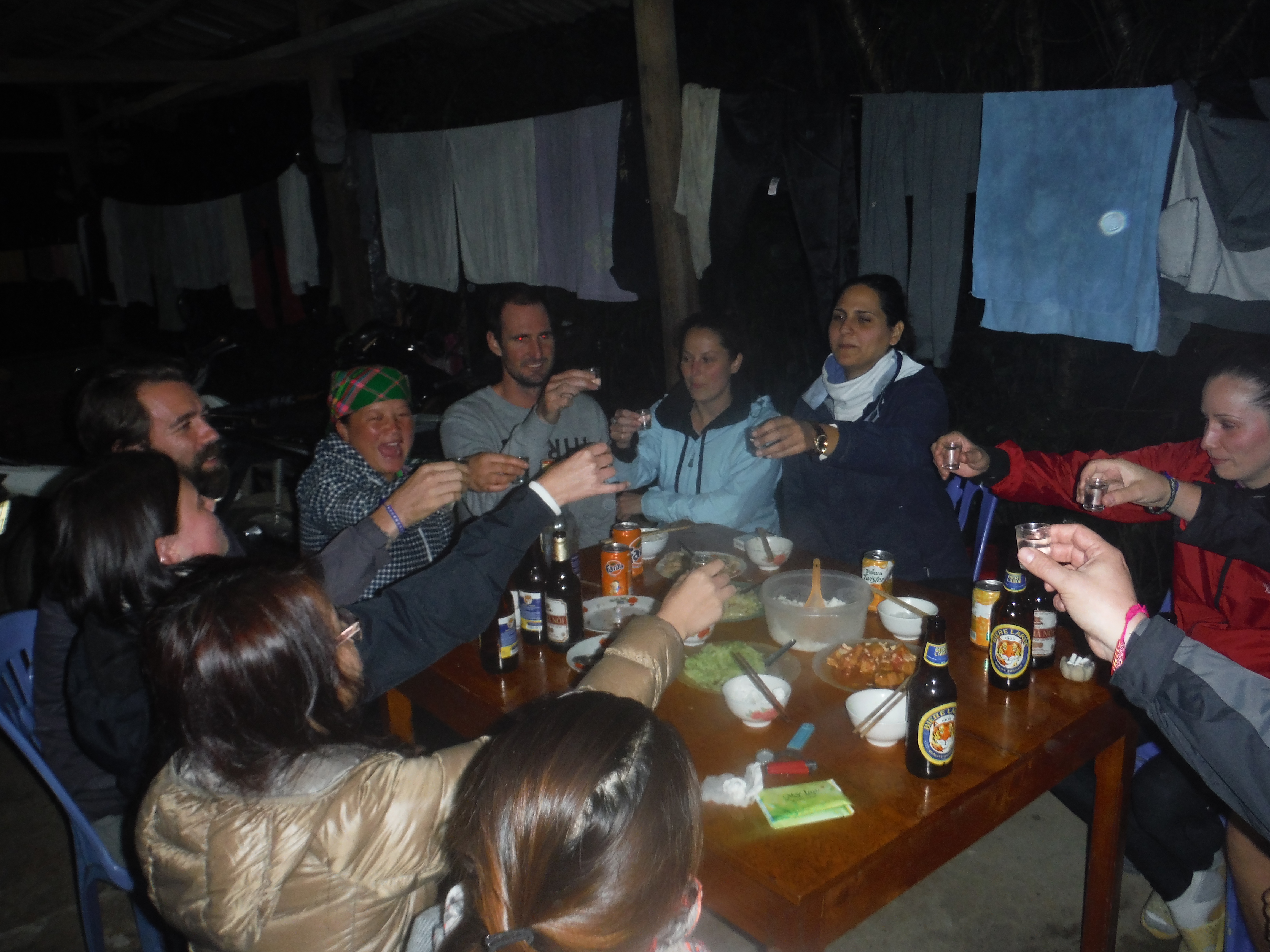
We got to our homestay around 4 that afternoon. We took turns showering then enjoyed a fantastic home cooked Vietnamese meal followed by way too much rice wine (also homemade). It’s rude to turn down a drink in the Vietnamese culture but the rice wine tasted awful! We got really creative with ways of discarding our shots so we didn’t have to take them.

DSCF0425

The following day we continued our stroll through local villages and paths leading to remote waterfalls. The scenery was so beautiful and lush and our local guide Mya entertained us with stories everywhere we went. After our lunch overlooking the misty hills we drove back to the town of Sapa. Leigh and I opted to spend our few hours of free time getting $10 massages. To our surprise they played children’s nursery songs paired with Gangnam style in the background. How soothing!

Strolling through a Sapa village.

Strolling through a Sapa village.

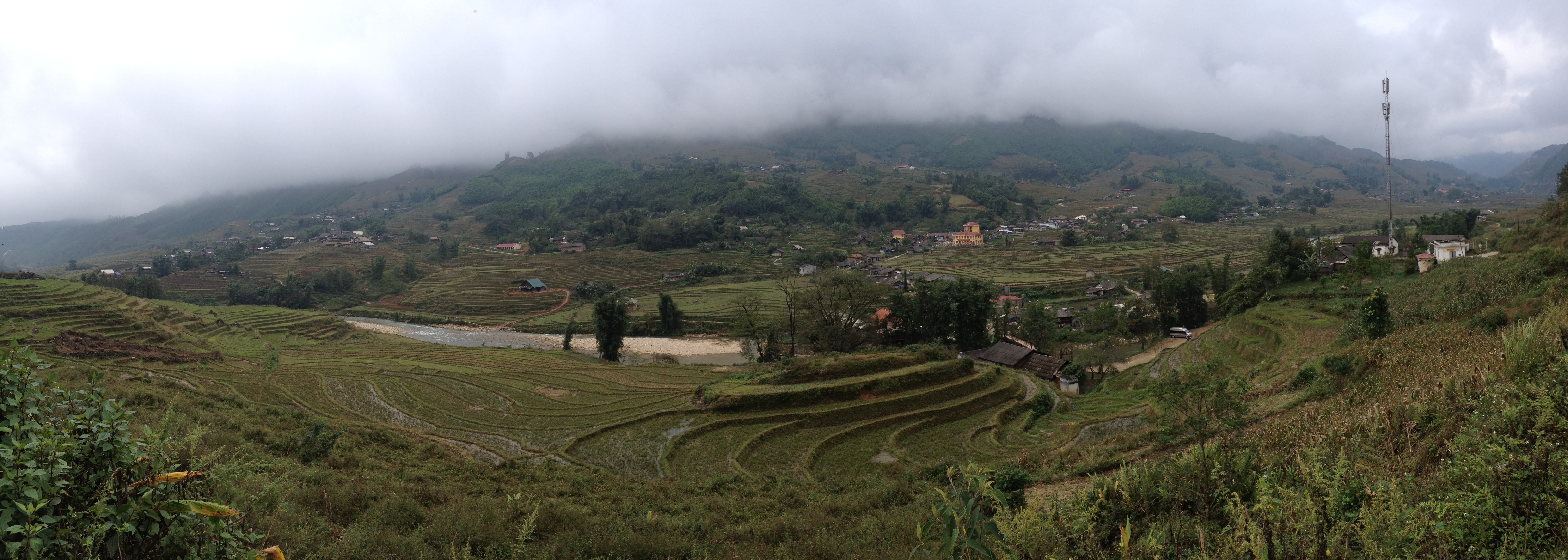
The rolling hills and rice paddies.

The rolling hills and rice paddies.

Before we knew it we were back on the sleeper train. Now, I didn’t describe the sleeper train before so I’ll take a second to touch on that now. Picture a train from the 1950’s with the interior décor of the 1970’s (I’m talking major wood paneling and orange everywhere). Each compartment has 4 beds. The beds are held up by chains attached to the wall. So you have to decide carefully, “If this chain were to snap, what would be worse? Falling from the top bunk onto someone else or not falling off your bunk but potentially being squished by a stranger falling from above?” These are the types of questions I’ve had to ask myself over the past 70 days of traveling, haha. There is no spot to store your bags on the train so you sleep curled up with them. You also need to be a semi-pro gymnast in order to vault yourself from the tiny foothold sticking out from the wall onto the top bunk. Sleeping on the train feels like sleeping in a hammock, it sort of rocks you to sleep. That is until it squeals to a stop to let people off.   Anyway, we survived the sleeper train (twice) and made it back to Hanoi. From there we had a quick shower, repacked our bags and hopped on a flight to our 24 hour layover in Singapore.

Segregated South Africa

The South African border was one of the most lax ones we crossed. This was unexpected for me because they are one of the more developed African countries so I assumed their Ebola scanning would be more stringent. If you enter South Africa you require a yellow fever certificate but they did not even ask to see it. This is probably a good thing because one of the people in our group forgot his certificate. 

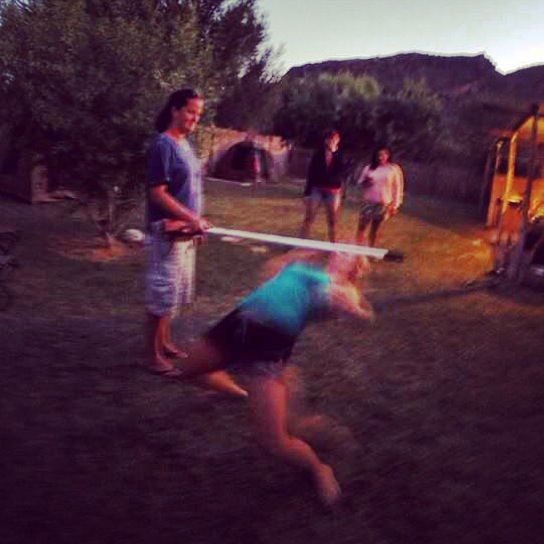
          On our first day of arrival we camped at Orange River which separates South Africa from Namibia. The afternoon was filled with floating in the water, getting a thrill out of “illegally” being in Namibia when we swam across the river, many games of Danger Flunky Ball, and a limbo contest. It was our last afternoon together and we made it a good one!


Campsite limbo contest

Campsite limbo contest

          For our next stop in South Africa we headed to the lush green landscape and the rolling hills of wine country. We set up our tent for the last time in the middle of a vineyard. That evening for $7 we sat in on a South African wine and cheese tasting. I’m not normally a wine drinker but I made an exception for the tastebud- tingling South African wine. The wine expert taught us how to look at the wine, swirl it for smell, and how to drink the wine while sucking air into your mouth to maximize the taste experience.

Delicious South African wine.

Delicious South African wine.

The next day after packing up our beloved tent for the last time we headed straight to Capetown. Technically our tour ended here but most of the group ended up hanging around Capetown for a few days. In true hobo style I had not prebooked any accommodations or departure flights. Fortunately my awesome roommate, Ling, offered that I stay in her room for the next 4 days and a newly engaged British couple offered that I could fly with them to Johannesberg and stay with them for a night. You can always depend on the kindness of strangers! … except these people weren’t strangers anymore, I had known them for 40+ days.
40 days later we had the  tent set up down to an art!

40 days later we had the tent set up down to an art!

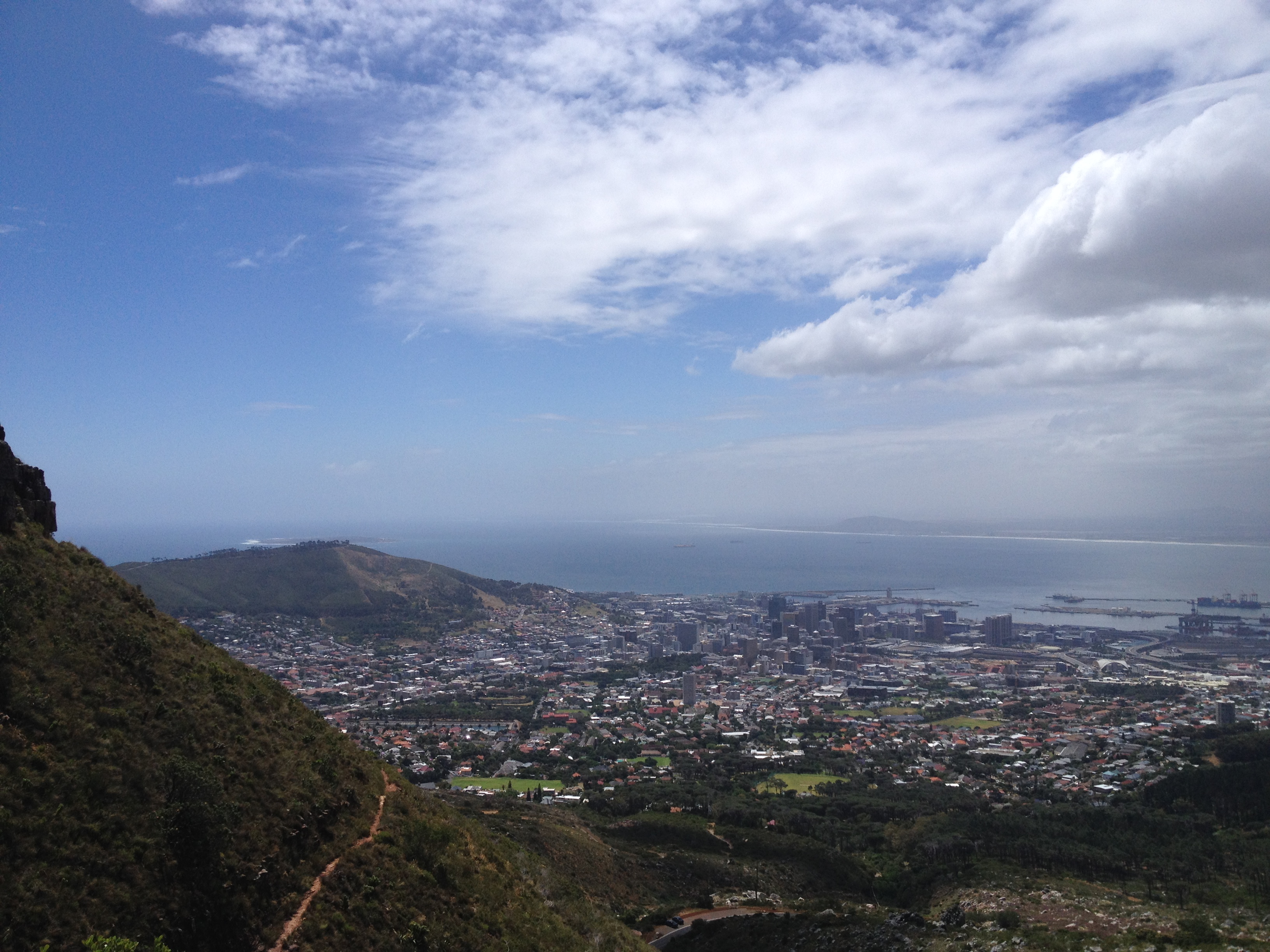
          The first thing we did when we got to Capetown was head to Table Mountain. A group of 10 of us made the hour and a half climb to the top. The views were stunning but it was like being on the stairmaster for 90 minutes straight. Table Mountain offered a fantastic view of the coast as well as a look into the bowl of the city. We took the 360 degree rotating cable car back down to the bottom. Following our hike we went for dinner where I had the meal deal of some delightful pasta with South African white wine for $5.50. Capetown is known for their fantastic variety of delectable food, and I liked the prices. We stayed up late that night to say goodbye to a chunk of the group that would be leaving the next day and to celebrate Shane (an ex-Irish-army guy) on officially becoming a civilian at midnight.

View of the city bowl on the way up Table Mountain.

View of the city bowl on the way up Table Mountain.

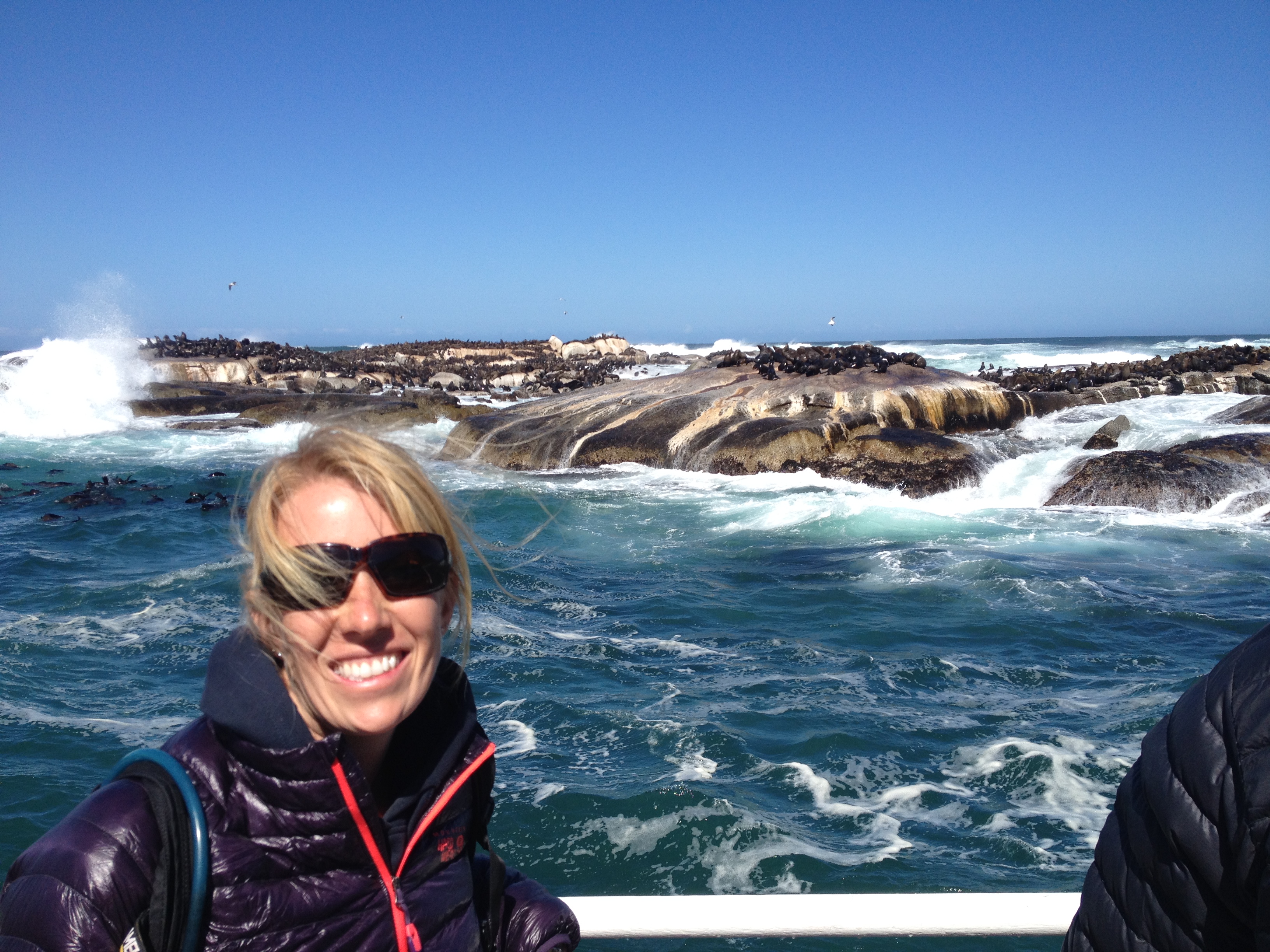
          The following day some of us took a tour down the twisting coastline of Capetown. First we took a boat out to see an island full of seals. I can see why Greenpeace gets mad about seal clubbing because they are really cute and super playful.

Laughing at the seals.

Laughing at the seals.

Next we continued onto Boulder Beach. Boulder Beach has lots of boulders (no surprise there) but it also has lots of penguins!

Adorable penguins at Boulder Beach

Adorable penguins at Boulder Beach

We continued onto the Cape of Hope National park where we had the chance to do some biking. Essentially you were just supposed to take a leisurely ride down the road until you reached the visitors centre where we would eat lunch. However, in true African style, the bikes they gave us were AWFUL! One girl fell off her bike and scraped up her face. As I was riding along my pedal fell off. I rode my bike like a scooter for awhile hoping I was not trespassing on baboon territory. Eventually the guide came along to replace my bike but the brakes were missing on my new one. Somehow we all made it to the visitor centre safe and sound except for one girl who was so bloody that she had to return to Capetown in a taxi.

Pedal in hand.

Pedal in hand.

Following the mayhem of the biking we visited a scenic lighthouse which is the spot where the Indian Ocean and the Atlantic Ocean meet. I was surprised by the number of tourists that were disappointed when they didn’t see a physical line separating the Oceans. This spot is also the most South Westerly point in Africa.

The point where the Atlantic and Indian Ocean meet.

The point where the Atlantic and Indian Ocean meet.

Our last stop was at the Cape of Good Hope but it was so windy that we couldn’t stay long and couldn’t climb the cliff without the probability of getting blown off.

IMG_3697

Day three of Capetown involved a much safer day of street strolling and shopping. I also used this day to do errands such as find a computer store to fix my laptop and I was lucky that Hubby Hobo’s parents offered to buy me a new camera as an early Christmas present. We wandered through the markets and down to the Harbour. The Harbour did not look like it belonged in Africa at all! In fact, it looked more like Pleasure Island at Disneyworld. It was clean, there were little shops and restaurants everywhere, live musical acts would pop up every now and again, and for the first time in two months I was not the minority. Our guide Colleen said that 30 million people visit the Harbour to go shopping every year which is more than the amount of people that visit the pyramids in Egypt!

IMG_3726

View of Table Mountain from the Harbour.

IMG_3724

I wanted to take the ferry out to Robben Island which is the prison where Nelson Mandela was held for years but the tickets were all sold out. I met up with friends for dinner and we called it an early night because we had to wake up at 5 in the morning for ….

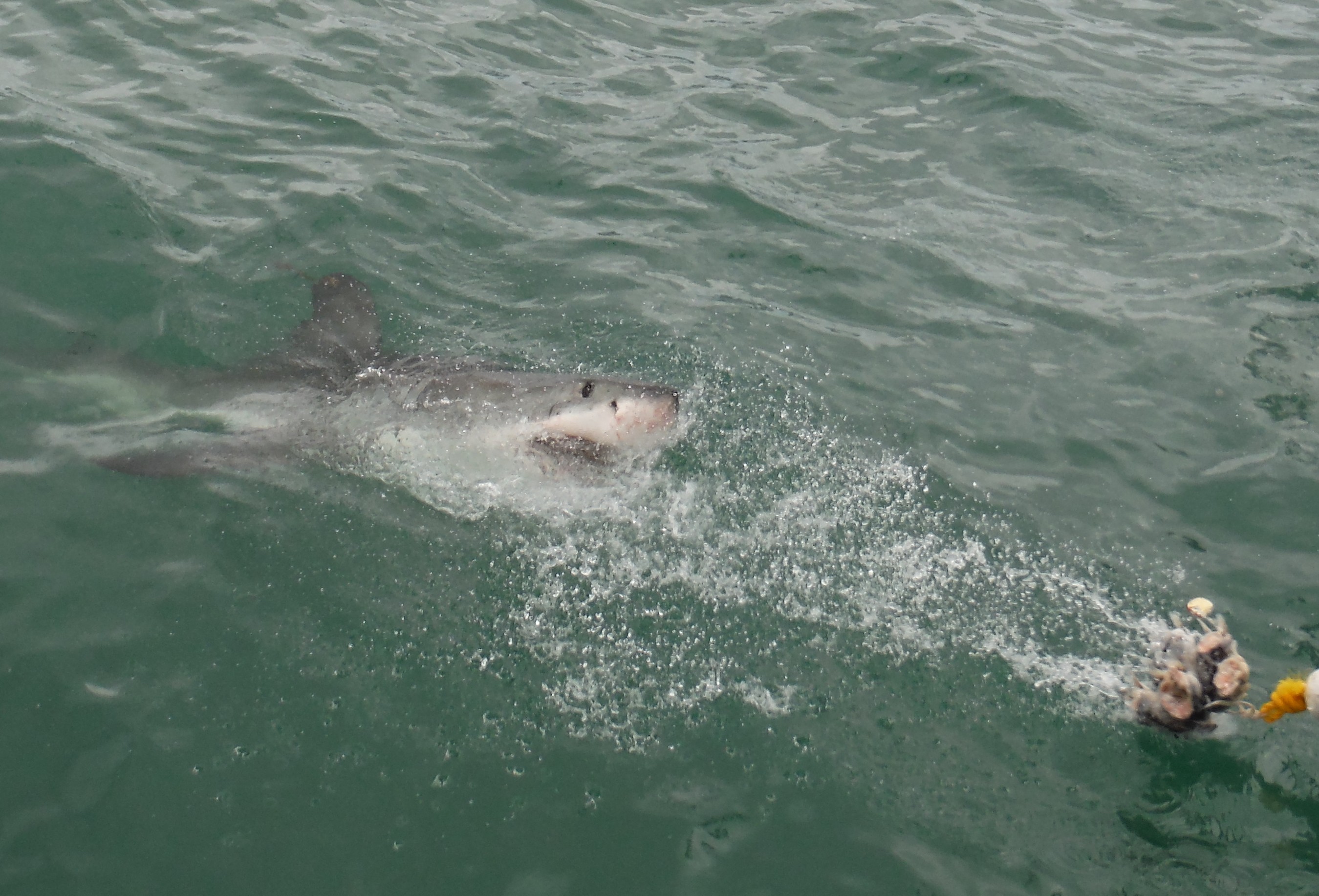
Shark Cage Diving! We chose to Shark Cage Dive with Marine Dynamics and I thought they were an extremely professional company. Upon they gave us a thorough safety debrief and a fabulous hot breakfast. We boarded the Slashfin (our boat) and started off into the Ocean. As the boat was driving we slowly released a mixture of chum, blood, and salt water into the Ocean so the sharks would pick up our scent and follow the boat. Once at our destination the first culprits climbed into the cage. One man held a line with a buoy and a bunch of chum attached to it and another man help a piece of wood painted black and in the shape of a seal fin. Together they would throw the “seal” and the chum out into the water to attract the sharks and lure them towards the cage. Unfortunately, we only saw a few sharks that day but we did see a lot of whales. If we had seen more sharks, the Shark Cage Dive day definitely had the potential to be one of the best days of my trip.

In the cage waiting for a shark.

In the cage waiting for a shark.

DSCF0012 (2)

A shark chasing the chum.

Pretending to be a shark.

Pretending to be a shark.

The following morning I ran downtown to pick up my laptop. It turns out that it did indeed melt in the desert so they replaced the wire that had melted. I shared a cab with Laura and Ben to the airport and we headed off for a night in Johannesburg. Johannesburg was the first spot in all of Africa where I did not feel comfortable. Someone tried to scam us while we were waiting for our pick up. When we made it to our hostel it was completely gated in. That evening we took a cab downtown (doors locked) to the Hard Rock Café. Laura collects Hard Rock glasses so it seemed like a good excuse to have some Western food. We took a cab back to the hostel as well …we took cabs everywhere.

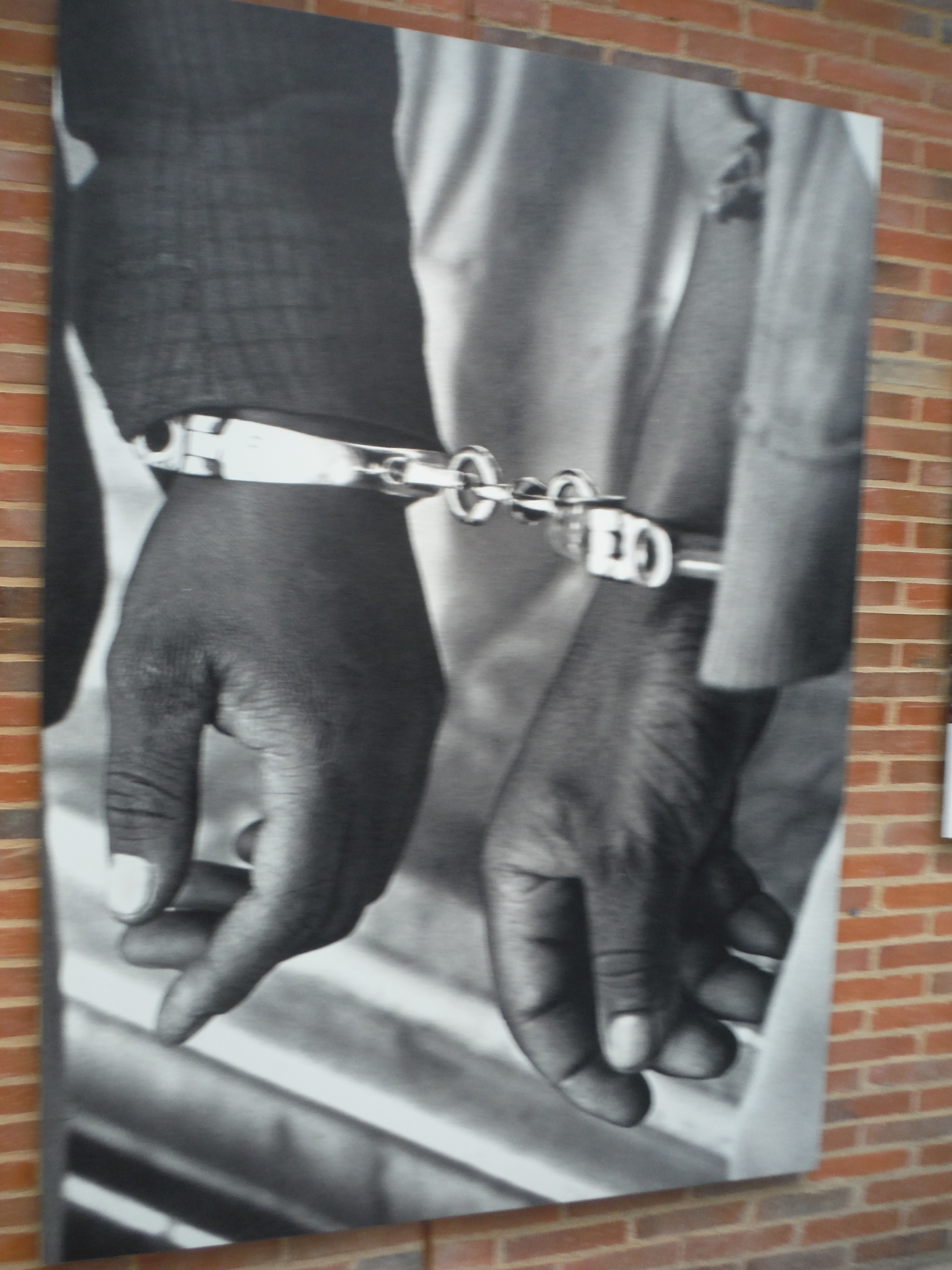
The following day I went to the Apartheid Museum. When I got there I sat on a rock for 90 minutes before the museum opened. Apparently the power hadn’t come on yet so they didn’t open the museum. TIA, I suppose (This Is Africa). The museum was worth the wait though. When I paid my fee to get in I was given a “white ticket” so I had to enter through the white door. Black visitors were given “black tickets.” I didn’t know much about the Apartheid before going to the museum so I will give you a quick summary of what I learned based on my visit.

DSCF0040

In the late 1800’s gold was discovered in Johannesburg. Many people came from the tribal villages to the city to work in the mines. During the great depression the price of gold went down. The owners of the mine still wanted to make a profit so they fired all the white workers (because they paid them the most) and cut all the black worker’s wages in half. Many black people refused to work for half the price so they imported Asian immigrants to work for the low wage. This was the introduction to the 4 categories of people that were segregated later on; the whites, the coloured, the asians, and the natives. As the rich got richer and the poor got poorer coloured and asians started moving into slums in Johannesburg. The white people feared that they would soon be outnumbered so they introduced a system of segregation. Everyone was given a certification labelling them into one of the four categories. The people in charge of labelling were unqualified white people. Some well to do coloured people who associated with white people were given white status and white people who worked with blacks could be demoted to coloured status. As the state of the slums got worse, the white politicians oppressed more. Asians, coloured, and natives could not vote. If the white politicians wanted the land that the slums were on they would displace all the people and destroy their homes. The minorities were given limited education so they would remain impoverished. Nelson Mandela spent 27 years as a prisoner for trying to lead a political party opposing the idea of apartheid.

Children trying to do their lessons on the floor in a crowded school.

Children trying to do their lessons on the floor in a crowded school.

Around 1990, the system of apartheid began to break down. Nelson Mandela was released and elected President in 1994. Many people died during the apartheid (mainly due to protesting) or were forced to work or live in horrendous conditions. I spent 3.5 hours in the museum but could have spent 5. It was incredibly fascinating.   It was obvious to me that this system of segregation had not totally broken down.  There were still huge slums outside of the city centres and it was obvious that white people were much wealthier. Upon speaking to people they admitted that the older generations are still extremely racist towards one another, but the younger generations are more accepting.   Hopefully the situation will improve as time passes.

DSCF0050 DSCF0043

Later that day I met up with Laura and Ben and we all continued onto Abu Dhabi. From there I said goodbye to the last of the group of friends I had met 45 days earlier.  I then hopped on a plane to Saigon, Vietnam. Goodbye Africa, Hello Asia!!!

Southern Namibia

We spent 9 days total in Namibia and it is one of my favourite countries so far. Namibia gained their independence in 1990 from South Africa. Namibia has a heavy German influence which makes for great food but a tough history. The colonization of Namibia was quite violent and up until the 1970’s the Native San Bushmen could be legally hunted like animals. It disgusted me that people used to make handbags out of the San women’s breasts but at that time they were considered non-humans.

San Woman and her cute San Baby

San Woman and her cute San Baby

After the mountains of North Namibia we headed towards the South with Swakopmund being our desired destination. On the way we made a few stops. First we went to a Hierera market. Hierera people wear giant colourful dresses with huge hats of cloth that look like buffalo horns.

Hierra woman making crafts to sell.

Hierera woman making crafts to sell.

Next we stopped at a Himba market. The Himba people are one of the most photographed tribes in the world. After menstruation the women are not allowed to use water except to drink or cook. Every day the women wake up and perform an hour long ritual that involves rubbing animal fats, sweet smelling herbs, and bright orange mud all over their bodies to cleanse themselves. They also cake the mud onto their hair and leave giant puffs at the bottom of their dreads. They wear headdresses and loincloths made out of hunted animals. They are so exotic looking.

Himba woman.  The fur headdress means that she is married.

Himba woman. The fur headdress means that she is married.

Himba woman selling her crafts.

Himba woman selling her crafts.

Our last stop on the road trip to Swakopmund was the Skeleton Coast beach. Our guides dared us to jump in the freezing Ocean coming directly from the Antarctica current near one of the many shipwrecks. The Skeleton Coast was given this name because once a crew shipwrecked here they were guaranteed to die because there was only desert for miles.

Yarrrgh Maties! It was cold!

Yarrrgh Maties! It was cold!

Alas we reached Swakopmund which looked like a completely different world! The only way I could tell I was still in Africa and not the outlet malls in Florida was the signs saying if you bought a couch you had the chance to win a free sheep! We ditched the tents for 2 nights and stayed in a giant dorm of bunk beds. Following an afternoon of shopping and wandering the streets we went out for a night of dinner and dancing. I cannot stress how weird it felt to be in such a “normal” environment again.

Win a free sheep!

Win a free sheep!

The following day was one of my favourite days of the journey so far. Sandboarding and Quadbiking!!! In the morning we were driven out to the giant star-shaped sand dunes of the Namib Desert. After climbing for what seemed like ages we reached the top with our modified snowboards. At the top we waxed the bottom of the board, clipped in, and set off down the dunes. It was SO much fun and very similar to snowboarding except I could do it in my shorts and sunglasses.

Sandboarding in the Namib Desert

Sandboarding in the Namib Desert

IMG_3438

Landed the jump!

After riding the dunes for a bit and trying our luck with the jump we switched to BellyBoarding. Basically BellyBoarding requires that you climb to the top of a sand dune, lay on your stomach on a flexible piece of wood, lift the front corners up and slide head first down the dune. This was essentially EXTREME tobogganing because you end up reaching speeds of 78 km/h (they have a police speed gun to clock you in). It was a blast.

Tied for fastest of the day: 78 Km/h!

Tied for fastest of the day: 78 Km/h!

Following a lunch of SANDwhiches (no pun intended) we all hopped on Quad bikes. The 2 hours on the bikes took us ATVing through the desert up and down the dunes. When we got more comfortable we sped up and started doing rollers. Rollers involve opening up the throttle and gunning it up the sand dune then back down like a giant berm. Aside from a few people getting stuck in the sand and one girl hitting a rock and rolling off her ATV, we came out safe and sound. After this day I had sand in every crevice of my body! I found sand in places I did not know sand could exist.

The gang with our quad bikes.

The gang with our quad bikes.

The following morning we did a township tour where we were taken out of the clean, dream like tourist area and into the blocks where the locals lived. Some of the houses were nicer than others. Back when the Germans were colonizing Namibia they strategically gave the best housing to the minority black tribe and the worst housing to the majority black tribe that had previously been in power. There were a few other tribes that received mediocre housing. The Germans did this on purpose to create jealousy and strife between the tribes so they would concentrate on squabbling with each other instead of using their numbers to unite and rise up against the white people. These tribes still exist today and for the most part they govern themselves with an elected chief who we met after we ate some traditional cooked worms. There was also special housing for the mine workers. The miners who work in uranium get the nicest homes in repayment for the toll working in a uranium mine will take on their health.

Locals in the poorest area paying for water.

Locals in the poorest area paying for water.

After saying our farewells to Swakopmund we hit the road again and headed to a farm in the middle of the desert. We passed an area called the Moonland (because it looks like the moon) and we also passed the Tropic of Capricorn which, as a Geography teacher, was a highlight for me.

From the Tropic of Cancer, across the Equator, and down to the Tropic of Capricorn!

From the Tropic of Cancer, across the Equator, and down to the Tropic of Capricorn!

When we arrived at our Farmstay, we went for a tour around the giant farm to learn about the local vegetation and how to spot certain animals and insects. One of the most interesting insects was the trap door spider. This spider weaves a pile of web just under the sand and then digs a tunnel that can go down 120 cm into the ground. The spider waits in its tunnel until it feels the vibrations of its prey. When the time is right the spider will scurry up the tunnel, pop open the trap door, grab its prey and pull it back down the tunnel to devour.

The Trap Door Spider's secret layer.  Muhahaha!

The Trap Door Spider’s secret layer. Muhahaha!

We ended our farm tour with a hike up a hardened sand dune to watch the sun set. It was absolutely stunning. What was even more striking was sleeping under the stars that night. There is something peacefully raw about sleeping outside with nothing between you and the surrounding wilderness. Due to our remote desert location there were no lights, no pollution, and few clouds. I didn’t know so many stars existed; it was overwhelmingly beautiful.

Imagine this was your farm?!

Imagine this was your farm?!

After surviving a night outside with no snake or scorpion bites we continued on to Sossusvlei. Following an afternoon of hiking through a canyon we rested up for a big surprise later that day. The big surprise was a visit to Fish River Canyon which is the second largest canyon in the world next to the Grand Canyon. Just like the Grand Canyon, the pictures do no properly show the beauty and depth of the enormous landscape. In typical African fashion there were no fences or warning signs anywhere at the canyon so we had to take care walking the kilometer long trail to the lookout point. To our delight our guides Colleen and Lucinda had prepared a wine and cheese tasting at the end of the hike for us. It was a lovely way to end the day.

Hiking through a canyon.

Hiking through a canyon.

Fish River Canyon - 160 km long, 27 km wide, and 550 m deep.

Fish River Canyon – 160 km long, 27 km wide, and 550 m deep.

The next day we headed further into the Namib desert, the oldest desert in the world. You could tell it was the oldest desert in the world because the sand grains were so small. It felt like you were walking on icing sugar. The dunes are a glorious red colour because of the tiny bits of metal in the sand that oxidize and rust. Following some intense DangerBall in the pool we took a drive out to the dunes. We visited Big Daddy and Little Mama and the dried up Lake that used to exist before the shifting sand dunes cut it off from the water source.

A dried up Lake in the middle of the desert.

A dried up Lake in the middle of the desert.

For sunset we made the trek up Dune 45, the most photographed sand dune in the world. If you’ve never climbed a sand dune I can tell you that it’s really hard work. Fortunately, sand dunes can only grow to a certain height because once the sand hits a 40 degree angle, it rolls down. At the top of Dune 45 we played Danger Dune (last one standing on the peak of the sand dune wins), somersaulted down the sand dune, made sand angels, and eventually watched the sun melt down over the horizon. After that we all used the momentum of the sand dune to run down at top speed. It was way easier going down than up! We fell asleep under the stunning view of the stars again that evening. Even though we had sand all over our bodies and grains infiltrating our sleeping bags, we were happy campers.

Feeling on top of the world at Dune 45!

Feeling on top of the world at Dune 45!

"Danger-saulting!"

“Danger-saulting!”

The next day we crossed the border to our final country on the tour. Stay tuned for The High Class Hobo’s South African adventures!

Waking up to a sunrise over the sand dunes.

Waking up to a sunrise over the sand dunes.